Pocket Squares Guide: Fabrics, Folds & Etiquette 2026
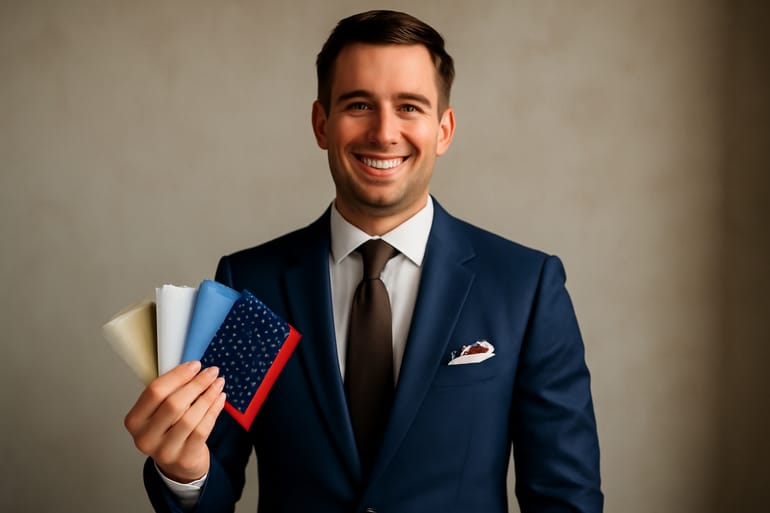
Pocket squares: why this small detail matters so much

A pocket square is one of the easiest ways to make formalwear look intentional—yet it’s also one of the easiest accessories to get wrong. If you’ve ever wondered why your suit looks “fine” but not finished, the pocket square is often the missing piece. Done well, it adds contrast, depth, and personality without shouting.
What a pocket square actually does
- Frames your face by adding a light/bright element near your chest
- Breaks up a large block of suit fabric (especially with navy, charcoal, black)
- Adds texture (linen slubs, silk sheen) that elevates an outfit instantly
- Signals occasion awareness: weddings and evening events love it; business formal needs restraint
Pocket square vs tie (and the #1 misconception)
A pocket square isn’t meant to be a matching set with your tie in the exact same fabric and pattern. That “perfect match” can look costume-like. A better goal is coordination: pick up one color from the tie or shirt, or echo the mood (formal, festive, understated).
Quick context: when you’ll reach for one
- Business formal: clean folds, quiet colors, minimal pattern
- Weddings: room for color, texture, and expressive folds
- Evening events: silk sheen and deeper tones can look especially sharp
Stay tuned for our upcoming guide on Occasions for pocket squares: business formal, weddings, and evening events—it’ll help you dial the look up or down without second-guessing.
Silk vs linen vs cotton: which pocket square fabric should you choose?

Fabric choice is where most frustration starts: a pocket square that won’t hold a fold, puffs out too much, or looks wrinkled ten minutes after you leave the house. The fix is matching fabric to your event, fold style, and tolerance for maintenance.
Silk pocket squares (the formal favorite)
A silk pocket square is ideal when you want a refined, slightly luminous finish. Silk is also the best choice for evening wear and many wedding looks.
Pros
- Elegant sheen; looks dressy in low light
- Works beautifully with puff-style folds and soft peaks
Watch-outs
- Can be slippery; may need a pocket square holder or a simple “anchoring” fold
- Shows stains more easily than textured fabrics
Linen pocket squares (crisp, classic, and business-friendly)
Linen gives you that structured, airy look—perfect for the presidential fold and warm-weather events.
Pros
- Holds sharp edges well
- Texture looks intentional, even in simple white
Watch-outs
- Wrinkles are part of the charm—but can look messy if you overdo complex folds
Cotton pocket squares (versatile and approachable)
Cotton sits between silk and linen: easier grip than silk, less crisp than linen.
Pros
- Easy to handle; good for beginners
- Generally more forgiving on maintenance
Watch-outs
- Can look a touch casual depending on weave and print
Quick “choose this if…” guide
- Choose silk if: weddings/evenings, you like softer folds, you want polish
- Choose linen if: business formal, you love crisp lines, you run warm
- Choose cotton if: you want all-around versatility and easy handling
Stay tuned for our upcoming guide on Pocket Squares 101: Silk vs Linen vs Cotton for deeper comparisons, seasonal tips, and what to look for in finishing and edge stitching.
Which pocket square fold works for your event (and skill level)?

Folding is where a pocket square goes from “nice accessory” to “this person knows what they’re doing.” The pain point: many folds look great in a video, then collapse in real life. The solution is choosing folds that match your fabric and the formality of the event.
The safest choices for most situations
1) Presidential fold (aka straight fold)
Best for business formal, interviews, and any time you want clean restraint. Linen and cotton excel here; silk can work if it’s not too slippery.
2) Puff fold
Best for weddings, date nights, and semi-formal events. A silk pocket square really shines here because the fabric creates a rounded, dimensional look.
3) One-, two-, or three-point folds
Best when you want a touch of flair but still a structured feel. Cotton and linen hold the points better; silk points can soften (which can be a feature, not a flaw).
How to keep the fold from sinking into your pocket
- Leave a little bulk below the pocket line (don’t flatten it too aggressively)
- Use a pocket square holder if you wear silk often or move around a lot
- For slippery silk, a simple base fold can act as an anchor under a puff
Matching fold to occasion
- Boardroom: presidential fold, minimal contrast
- Wedding: puff or soft peaks, coordinated color
- Evening event: silk puff or elegant multi-point with darker tones
Stay tuned for our upcoming guide on Pocket Square Folding Techniques: presidential fold and more, plus a step-by-step on How to fold a pocket square for lapel flair if you want a bolder, photo-friendly look.
How do you match a pocket square with your suit, shirt, and tie?

Color matching is the #1 reason pocket squares end up abandoned in a drawer. Either the square matches the tie too perfectly, or it clashes in a way that feels loud. A simple rule: aim for harmony, not duplication.
Start with the suit (your biggest color block)
- Navy: almost any pocket square works—white linen is the easiest win
- Charcoal/gray: cooler tones (white, light blue, burgundy accents) feel natural
- Black: keep it sharp—white or deep, controlled colors for evening
Use the shirt to set contrast
A white shirt gives you maximum freedom. Light-blue or patterned shirts already add visual activity, so keep the pocket square calmer—especially in business settings.
Coordinate with the tie (without matching)
Instead of buying a pocket square that’s identical to your tie, try one of these:
- Pick up one color from the tie (a stripe color, a small accent)
- Go one shade lighter than the tie for a layered look
- Mix pattern scales: small-pattern tie + larger-pattern pocket square (or vice versa)
Pattern pairing: the easy method
- If your tie is bold, choose a solid or subtle texture square.
- If your tie is solid, you can use stripes, paisley, or a small print square.
Stay tuned for our upcoming guides on How to choose a silk pocket square to match your tie, Color coordination: pocket square colors with suit and tie, and Pocket squares by pattern: solid, striped, paisley and more.
Care, maintenance, and storage: keep pocket squares looking new

Nothing ruins the look of a pocket square faster than ripples, stains, and frayed edges. The good news: a few habits prevent most problems—especially with silk.
Caring for a silk pocket square (the cautious approach)
Silk is luxurious, but it’s sensitive to water spots and harsh detergents.
- If you spill something, blot—don’t rub.
- Avoid aggressive washing methods; when in doubt, use professional cleaning.
- Steam lightly from a distance to relax wrinkles without crushing the fabric’s finish.
Prevent wrinkles before they happen
- Don’t overstuff your jacket pocket; give the fold room.
- When you take it off, unfold it at home—leaving it crumpled sets creases.
- Rotate pocket squares so the same ones aren’t worn and pressed constantly.
Smart storage (so they’re ready when you are)
- Store flat in a drawer, or use dividers so edges don’t snag.
- For silk, keep away from rough surfaces that can pull threads.
- Travel tip: fold into a clean pouch or a smooth bag to avoid friction.
Durability: what actually lasts
A longer-lasting pocket square usually has:
- Neat, even edge finishing
- Fabric that feels substantial (not paper-thin)
- Clean corners that don’t distort after folding
Stay tuned for our upcoming guides on Care guide for silk pocket squares: washing, storage, durability, and Pocket Square Maintenance: preventing wrinkles and stains.
Pocket square etiquette: the rules that still matter (and the ones that don’t)

Etiquette is really about avoiding two extremes: looking sloppy or looking like you’re wearing a costume. You don’t need a long list of “dos and don’ts,” but a few guidelines keep you confidently on track.
The modern rules worth following
- Don’t exactly match your tie and pocket square. Coordinated beats identical.
- Match the formality of the event: crisp fold for conservative settings; expressive folds for celebrations.
- Keep it intentional: if your suit and tie are already loud, let the pocket square calm things down.
Cultural context (why pocket squares signal polish)
Pocket squares grew into a classic menswear detail because they’re visible, close to the face, and easy to change. In formal contexts, that small visible choice reads as: “I paid attention.”
Common etiquette mistakes to avoid
- Too much shine during daytime business meetings (save high-sheen silk for evenings)
- Overly complicated folds with wrinkly linen (looks unkempt fast)
- A pocket square that’s so large it balloons out of the pocket
Budget-friendly buying guidance (what to look for)
If you’re building a rotation, you don’t need dozens.
- Start with white linen (business), silk in a versatile color (events), and one pattern.
- Prioritize edge finishing and fabric feel over novelty prints.
Stay tuned for our upcoming guide on Budget-friendly pocket squares: what to look for.
Häufig gestellte Fragen

What is the best pocket square fabric for formal events?
For most formal events, a silk pocket square looks the most refined because of its smooth finish and subtle sheen. Linen is also formal, especially with a crisp straight fold.
Should my pocket square match my tie?
It shouldn’t match exactly. Instead, coordinate by picking up one color from the tie, choosing a complementary shade, or mixing textures and pattern sizes.
What pocket square fold is best for business formal?
The presidential (straight) fold is the safest choice for business formal because it’s clean and understated. Linen or cotton makes it easier to keep sharp.
How do I stop a silk pocket square from sliding down?
Silk can be slippery, so use a simpler base fold, leave a bit more fabric below the pocket line, or consider a pocket square holder. A slightly fuller puff also helps it stay in place.
Can I wash a silk pocket square at home?
It depends on the silk and finishing, but silk is easy to damage with water and harsh detergent. When you’re unsure, spot blot gently and use professional cleaning for stains.
How many pocket squares should a beginner own?
Three is a strong start: a white linen square, one versatile silk square, and one patterned square. That covers business, weddings, and most semi-formal looks.
What pocket square colors work with a navy suit?
White is the easiest and most classic option. Light blue, burgundy accents, and muted patterns also work well as long as they coordinate with your tie or shirt.