Blue Floral Neckties: Styling & Color Guide 2026
Breadcrumb
Why do blue floral neckties look “easy” but style tricky?
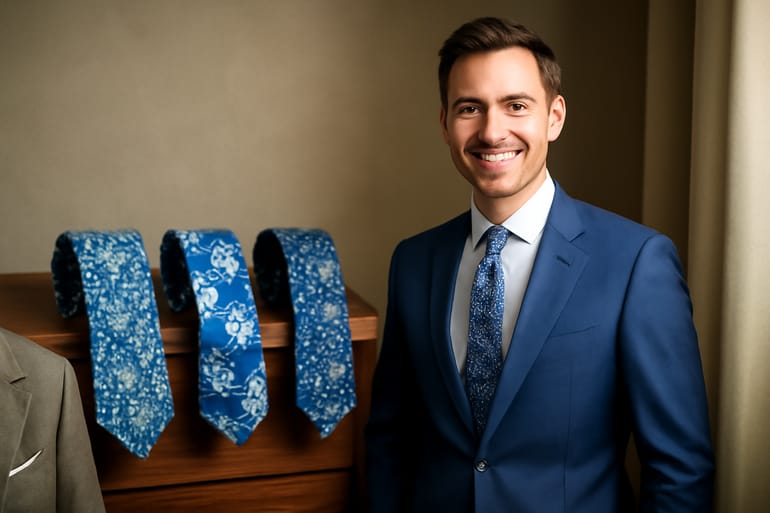
A blue floral necktie feels safe because blue reads classic, but the floral pattern adds visual complexity that can clash fast—especially in photos, at weddings, or under office lighting. The good news: once you understand a few pieces of color theory (tone, contrast, and temperature), a blue floral tie becomes one of the most versatile statement accessories you can own.
The two things you’re really balancing
- Blue tone: navy, royal, sky, dusty blue, or teal-leaning blue change the formality and mood.
- Floral contrast: how much the flowers pop against the background determines whether the tie is subtle or loud.
A simple rule that prevents 90% of mismatches
Match your tie’s “distance readability” to the rest of the outfit. If the floral is bold from 6 feet away, keep the shirt and suit quieter (solid or very fine texture). If the floral is small and low-contrast, you can add texture elsewhere (a herringbone suit, an Oxford shirt).
Quick buying mindset (non-brand)
Instead of chasing labels, shop by fabric, construction, and color harmony. For deeper outfit building, Pairing Blue Floral Neckties with Shirts: Best Practices helps you avoid the most common shirt-and-tie mistakes.
Lead magnet idea: if you want a faster decision, a one-page “blue floral tie color-match cheat sheet” (skin tone + suit color + shirt color) is the kind of guide worth downloading before you shop.
Blue tie color theory: which blue tone works with your suit?

When you’re choosing blue floral neckties, the background blue is the anchor. Get that right and the floral accents almost style themselves.
Navy vs royal vs light blue (what each communicates)
- Navy blue floral tie: most formal and most forgiving; pairs cleanly with charcoal, navy, and mid-grey suits.
- Royal/cobalt blue floral tie: higher energy and contrast; great with mid-grey suits and crisp white shirts, but can look “loud” next to bright shirts.
- Light/sky blue floral tie: spring/summer friendly; best with lighter greys, tan, and softer textures.
- Dusty/slate blue floral tie: muted, modern; ideal if you want floral without the “party” vibe.
Temperature: cool vs warm florals
Look at the flowers: are they cool (white, silver, icy pink, lavender) or warm (cream, yellow, rust, coral)? Cool florals lean sharp and business-friendly; warm florals feel relaxed and event-ready.
Contrast: how to keep it intentional
Aim for one clear contrast point:
- Tie vs shirt (most common): darker tie on lighter shirt.
- Flowers vs background: high-contrast flowers on a deeper blue.
- Tie vs suit: tie slightly brighter than the suit for separation.
If you try to max out all three, the tie can start wearing you.
Best for menswear enthusiasts
If you like dialing in details, treat blue as a “neutral” and use the flower color as your accent—echo it subtly with a pocket square edge, socks, or a knit texture. If pattern scale is your playground, Floral Necktie Pattern Variations: Small Floral vs Large Floral breaks down what reads refined vs bold at different distances.
Shopping checkpoint: prioritize a blue that matches the suits you already own, not the suit you might buy someday.
Floral scale and pattern density: subtle, statement, or chaotic?
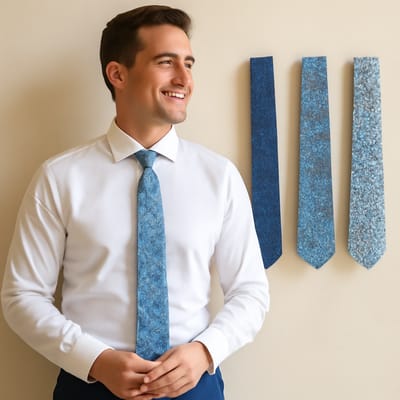
The biggest styling pain point with a blue floral necktie isn’t the blue—it’s the flower size and how tightly the pattern repeats.
The scale test (fast and practical)
Hold the tie at arm’s length:
- If the flowers blur into texture, it’s small-scale and office-friendly.
- If you can count petals, it’s medium-scale and best as the outfit’s focal point.
- If one flower dominates the blade, it’s large-scale and usually event/party territory.
Density matters as much as size
A medium floral can still look refined if there’s breathing room (more background blue showing). Dense patterns read more casual and can look busy with textured suiting.
The pattern-mixing rule you can trust
If your suit or shirt has a pattern (checks, stripes), keep the tie floral either:
- Low contrast, or
- Clearly different in scale (tiny shirt pattern + larger tie floral, or vice versa).
Avoid similar-sized patterns fighting for attention.
Best for wedding & event planners
For groups, photos, and varied lighting, small-to-medium florals with a navy or dusty-blue base are safest. They add personality without creating “moire” effects on camera. If the wedding palette includes blush, sage, or lavender, choose a tie where that accent color appears in the flowers—then keep groomsmen shirts consistent (white is the least risky).
Best for gift buyers and gift shoppers
If you’re buying without seeing the full outfit, choose a navy blue floral tie with white/cream flowers and moderate contrast. It’s the most universally wearable and least likely to clash with someone’s existing shirts.
Quality signal: printed florals can look great, but check that the print edges are crisp and the blue background doesn’t look washed out under warm indoor light.
How do you pair a blue floral tie with shirts and suits (without guessing)?
Use this as a repeatable formula when styling blue floral neckties for real life—workdays, weddings, and dinners.
Shirt pairing (ranked from easiest to riskiest)
- White shirt: always works; lets the floral do the talking.
- Light blue shirt: works if the tie is clearly darker or the flowers add contrast.
- Pale pink or lavender: great with navy or slate-blue backgrounds; keep florals mostly cool-toned.
- Patterned shirts (stripes/checks): only if the shirt pattern is fine and the tie scale is different.
Suit pairing (what looks most “put together”)
- Charcoal suit + blue floral tie = sharp, modern contrast.
- Navy suit + blue floral tie = tonal; choose a tie with lighter flowers for separation.
- Medium grey suit + royal/cobalt floral = energetic and clean.
- Tan or light brown suit + light/dusty blue floral = spring/summer standout.
Accessories that keep the look intentional
- Pocket square: pull one color from the flowers, or go white linen for safety.
- Belt/shoes: match leather tone; don’t try to “match the flowers.”
- Tie bar: optional; keep it simple so it doesn’t compete with the pattern.
Best for menswear enthusiasts
Try a texture upgrade: a matte grenadine-style weave or a slightly slubby silk can make florals feel more grown-up. If you’re building a rotation, buy one conservative navy small-floral, then one lighter seasonal option.
Buying guidance (affiliate/product pathway-ready)
When comparing non-brand options online, prioritize:
- Material (silk for sheen and drape; cotton/linen blends for casual)
- Width (pick what matches your lapels; most wardrobes do well in the middle)
- Stitching and tipping (clean edges, no puckering)
- Return policy (florals can look different under your lighting)
If you want a confident “add to cart” decision, pick the tie first, then build the shirt around it—your odds of a clean match go way up.
Fabric, care, and longevity: how to keep blue florals looking crisp
A blue floral necktie can fade, shine oddly, or lose shape if the fabric and care don’t match how you actually wear it. This is where non-brand shopping can be a win—quality often shows up in basics, not logos.
Fabric choices (and what they’re best for)
- Silk: best all-around; holds color well and drapes cleanly. Great for weddings and business.
- Cotton: more casual and matte; ideal with chinos, casual blazers, and daytime events.
- Linen or linen blends: airy and textured; perfect for warm-weather looks, but wrinkles are part of the vibe.
- Wool blends: fall/winter friendly; helps florals feel less “summery.”
How to prevent the three most common problems
- Wrinkles and ripples: untie carefully (don’t yank), then hang for 24 hours.
- Stains on light flowers: blot, don’t rub; spot-clean gently and consider professional cleaning for silk.
- Fading blues: keep ties out of direct sunlight when storing; rotate wear.
Storage and travel that actually works
- Store on a hanger or rolled loosely in a drawer.
- For travel, roll the tie around two fingers and place it in a pocket of your luggage; unroll and hang as soon as you arrive.
Best for wedding & event planners
If ties will be worn hard (setup, teardown, long days), consider slightly more textured fabrics or darker bases. They hide minor scuffs and photograph consistently.
Soft CTA for lead gen: a downloadable “color coordination guide” is especially useful here—saving swatches and pairing rules helps you avoid last-minute mismatch panic when the tie arrives.
Frequently Asked Questions
Are blue floral neckties appropriate for formal events?
Yes—if the background is darker (navy/slate) and the floral is small-to-medium scale. Pair with a white shirt and a darker suit for the cleanest formal look.
What shirt color goes best with a blue floral tie?
White is the safest and most versatile. Light blue can work well too, as long as the tie is darker or the flowers create clear contrast.
Can I wear a blue floral tie to a wedding as a guest?
Absolutely. Choose a tie that matches the wedding’s formality: darker blues and smaller florals read dressier, while lighter blues and larger florals feel more daytime or outdoor.
What blue floral tie works best for wedding & event planners coordinating groups?
Look for navy or dusty-blue bases with medium-to-low contrast florals so they photograph consistently. Repeating a single accent color from the flowers across the party keeps the look cohesive.
What’s the safest blue floral tie to buy as a gift?
A navy blue floral tie with white or cream flowers is the most universally wearable. It pairs easily with common suit colors and doesn’t rely on knowing the recipient’s exact style.
How do I choose a blue floral tie if I’m a menswear enthusiast who likes pattern mixing?
Vary pattern scale on purpose: pair a fine stripe or micro-check shirt with a larger, clearer floral (or vice versa). Keep the overall color palette tight—blue plus one accent color is a strong starting point.
Is silk always better than cotton for floral ties?
Not always. Silk is more formal and drapes smoothly, while cotton is matte and casual; pick based on where you’ll wear it most.
How do I keep a blue floral tie from looking too loud?
Lower the contrast by choosing a darker blue base and smaller florals, then keep the shirt and suit solid. Let the tie be the only statement piece in the outfit.