Blue Floral Neckties: Styling & Buying Guide 2026
Breadcrumb
What makes blue floral neckties a go-to statement?
Blue floral neckties sit in a sweet spot: they read confident and expressive without feeling costume-y. Blue is a naturally “safe” color in menswear, while florals add texture and personality—which is why these ties work everywhere from weddings to creative offices.
A blue floral tie usually succeeds (or fails) for three reasons:
- Blue tone (navy vs sky vs cobalt) sets the formality and contrast.
- Floral scale (micro florals vs large blooms) controls how loud the tie feels.
- Fabric and finish (silk, satin, cotton) changes shine, drape, and how “dressy” it reads.
If you want to go deeper on matching undertones, contrast, and what colors reliably pair with each blue family, blue Floral Neckties: Color Theory and Styling Guide breaks down the rules in a practical, outfit-first way.
Best For Wedding & event planners: Blue florals photograph well across seasons and venues (especially with navy or slate suits), and they offer an easy way to coordinate groups without forcing identical looks.
Best For Gift buyers: A blue floral is one of the easiest “personality ties” to gift—blue keeps it wearable, while the floral pattern makes it feel intentional rather than generic.
Blue color family essentials: navy, royal, sky, and teal
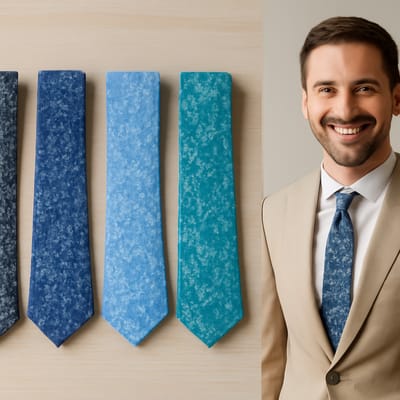
Not all “blue” reads the same. Choosing the right shade is the fastest way to make a blue floral necktie look appropriate—and make your outfit feel cohesive.
The most common blue tones (and what they signal)
- Navy: The most formal, most versatile, and easiest to wear in business settings. A navy floral can still look conservative if the flowers are small and the contrast is low.
- Royal/Cobalt: Brighter and more energetic. Great for daytime events, spring/summer, and outfits where you want the tie to be the focal point.
- Sky/Powder blue: Light and airy; pairs naturally with light gray, tan, and summer suiting. Watch contrast so it doesn’t look washed out.
- Teal/Blue-green: Fashion-forward. Works best when you repeat the green/teal note subtly (pocket square edge, shirt stripe, or jacket check).
Quick contrast rule for florals
Aim for one strong contrast only:
- Either the blue background vs shirt is high contrast (navy tie on a white shirt),
- Or the floral print vs tie background is high contrast (bright petals on navy).
When both contrasts are extreme, the tie can feel busy and distracting.
Best For Menswear enthusiasts: Start with navy and low-contrast florals to master proportion, then move into cobalt or teal once you’re confident controlling contrast and pattern density.
Floral pattern varieties: how scale changes the whole look
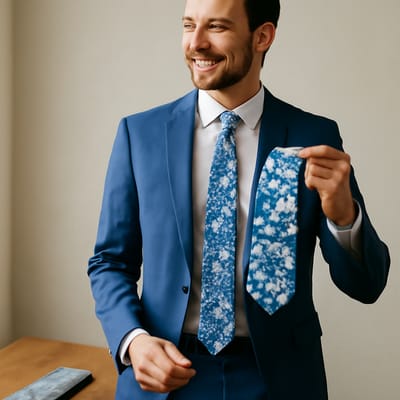
Floral pattern “scale” is the difference between a tie that reads refined and one that reads bold. It’s less about the flowers themselves and more about how far away the pattern is legible.
Small floral (micro) patterns
Micro florals look textured from a distance and detailed up close. They’re the easiest entry point for most wardrobes because they behave like a classic pattern.
- Great for: business-casual offices, interviews in creative fields, dinners
- Pairing advantage: plays nicely with subtle shirt textures (oxford, pinpoint)
Large floral patterns
Large florals are unmistakably statement-making. They need calmer supporting pieces so the tie doesn’t fight the rest of the outfit.
- Great for: weddings, garden parties, cocktail events
- Pairing advantage: works well with solid shirts and simple suits
If you want a side-by-side breakdown of when each scale works—and how to keep a big floral from overwhelming your frame—floral Necktie Pattern Variations: Small Floral vs Large Floral walks you through practical outfit pairings.
Density and spacing (the hidden lever)
Two ties can have “small flowers,” but one looks louder because the flowers are packed closer together. When in doubt, choose a tie with more background showing—it reads cleaner and is easier to match.
Best For Gift shoppers: Micro florals are the safest choice when you don’t know the recipient’s style. They feel special without demanding a specific wardrobe.
How do you coordinate shirts, suits, and pocket squares?

A blue floral tie is easiest to style when you treat it like the “pattern anchor,” then keep everything else quiet. Your job is to manage pattern mixing and color repetition so the tie looks intentional.
Shirt pairing that rarely fails
- White shirt: Maximum clarity; makes any blue tone look sharper.
- Light blue shirt: Softer contrast; works best with navy or cobalt ties for definition.
- Subtle stripes: Acceptable if stripes are thin and the floral is small-to-medium.
For a deeper set of do’s/don’ts (including what to avoid with checks and bold stripes), pairing Blue Floral Neckties with Shirts: Best Practices gives you outfit logic you can reuse.
Suit and jacket guidelines
- Navy suit: A classic match; choose a floral that includes a lighter petal color to prevent “blue-on-blue flatness.”
- Gray suit (light to charcoal): Very forgiving; great backdrop for cobalt or sky-blue florals.
- Tan or brown suits: Excellent with sky blue or teal accents; keep petals warm (cream, muted pink) if possible.
Pocket squares without the “matchy-matchy” problem
Instead of matching the exact floral print, match one element:
- Pull one petal color (cream, pink, light blue) into a simple pocket square.
- Or choose a solid linen white for a clean, formal look.
Best For Wedding & event planners: When coordinating groups, keep shirts consistent (usually white) and vary floral scale or shade of blue to create cohesion without clones—especially helpful across groomsmen of different builds.
Best For Menswear enthusiasts: If you mix patterns, vary scale: small floral tie + larger windowpane jacket, or larger floral tie + solid suit. Two similarly sized patterns tend to vibrate visually.
Occasion-based styling: business, casual, and weddings
Context matters as much as color. The same blue floral necktie can look sharp at a reception and slightly out of place in a conservative boardroom—unless you adjust the supporting pieces.
Business vs casual: make it work without guessing
In general, business outfits want lower contrast and smaller florals, while casual outfits can handle brighter petals and larger blooms. If you’re deciding where your tie lands on that spectrum, blue Floral Neckties for Business vs Casual Settings provides clear guardrails.
Wedding styling (grooms, guests, and planners)
Blue florals are especially strong for weddings because they feel celebratory without being loud.
- Groom: Choose a slightly richer tie (navy or cobalt) and a cleaner floral layout so you look elevated in photos.
- Guests: You can go brighter or more patterned, but keep shirt and suit simple.
- Seasonality: Navy works year-round; sky blue shines in spring/summer; teal reads modern in fall.
For groom-specific details—like matching the venue formality and coordinating with party colors—groom's Guide: Wearing Blue Floral Necktie for Weddings is the dedicated playbook.
Best For Wedding & event planners: If a couple wants “floral” without literal boutonniere repetition, a blue floral tie delivers the theme subtly. Use floral scale (small for formal, large for playful) as your control knob.
Best For Gift buyers: If you’re buying for someone with an upcoming event, pick navy with a medium-small floral. It’s formal enough for weddings but still wearable afterward.
Fabrics, care, and longevity: what to buy (and how to keep it)
With blue floral neckties, fabric choice isn’t just feel—it changes shine, knot structure, and how “premium” the pattern looks.
Fabric options you’ll see most often
- Silk: The standard for drape and color depth. Floral details often look crisp, and knots hold shape well.
- Satin: Higher sheen; can look dressier but also less forgiving in bright light (the shine amplifies contrast).
- Cotton: More matte and casual; great for warmer months and relaxed tailoring.
If you want a clear comparison of benefits and trade-offs, including when satin can look too glossy, materials and Fabrics for Blue Floral Ties: Silk, Satin, Cotton lays it out simply.
Care basics that keep florals looking sharp
Floral ties show creases and wear faster because your eye is drawn to the print. A few habits protect shape retention and color clarity:
- Untie the knot fully (don’t yank) to avoid permanent wrinkles.
- Let the tie rest after wear so fibers recover.
- Spot-treat carefully; avoid aggressive home washing.
For wrinkles, cleaning, and storage specifics—especially what to do when the tie gets crushed in luggage—care Guide for Floral Neckties: Wrinkles, Cleaning, Storage is your step-by-step reference.
Best For Gift shoppers: If you’re gifting a tie, consider including a simple care note (or choosing a more forgiving weave). It’s a small touch that helps the gift stay looking new.
Best For Menswear enthusiasts: Look closely at print alignment and edge finishing; floral patterns make small manufacturing shortcuts easier to notice over time.
Buying guide: how to choose a quality blue floral necktie
When you’re shopping blue floral neckties, focus on a few quality signals that directly affect how the tie wears and how the pattern looks in real life.
What “quality” looks like in practice
- Construction: A tie that forms a clean dimple and releases wrinkles more easily is usually built better.
- Pattern clarity: Florals should look intentional, not blurry or muddy—especially on darker navy grounds.
- Proportion: Tie width should match your lapel width and body frame; overly skinny ties can make large florals look even louder.
- Versatility: If you’re buying your first one, choose navy/white pairing potential and a small-to-medium floral scale.
Price bands (and what to expect)
- Budget: Great for trying the look, gifting, or building variety—just be more selective about fabric feel and print sharpness.
- Mid-range: Usually the best balance of drape, finishing, and color depth.
- Premium: Often pays off in fabric hand-feel, long-term shape, and refined printing.
If value is your priority, budget Blue Floral Neckties: Value Picks helps you shop smart without settling for a tie that looks cheap up close.
A quick checklist before you buy
- Can you name two shirts you already own that work with it?
- Does the floral scale match where you’ll wear it (office vs event)?
- Is the blue tone compatible with your go-to suit color?
Best For Gift buyers: If you don’t know sizing preferences, choose a classic width and a micro floral. It’s the highest-probability “he’ll actually wear it” option.
Best For Wedding & event planners: When buying multiple ties, keep blue tone consistent across the group, then vary floral pattern slightly so photos look coordinated but not identical.
FAQ: Blue Floral Neckties
Are blue floral neckties appropriate for formal events?
Yes—especially in navy tones with small, low-contrast florals and a silk finish. Pair with a white shirt and a dark suit to keep the look formal and photo-ready.
What shirt color works best with a blue floral tie?
White is the most reliable because it creates clean contrast and makes the floral colors look intentional. Light blue also works well, especially with navy or cobalt ties that have enough definition.
How do I choose small floral vs large floral for my build?
Small florals generally look more subtle and are easier on shorter or slimmer frames. Large florals can look great on broader builds, but they need a calm outfit (solid shirt and suit) so the tie doesn’t dominate.
What should wedding and event planners consider when coordinating floral ties?
Decide on a consistent blue tone first (navy, cobalt, or sky), then keep shirts uniform—usually white. Use floral scale and petal accent colors to create variety without visual chaos in group photos.
Is a blue floral tie a good gift for someone with conservative style?
Yes, if you choose a navy base with a micro floral pattern and muted petal colors. It reads classic at a glance but still feels more thoughtful than a plain solid.
What should menswear enthusiasts look for in higher-end floral ties?
Pay attention to print crispness, pattern balance, and how the tie forms a knot and dimple. Higher-quality ties also tend to recover from wrinkles better and maintain cleaner edges over time.
How do I store and clean a floral necktie to avoid wrinkles?
Untie it fully after wearing, let it rest, and store it either rolled loosely or hung so it can relax. For stains, avoid aggressive washing and use careful spot cleaning or professional care when needed.
Can gift shoppers buy blue floral ties in bulk for teams or parties?
They can, but it’s best to standardize the blue tone and choose a medium-small floral scale for broad appeal. If you’re buying multiple, order early so you can check consistency and return mismatches if needed.
Explore Blue Floral Neckties Hub
- Blue Floral Neckties: Color Theory and Styling Guide
- Pairing Blue Floral Neckties with Shirts: Best Practices
- Floral Necktie Pattern Variations: Small Floral vs Large Floral
- Materials and Fabrics for Blue Floral Ties: Silk, Satin, Cotton
- Groom's Guide: Wearing Blue Floral Necktie for Weddings
- Care Guide for Floral Neckties: Wrinkles, Cleaning, Storage
- Budget Blue Floral Neckties: Value Picks
- Blue Floral Neckties for Business vs Casual Settings