Small vs Large Floral Neckties: Style Guide 2026
Breadcrumb
Small or large floral necktie: which looks more “right” on you?

A blue floral necktie can look sharp and intentional—or loud and distracting—mostly based on one thing: pattern scale. If you’ve ever tried a floral tie and felt it looked “off,” chances are the flowers were too small to read from a distance, or too large for the outfit’s overall contrast.
The quick difference
- Small floral (micro to small blooms): reads as a refined texture from a few feet away.
- Large floral (big blooms, bold spacing): reads as a statement pattern immediately.
Why scale matters (more than you think)
Pattern scale controls how formal your tie feels, how much attention it pulls, and how easily it pairs with shirts and suits. With blue tones specifically, scale also changes the vibe: small florals can feel classic and business-friendly, while large florals lean expressive—great when you want the tie to be the focal point.
What you’ll get from this guide
You’ll learn how to pick small vs large floral based on your body proportions, outfit contrast, and occasion (work, weddings, evening events). You’ll also get practical pairing rules so your blue floral necktie looks deliberate—not like a last-minute gamble.
When does a small floral tie look better than a large floral tie?

Small floral patterns solve the most common pain point: “I want a floral tie, but I don’t want it to scream.” A small floral necktie keeps the look controlled, especially in blue, where darker tones already read more formal.
Best situations for small floral
- Office and interviews: Small flowers behave almost like a solid from a distance.
- Low-contrast outfits: Navy suit + light blue shirt + small floral tie stays cohesive.
- You’re wearing other texture: Tweed, flannel, or a patterned pocket square pairs more safely with small florals.
Fit and proportions (an easy rule)
If you’re slim to average build, or you wear narrower ties (around 2.5–3.0 inches), small florals often look more balanced. Large blooms on a narrow tie can feel cramped and busy.
Pairing rules that reduce “pattern clash”
- Pick one hero pattern: if the tie is floral, keep the shirt mostly solid.
- If you do a patterned shirt, go micro: a fine stripe or tiny check.
- Keep contrast moderate: a bright white shirt can make small florals pop more than you expect.
If you’re building your first blue floral necktie rotation, small-scale florals are usually the safest “buy once, wear often” choice.
When does a large floral tie look stylish (not overwhelming)?

A large floral necktie works when you treat it like a centerpiece. The main pain point here is fear of looking costume-y. The fix is to control everything around it: contrast, pattern mixing, and overall formality.
Best situations for large floral
- Weddings and social events: Large blooms feel celebratory and intentional.
- Simple tailoring: A solid navy or charcoal suit gives the tie room to shine.
- Creative or smart-casual settings: Blazers, knitwear, and open-collar looks handle bold scale well.
How to keep it balanced
- Lower the contrast: If the tie has light blue blooms, choose a shirt in light blue, off-white, or soft gray instead of stark white.
- Mind the jacket pattern: Avoid pairing large floral with windowpane, bold pinstripes, or loud checks.
- Use “one loud item” logic: Keep pocket squares simple (solid or minimal texture).
Body scale and tie width
Large florals tend to look best on average-to-broad frames and on standard-width ties (around 3.0–3.5 inches). Bigger pattern + wider tie = cleaner readability.
If you love large florals but worry they’re too much, pick a blue floral necktie where the background is darker and the flowers are fewer and more spaced—same bold scale, calmer impact.
Small floral vs large floral: a practical buying checklist (with prices in mind)
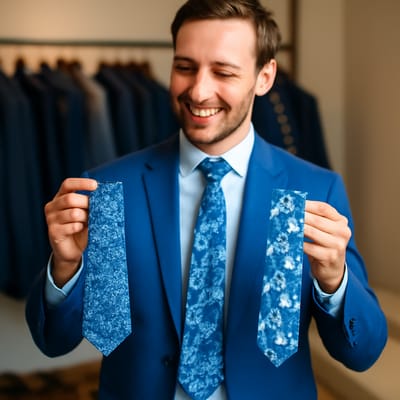
If you’re shopping non-brand, the biggest pain point is uncertainty: photos look great, but you don’t know what you’ll get. Use this checklist to choose the right blue floral necktie scale and avoid common disappointments.
Checklist: choose your pattern scale in 60 seconds
- Occasion first:
- Work/interviews → small floral
- Weddings/parties → large floral (or small if you prefer conservative)
- Shirt plan:
- Mostly solid shirts → either works
- Lots of patterned shirts → small floral is safer
- Suit/jacket pattern:
- Solid suit → either works
- Patterned suit → small floral (or switch to a solid tie)
- Your contrast tolerance:
- Prefer subtle → small floral with close-tone blues
- Prefer bold → large floral with clear light/dark separation
Fabric and finish (affects how “loud” it feels)
- Silk: higher sheen, patterns look more vivid (large florals get bolder).
- Wool or matte blends: tones down contrast (helps large florals feel wearable).
- Textured weaves: make small florals read richer instead of “busy.”
Price guidance (typical ranges)
- Budget: good for experimenting with scale; check stitching, lining, and print sharpness.
- Mid-range: often better fabric hand-feel and cleaner pattern edges.
- Premium: pays off when you want a large floral that still looks refined up close.
Optional download (lead magnet)
If you want a fast way to match blues to shirts and suits, create a one-page blue color coordination checklist you can save on your phone while shopping.
Frequently Asked Questions

Are small floral ties more formal than large floral ties?
Usually, yes. Small floral patterns read like a subtle texture at a distance, which fits business and formal settings more easily than bold, large blooms.
Can I wear a large blue floral necktie to the office?
You can, but keep the rest of the outfit simple: solid suit, solid shirt, and minimal accessories. If your workplace is conservative, choose a darker blue background with fewer flowers.
What shirt pattern works with a floral tie?
Solid shirts are the easiest match. If you want a patterned shirt, stick to micro-stripes or small checks so the tie stays the dominant pattern.
How do I know if the floral pattern is “too busy”?
Step back 6–8 feet from a mirror (or use your phone camera). If the flowers blur into visual noise, the pattern is likely too dense or too high-contrast for your outfit.
Does tie width affect whether small or large florals look good?
Yes. Small florals can work on narrow or standard widths, but large florals usually look cleaner on standard-width ties where the blooms have room to breathe.
Are floral ties appropriate for weddings?
Absolutely. Small florals can look classic and polished, while large florals feel festive and expressive—choose based on the wedding’s dress code and your comfort with contrast.
What fabric is best for a blue floral necktie if I want it to look less bold?
Choose a matte fabric (like wool or a low-sheen blend) or a textured weave. These reduce shine and soften contrast, making florals feel more understated.