Solid Black Necktie for Weddings: Guide 2026
Breadcrumb
When is a solid black necktie right for a wedding?
A solid black necktie for weddings can look clean, modern, and formal, but it only works when you match it to the actual dress code and the couple’s tone. In the wrong setting, black can read like business attire, or worse, funereal. In the right setting, it looks intentional and photographs beautifully.
Quick rule of thumb by dress code
- Black Tie: Usually a black bow tie, not a necktie. A black necktie may be acceptable only if the invitation clearly allows “black tie optional” or the couple is relaxed.
- Black Tie Optional / Formal: A solid black necktie is a safe, polished choice with a dark suit.
- Cocktail / Semi-formal: Black works, but consider adding texture (grenadine, ribbed silk) so it doesn’t look like office wear.
- Beach / Garden / Daytime: Black can feel heavy. If you still want black, lighten everything else (shirt, pocket square, and overall contrast).
Wedding planners often care most about consistency across photos. If you’re coordinating a groom’s party, pick one black tie style (same width and finish) and let variation show up in pocket squares or boutonnieres instead of mixing shiny and matte blacks.
For a deeper foundation on the simplest, most reliable base, how to style a solid black necktie with white shirts covers the combinations that rarely fail.
How do wedding dress codes change black tie pairing?

A solid black necktie is all about context. The same tie can look sleek at an evening ballroom wedding and out of place at a casual daytime ceremony.
Black tie vs. black necktie (yes, it matters)
Black Tie traditionally means tuxedo, black bow tie, formal shirt, and black patent shoes. If you wear a necktie with a tux, it can read as “prom formal” unless it’s clearly styled with intention (matte textures, proper collar, clean proportions). When in doubt, don’t try to reinterpret the code.
Black tie optional / formal (the sweet spot)
This is where a black necktie shines. Pair it with:
- A charcoal or midnight/navy suit for depth
- A crisp white shirt for contrast
- Minimal pattern so the tie looks purposeful
Cocktail and semi-formal
To avoid the “corporate meeting” vibe, use one upgrade:
- Choose a textured fabric (grenadine, shantung-like weave, wool).
- Add a refined accessory (silver tie bar, white linen pocket square).
If you’re comparing outfits across a group (groomsmen, ushers, vendors), the fastest way to keep it cohesive is to standardize suit color first, then tie finish. The broader pairing logic is laid out in color matching guide: shirt and suit combinations with black ties, which helps you avoid mismatched “almost black” tones in photos.
Occasion wear retailers can also use these dress-code distinctions to guide customers quickly: “tux event” vs. “dark suit event” determines whether they should even be looking at neckties.
What to wear with a solid black necktie (suits, shirts, shoes)
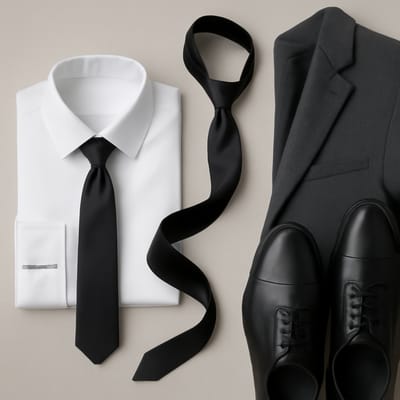
If your goal is sharp wedding styling, build around contrast and tone. Black is unforgiving: tiny mismatches in shirt white, suit darkness, or shoe finish show up immediately.
The most reliable pairings
- White shirt + charcoal suit + black tie: Modern, high-contrast, consistently flattering.
- White shirt + navy suit + black tie: Great for evening weddings; choose deep navy, not bright blue.
- Light blue shirt + charcoal suit + black tie: Slightly softer than white, still formal.
Pairings to be careful with
- Black shirt + black tie: Low contrast can look flat on camera and may skew nightclub rather than wedding.
- Brown shoes + black tie: Can work with navy, but only if the brown is very dark and the belt matches precisely.
- Black suit + black tie: Very formal, but easy to drift into “staff uniform” unless you add texture and immaculate fit.
Small details that make it look wedding-appropriate
- Keep the tie knot neat (four-in-hand for slimmer ties, half-Windsor for medium widths).
- Match metal tones: if you wear a watch and belt buckle, keep them in the same family as your tie bar/cufflinks.
- Choose a pocket square that supports the wedding palette (often white linen is perfect).
If your outfit starts with the classic white-shirt base, how to style a solid black necktie with white shirts helps you dial in collar types, knot size, and proportion so the tie doesn’t overpower your look.
Which fabric and texture looks best for wedding photos?
For weddings, the best solid black necktie is rarely the shiniest one on the rack. Camera flash and venue lighting can turn high-gloss satin into a bright stripe. You want controlled sheen and visible texture so black reads as rich, not flat.
Fabric choices that work well
- Silk (classic twill or ribbed): Versatile, formal, and the easiest to dress up.
- Grenadine-style weave: Subtle texture that looks premium and avoids glare.
- Wool or wool-blend: Great for fall/winter weddings; matte and refined.
- Microfibre: Budget-friendly and durable; choose higher-quality weaves to avoid a plasticky shine.
Texture tips to avoid “office tie” energy
- Prefer matte-to-semi-matte finishes.
- Avoid overly thin fabrics that collapse at the knot.
- If the suit is plain (solid navy/charcoal), add texture in the tie; if the suit is textured, keep the tie smoother.
Men’s fashion enthusiasts often build a small “event tie” rotation: one smooth silk, one textured weave, and one seasonal option. That gives you flexibility across venues without overbuying.
For a deeper breakdown of pros, cons, and what to look for at different price points, best fabrics for solid black neckties (silk, wool, microfibre) walks through how each material drapes, knots, and photographs.
Buying a solid black wedding necktie: what to look for
Because this is a high-visibility accessory, small construction details matter. A “just black” tie can still look cheap if it twists, wrinkles, or reflects light unevenly.
A quick buying checklist
- Width: Aim for a balanced width that matches your lapels (often in the modern middle range, not ultra-skinny).
- Length: You want the tip to land near your belt line when tied.
- Interlining: A fuller interlining helps the knot hold shape and prevents limp drape.
- Finish: Look for even edges, clean bar tacks, and a straight seam down the back.
- Color consistency: True black should not read greenish or brownish under warm lights.
Price and value (what’s worth paying for)
- Entry-level: Often fine for one event, but watch for shiny fabric and weak interlining.
- Mid-range: Usually the best value for weddings; better drape, better texture options.
- Premium: Pays off if you attend multiple formal events and want a tie that keeps its shape for years.
Occasion wear retailers can reduce returns by helping shoppers try the tie under store lighting and natural light, since black shifts easily. Wedding planners coordinating multiple people should order early and inspect ties together to ensure matching blacks.
After the wedding, proper storage keeps the tie ready for the next event. Solid black necktie care and maintenance tips explains how to untie, hang, steam safely, and prevent shine marks.
FAQ: Solid black neckties for weddings
Can I wear a solid black necktie to a black-tie wedding?
Traditionally, “Black Tie” means a black bow tie and a tuxedo. A solid black necktie may be acceptable only if the invite says black-tie optional, or the couple explicitly allows suits and neckties.
What’s the best shirt for a solid black wedding necktie?
A crisp white shirt is the most reliable choice because it creates clean contrast and reads formal in photos. Light blue can work for semi-formal events, but keep the rest of the outfit dark and structured.
How do I keep a black tie from looking like office attire?
Choose a textured fabric (like a subtle weave) or a semi-matte finish rather than shiny satin. Pair it with a formal suit color (charcoal or deep navy) and refined accessories instead of loud patterns.
As a wedding planner, how can I make black ties look consistent across the wedding party?
Standardize the tie finish and width so everyone’s black reads the same in photos. It also helps to keep shirts identical (same white tone) and avoid mixing very matte ties with very shiny ones.
As an occasion wear retailer, what should I recommend for most formal weddings?
Steer customers toward a mid-range silk or textured black tie with good interlining and controlled sheen. Encourage them to check the tie under different lighting so the “black” doesn’t shift warm or greenish.
Do men’s fashion enthusiasts need more than one solid black tie?
If you attend multiple events, two is practical: one smooth silk for strict formal settings and one textured option for cocktail or semi-formal weddings. That small rotation covers most venues without repeating the exact same look.
How should I care for a solid black necktie after the wedding?
Untie it gently, roll or hang it to relax wrinkles, and use light steam rather than aggressive ironing. Store it away from direct sunlight to prevent fading and keep the edges crisp.