Tie Clip & Cufflink Care: Maintenance Guide 2026
Why do tie clips and cufflinks tarnish or scratch so fast?
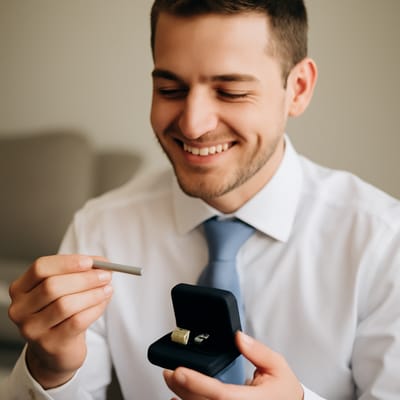
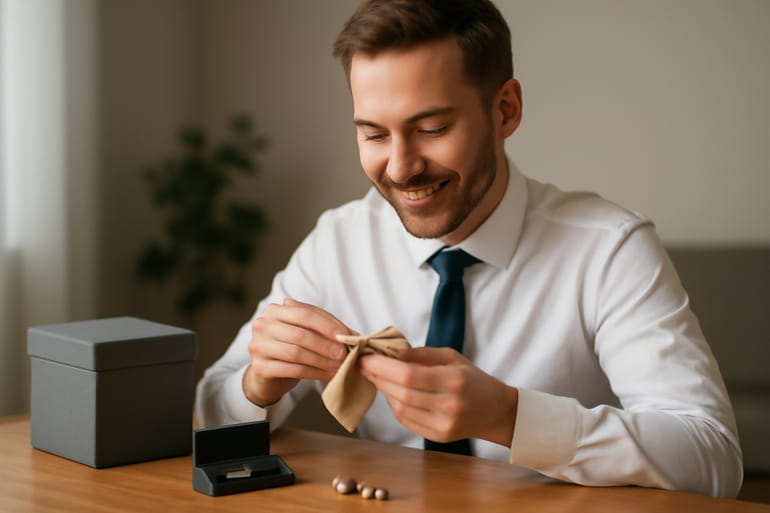
Tie clip and cufflink care matters because these small accessories take a lot of “micro-damage” in normal wear. Your tie clip rubs against a tie’s weave, jacket buttons, desk edges, and even seatbelts. Cufflinks get knocked against watch clasps, tables, and door frames—so scratches and dull patches can appear quickly, especially on high-shine finishes.
The usual culprits (and how to avoid them)
- Moisture & skin oils: Aftershave, hand cream, and sweat can leave a film that dulls shine. Wipe pieces with a soft cloth after wearing.
- Friction: Sliding a tie clip on and off repeatedly can scuff plating. Open it gently rather than forcing it.
- Air exposure: Some metals and finishes naturally oxidise, causing tarnish. Keep items in a closed box or pouch.
- Contact with harder items: Keys and coins will scratch metal accessories fast—avoid tossing them into pockets.
A quick “wearing” checklist
- Put cufflinks on over a soft surface (bed or folded towel) to avoid drops.
- Add the tie clip last, and remove it first.
- Keep accessories away from water (hand-washing, rain) where possible.
If you’re buying for a wedding party or as a gift, good maintenance keeps everything photo-ready—and avoids that disappointing “cloudy metal” look on the big day.
How should you clean tie clips and cufflinks at home (without damage)?
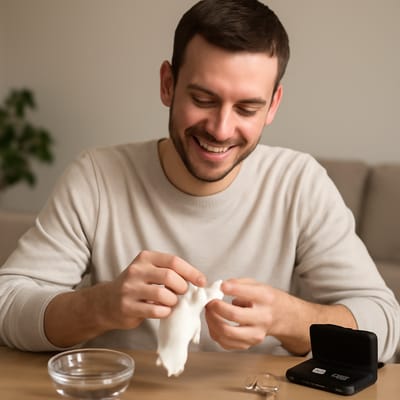
The safest tie clip and cufflink care routine is simple: gentle cleaning often, deeper cleaning rarely. Most damage happens when people use harsh chemicals or abrasive cloths trying to “restore shine” quickly.
Everyday cleaning (after each wear)
- Use a dry microfibre cloth to remove fingerprints and skin oils.
- For textured designs, use a soft, clean makeup brush to lift dust from grooves.
Deeper cleaning (when the shine has dulled)
- Mix a bowl of lukewarm water with a drop of mild washing-up liquid.
- Dip a soft cloth (don’t soak the piece) and wipe gently.
- Rinse the cloth with clean water and wipe again to remove soap.
- Dry immediately with a microfibre cloth.
Important cautions (especially for plated finishes)
- Avoid silver dip, bleach, vinegar, and strong jewellery cleaners unless the seller confirms they’re safe for your finish.
- Avoid paper towels—they can leave fine scratches on polished surfaces.
- If your cufflinks include inlays (enamel, mother-of-pearl look, stones), keep water exposure minimal and don’t scrub edges.
If you’re shopping, look for product pages that clearly state the material/finish and include care notes. That’s usually a good sign the finish will hold up better with normal wear.
What’s the best way to store tie clips and cufflinks to prevent scratches?

Storage is the make-or-break part of tie clip and cufflink care. You can clean perfectly, then ruin the finish by dropping everything into one drawer where pieces rub together.
Storage options that actually work
- Individual pouches: Ideal for travel and gifting. Each piece stays isolated.
- Compartment boxes: Best at home—one slot per pair of cufflinks and one per tie clip.
- Original packaging: Often designed to prevent movement; keep it if it’s sturdy.
Anti-scratch rules (simple but effective)
- Store accessories completely dry. Even tiny moisture can encourage tarnish.
- Keep different metals separated. Harder edges can mark softer finishes.
- Don’t stack tie clips. Their springs and edges are common scratch points.
Wedding party and gift-buyer tip
If you’re organising groomsmen accessories, label compartments by name and keep a spare cloth in the box. On the day, a quick wipe takes 10 seconds and avoids “fingerprint shine” in close-up photos.
If you’re browsing sets, consider choosing a storage-friendly format (for example, a box set rather than loose pieces). It’s not just presentation—it’s long-term protection.
Can you polish a tie clip or cufflinks—and when should you not?

Polishing is useful, but it’s also where many people accidentally strip a finish. The safest approach depends on whether your pieces are solid metal, plated, or coated.
When polishing is a good idea
- Light surface dullness on solid metal items.
- Minor marks on a brushed finish (polish lightly and follow the grain).
When you should avoid polishing
- Plated finishes: Aggressive polishing can wear through plating, revealing a different base colour.
- High-gloss coatings: Some coatings scratch or haze if you use metal polish.
- Mixed-material cufflinks: Polish can stain enamel or seep into joins.
A safer “polish-lite” method
- Start with a microfibre cloth only.
- If needed, use a non-abrasive jewellery polishing cloth made for your metal.
- Stop as soon as the shine returns—more rubbing isn’t better.
What to do about deeper scratches
Deep scratches usually can’t be truly removed without refinishing. If it’s a special occasion piece, you might prefer to replace it or reserve it for low-risk wear.
Buying tip: if you expect heavy use (daily office wear, lots of travel), consider finishes that hide wear better—brushed or matte styles tend to show fewer marks than mirror-polished pieces.
How do you keep accessories looking “gift-ready” for weddings and formal events?

For weddings, black-tie events, and gifting, tie clip and cufflink care is really about consistency: keeping pieces clean, matching, and free of last-minute surprises.
A 7-day pre-event routine (simple and low-stress)
- 7 days out: Inspect under bright light. Check for cloudy patches, loose fittings, or bent tie clip tension.
- 3 days out: Gentle wash (lukewarm water + mild soap), then dry fully.
- 1 day out: Final microfibre wipe and pack properly (separate compartments).
On-the-day emergency kit (tiny but effective)
- Microfibre cloth
- Cotton buds (for grooves)
- A small zip pouch (to store pieces safely after photos)
If you’re choosing accessories now
For wedding parties and gifts, sets can simplify your coordination: matching finishes look intentional in photos, and buying together often means consistent colour tone.
If you want a ready-to-go option, look for tie clip and cufflink sets that include a protective box and clear material details. That makes it easier to maintain, easier to gift, and easier to reorder later if you need extra pieces for new groomsmen or replacements.
Frequently Asked Questions

How often should I clean a tie clip and cufflinks?
Wipe them with a microfibre cloth after each wear to remove oils. Do a gentle soap-and-water clean only when you notice dullness or residue.
Can I use jewellery cleaner on cufflinks?
Only if the cleaner is confirmed safe for the specific metal and finish. Avoid harsh dips or abrasives on plated or coated pieces, as they can strip the surface.
Why is my tie clip losing its shine?
Most loss of shine comes from fingerprints, skin oils, and tiny surface scratches. Regular wiping and proper storage (separate compartments) usually restores the look.
What’s the safest way to store cufflinks when travelling?
Use individual pouches or a travel case with separate slots so pieces don’t rub together. Keep them dry and away from keys, coins, and chargers.
Can I fix a loose cufflink fitting?
Sometimes you can gently tighten a moving part, but forcing it can snap the mechanism. If it’s a sentimental or wedding piece, it’s safer to have it checked or replaced.
Do brushed finishes scratch less than polished finishes?
They don’t scratch less, but they typically hide marks better than mirror-polished surfaces. For everyday wear, brushed or matte styles can look newer for longer.
How do I prevent tarnish on metal accessories?
Keep them clean, dry, and stored in a closed box or pouch away from humid bathrooms. A quick wipe after wearing makes a big difference over time.