Bolo Tie History: Origins to Modern Style Guide 2026

Breadcrumb
Home > neckties > types of Necktie > bolo Tie
Where did the bolo tie come from—and why does it matter today?
Bolo tie history isn’t just trivia—knowing the historical origins helps you spot an authentic design, avoid costume vibes, and choose a piece that fits your wardrobe today. The bolo tie (a cord with decorative tips and a sliding clasp) is most strongly associated with the American Southwest, where Western wear blended Indigenous craftsmanship, ranch culture, and later, mainstream menswear.
The most accepted origin story (in plain terms)
Most accounts trace the modern bolo tie to the mid-20th century Southwest, popularized as a practical, rugged alternative to a standard necktie. The defining innovation wasn’t the cord itself—people had worn cords and laces at the neck for generations—but the sliding clasp that lets you adjust height and tension quickly.
Why the origin still affects what you buy
That Southwest lineage shaped what many people still consider “right” in a bolo tie:
- A substantial slide (often metalwork) that reads like jewelry
- A cord that drapes cleanly rather than twisting
- Finished tips (aiguillettes) that add weight and stop fraying
If your goal is to look modern, you don’t need a museum piece—but you do want a design that respects the form. For a practical selection framework (cord thickness, slide size, and how it should sit), see the related guide titled “Bolo Tie Buyer's Guide: Materials, Fit, and Sizing.”
What design features survived from early bolo ties (and what changed)?
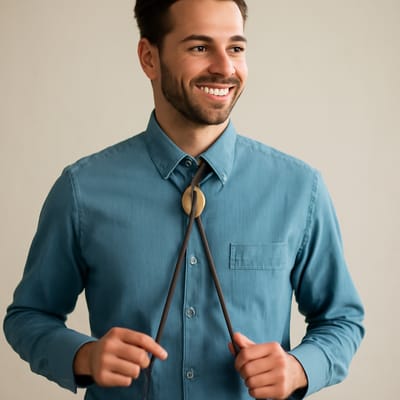
The biggest reason bolo ties have lasted is that the core design solves real problems: it’s adjustable, comfortable, and visually strong without needing a full suit-and-tie commitment. But modern adaptations have changed details that affect how the tie looks—and how “Western” it feels.
What stayed consistent
A traditional bolo tie look still relies on three essentials:
- Cord: typically leather or braided material with enough stiffness to hang neatly
- Slide (clasp): the centerpiece—often the visual “statement”
- Tips: weighted ends that keep the line clean
The classic proportion is a slide that’s noticeable but not oversized, paired with tips that add subtle shine and structure.
What modern makers adapt
Modern bolo tie styling has shifted in a few predictable ways:
- Slimmer cords for a cleaner, city-friendly silhouette
- Minimal slides (geometric, matte finishes) that feel more contemporary
- Alternative materials that lower cost or change the vibe (synthetics, coated metals)
A quick authenticity check
If the slide creeps down or won’t hold position, the tie will look sloppy fast. Also watch for tips that are too light (the ends float and curl) or crimped poorly (they snag fabric).
If you want the bolo to integrate with tailoring—without looking like you’re wearing a themed outfit—pair these design cues with outfit rules from “How to Style a Bolo Tie with Suits, Shirts, and Casual Looks.”
How did bolo ties move from Western wear to modern street and formal looks?

A major pain point with bolo ties is fear of looking “too Western” (or like you’re wearing a costume). The good news: modern adaptations have created clear lanes—Western, smart-casual, and even formal—without changing the basic structure.
The Western lane: tradition-forward
This is the most recognizable route: a bold slide, sturdy cord, and visible tips. It pairs naturally with denim, chambray, suede, and boots. Here, the bolo tie isn’t trying to imitate a necktie; it’s functioning as Western neckwear with jewelry-like impact.
The modern lane: understated and intentional
For city outfits, the adaptation is mostly about restraint:
- Smaller, simpler slide
- Dark cord that blends into the shirt
- Minimal contrast at the tips
This lane works best when the rest of the outfit is clean—think solid shirts, subtle textures, and one “hero” accessory.
The formal lane: when it can work
A bolo tie can replace a necktie in dressier settings if the slide reads as refined metalwork rather than novelty. The shirt collar matters too: collars that sit neatly (and don’t collapse) keep the look sharp.
If you’re unsure, choose one variable to modernize (slide shape or cord thickness), and keep everything else classic. Then you can adjust toward bolder or cleaner looks over time—without buying multiple ties immediately.
Modern adaptations: choosing materials and price points without regrets
Another common pain point is spending money on a bolo tie that feels cheap in person. Materials and construction determine whether it looks like a refined accessory—or a novelty item.
Material choices that change the feel
- Leather cord: the most classic; tends to drape well and age naturally
- Braided cords: often hold shape better, can look more polished
- Metal slides: finish matters—clean edges and consistent plating read premium
What you’re really paying for is how the slide is made (detail, weight, finishing) and whether the cord/tips hang correctly.
Practical price tiers (what to expect)
- Budget: simpler slides, lighter tips; fine for experimenting, but inspect the clasp grip
- Mid-range: better slide finishing, more reliable hardware, nicer cord
- Premium: substantial slide, refined detailing, durable tips, and a better “hang”
Buying checklist (fast)
Before you buy, confirm:
- The slide holds its position without constant re-tightening
- The tips have enough weight to keep the cord straight
- The cord thickness matches your style goal (thin = modern, thicker = traditional)
- The slide size fits your body frame (too large can overwhelm)
For keeping that investment looking good long-term, “Bolo Tie Care: Cleaning, Storage, and Maintenance” is worth a read—especially if you choose leather cords or polished metal slides.
Best For each audience: how to pick a bolo tie that fits your situation
Bolo tie history explains why the shape works; your lifestyle decides which adaptation makes sense. Use these quick callouts to avoid the most common mis-buy: choosing a bolo that’s right in theory but wrong for your real use.
Best for young adults (18–24) exploring casual neckwear
Go modern and low-risk: a slimmer cord, smaller slide, and neutral colors. You’ll get the look without feeling overdressed, and it pairs easily with tees, open collars, and light jackets.
Best for fashion bloggers and influencers
Choose a bolo with a strong visual point: a distinctive slide shape, a finish that catches light on camera, and tips that hang symmetrically (asymmetry is very noticeable in photos and video). Consider owning one classic version and one modern minimal version for range.
Best for men’s fashion enthusiasts
Aim for quality construction: a slide with clean finishing, reliable grip, and a cord that drapes perfectly. This is where mid-range to premium options tend to feel worth it because the details hold up at close distance.
Best for gift buyers
Prioritize versatility and sizing flexibility: medium slide size, neutral metal tone, and an adjustable clasp that stays put. If you’re unsure of the recipient’s style, choose an understated slide—bold Western pieces are harder to guess correctly.
If you want a simple next step, build a shortlist across two price tiers (mid-range and premium) and compare materials and hardware—those factors matter more than trendy patterns.
Frequently Asked Questions
Are bolo ties Native American in origin?
Bolo ties are strongly associated with the American Southwest, including Indigenous craftsmanship influences, but the modern bolo tie form is generally traced to mid-20th-century Western wear. It’s best to view it as a regional style shaped by multiple cultures.
When did bolo ties become popular?
They rose to broad popularity in the mid-1900s, especially in Southwestern states where Western wear was common. Their adjustability and rugged practicality helped them spread beyond ranch culture.
Can young adults (18–24) wear a bolo tie without looking overdressed?
Yes—choose a slimmer cord and a minimal slide, and wear it with an open-collar shirt or a tee layered under a jacket. Keeping the slide smaller and the colors neutral makes it feel modern and casual.
What kind of bolo tie photographs best for fashion bloggers or influencers?
A slide with clear geometry or reflective finishing tends to read well on camera, as long as it isn’t overly large. Make sure the tips hang evenly and the slide doesn’t drift during movement.
What details do men’s fashion enthusiasts usually care about most?
Hardware quality and proportion: a slide that grips reliably, clean metal finishing, and tips with enough weight to keep the cord straight. These details are what separate a refined accessory from a novelty piece.
Is a bolo tie a good gift if I don’t know the recipient’s style?
It can be, if you pick a versatile option: medium slide size, neutral finish, and an adjustable clasp that holds. Avoid very bold Western motifs unless you know the recipient loves that look.
How do I keep a bolo tie from slipping down during the day?
Look for a slide with a firm, well-designed clasp and a cord that isn’t too slick. If it still slips, a slightly thicker cord or better-quality hardware usually solves the issue.
Can a bolo tie work with a suit?
It can, especially with a clean slide and a crisp collar that supports the cord. Keep the rest of the outfit simple so the bolo reads as an intentional replacement for a necktie, not a costume accessory.