Bolo Tie Materials: Buyer’s Guide to Cord & Slide 2026

Breadcrumb
Home > Neckties > Types of Necktie > Bolo Tie
Which bolo tie materials matter most when buying?
Bolo tie materials determine how the piece looks, how it feels all day, and how well it holds up to regular wear. If you’ve ever had a cord that kinks, a clasp that slips, or a slide that tarnishes fast, you’ve already felt why materials are the first buying decision—not an afterthought.
The two parts that make (or break) a bolo tie
- The cord: sets comfort, drape, and longevity. Cheap cords crack or fray; better ones stay smooth and keep their shape.
- The slide (clasp): sets the “jewellery” impact and the security of the fit. Good slides resist corrosion and grip without chewing up the cord.
A quick way to shop smarter
- Start with how you’ll wear it: daily casual, office smart-casual, or suit-level dress.
- Choose a cord material that matches that use (comfort + durability).
- Choose a slide material and finish that won’t look tired after a few months.
You don’t need brand names to buy well. In the UK non-brand market, quality usually shows up in material cues: clean edges, solid weight, smooth plating, and hardware that moves with a controlled, not scratchy, feel.
Cord materials: leather, braided, or chain—what’s best?

The cord is where most “regret purchases” happen: stiff cords that won’t sit flat, or soft cords that stretch and make the slide drift. Here’s how the common options compare.
Leather cord (most classic)
Pros: natural look, comfortable, ages with character. Often the best match for Western-inspired styling.
What to check:
- Thickness (usually ~3–5 mm): thicker reads more rugged; thinner looks cleaner with tailoring.
- Finish: smooth leather looks dressier; rougher leather reads casual.
- Weak points: cracking at bend points if stored tightly or exposed to heat.
Braided cord (nylon/polyester or faux leather)
Pros: very durable, consistent colour, less prone to cracking. Great if you wear a bolo tie often.
What to check:
- A tight braid that doesn’t “fuzz” after a few wears.
- Ends (tips) that are firmly crimped so the braid can’t unravel.
Chain or metal-linked cords
Pros: striking, jewellery-like, and very stable shape.
Trade-offs: heavier and less flexible; can feel cold on the neck; more “statement” than everyday.
Best For: Young adults (18–24)
If you’re experimenting with casual neckwear, start with a braided cord. It’s affordable, tough, and forgiving if your style changes in six months.
Slide materials and finishes: what looks premium (and lasts)?
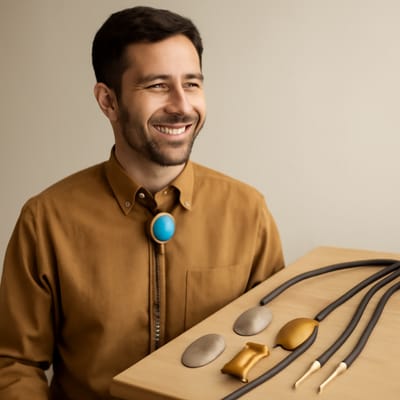
The slide is the focal point, and it’s also where shortcuts show: thin stamping, rough casting lines, and plating that rubs off quickly. Material choice affects both appearance and maintenance.
Common slide materials
- Zinc alloy / base metal (often plated): affordable and common. Look for even plating and solid weight; avoid flaking edges.
- Stainless steel: great for everyday wear—strong, corrosion-resistant, and low-fuss.
- Sterling silver: a classic premium option with a softer shine. It can tarnish, but cleans up well with the right cloth.
- Brass or copper: warm tones and vintage vibes. Expect patina over time (some people love this).
Finishes you’ll see (and what they signal)
- High polish: dressier; shows scratches sooner.
- Brushed/satin: hides small marks; reads modern.
- Antique/oxidised: adds depth; hides wear; can look more “authentic” in Western styling.
What to look for in real life
- Smooth edges (no sharp spots that catch fabric)
- Even colour (patchy plating is a red flag)
- A slide back that sits flat (reduces twisting)
Best For: Fashion bloggers/influencers
If you’re shooting content, choose a slide finish that reads well on camera: brushed metal reduces glare, while antique finishes photograph with more texture and contrast.
Hardware and mechanism quality: will it grip or slip?
Even the best-looking bolo tie can become annoying if the mechanism won’t hold. The pain point is simple: you set the height, it drifts down, or it chews up the cord.
The main mechanisms (and how they behave)
- Friction grip (spring plate / tension): very common. Works well when tension is consistent and the cord thickness matches the hardware.
- Set-screw style (less common): can hold firmly but may mark the cord. Better for occasional wear than daily adjustments.
- Slider with internal teeth: can grip strongly, but low-quality teeth can shred braided cords.
A quick “quality check” you can do
- Slide it up and down the cord: it should move smoothly without grinding.
- Set it at mid-chest height and gently tug the cord ends: it should stay put.
- Inspect the cord where it passes through: there shouldn’t be visible shaving or fuzzing after a few adjustments.
Price reality (UK non-brand shopping)
You don’t need to overspend, but ultra-cheap options often cut costs in the back plate and internal grip parts. If you want reliability, prioritise mechanism build over decorative extras.
Best For: Men’s fashion enthusiasts
If you rotate accessories and care about longevity, aim for a stainless steel or sterling silver slide paired with a quality leather cord—it’s the most versatile “buy once, wear for years” combination.
Material matching: choose the right combo for your use case
Picking materials gets much easier when you start with the situation you’re dressing for. The goal is avoiding the common mismatch: a rugged cord with a dressy slide, or a delicate finish you’ll scuff in daily wear.
Everyday casual (denim, tees, overshirts)
- Best combo: braided cord + stainless steel or antique-finish base metal slide
- Why: tough, low-maintenance, and doesn’t look precious
Smart-casual office (button-downs, knit polos, relaxed tailoring)
- Best combo: smooth leather cord (3–4 mm) + brushed stainless steel or subtle silver-toned slide
- Why: clean lines, comfortable at the collar, easy to style
Dressier looks (blazers, suits, events)
- Best combo: slim smooth leather cord + sterling silver or high-quality plated slide
- Why: the cord disappears visually and the slide reads like a refined accessory
Buying tips for value (and affiliate-style comparison mindset)
When you compare options, scan listings for:
- Cord material clearly stated (not just “rope”)
- Slide material/finish specified (not just “metal”)
- Close-up photos of the back plate and cord pass-through
- Return policy (mechanism feel is hard to judge online)
Best For: Gift buyers
If you’re unsure of the recipient’s style, choose a neutral leather cord and a simple brushed silver-toned slide. It’s the safest, most wearable combination across casual and smart-casual outfits.
Frequently Asked Questions
What is the best material for a bolo tie cord?
For most people, a quality leather cord offers the best balance of comfort, classic look, and versatility. If you’ll wear it often or want low maintenance, a tight braided synthetic cord is a strong alternative.
Do sterling silver bolo tie slides tarnish?
Yes, sterling silver can tarnish over time, especially with humidity and skin oils. The good news is it usually cleans up quickly with a silver polishing cloth and proper storage.
Are braided cords “cheap,” or can they be good quality?
Braided cords can be excellent if the braid is tight, doesn’t fuzz, and the tips are securely crimped. Many durable everyday bolo ties use braided cords specifically because they resist cracking.
Which bolo tie materials are best for young adults trying the style (18–24)?
Start with a braided cord and a simple stainless steel or well-plated slide. It keeps the cost reasonable while still looking sharp in casual outfits.
What materials photograph best for fashion bloggers and influencers?
Brushed or antique-finish slides tend to photograph better than mirror-polished ones because they reduce glare. Pair them with a smooth leather cord for a clean, intentional look on camera.
What’s the best “buy it for life” material combo for men’s fashion enthusiasts?
A smooth leather cord paired with a stainless steel or sterling silver slide is the most reliable long-term setup. It’s versatile, comfortable, and easier to maintain than delicate plated finishes.
What should I choose if I’m buying a bolo tie as a gift?
Go for a neutral leather cord and a minimal silver-toned slide in a medium size. It’s broadly wearable and less likely to clash with the recipient’s wardrobe.
How can I tell if the slide mechanism will slip before I buy?
Look for close-up photos of the back plate and read reviews for words like “holds,” “grips,” or “doesn’t move.” A clear return policy also matters, because mechanism feel is one of the hardest things to judge online.