Tartan Bow Tie Styles: Classic vs Modern Guide 2026
Breadcrumb
Home > neckties > types of Necktie > bow Tie
What makes tartan bow tie styles “classic” or “modern”?
Tartan bow tie styles sit in a sweet spot: they’re traditional by nature, but they can read heritage or fashion-forward depending on shape, scale, and how you wear them. When you’re shopping for a tartan bow tie, this classic vs modern split helps you avoid the most common problem—buying a bow tie that looks great online but feels “off” once it’s on your collar.
The quick definition
- Classic tartan bow tie style: smaller to medium proportions, tidy “butterfly” or subtle “diamond” shape, restrained pattern scale, and conservative pairings (solid shirts, traditional suiting).
- Modern tartan bow tie style: bolder proportions (or intentionally narrow “batwing”), higher contrast tartans, texture-forward fabrics, and more adventurous pairings (pattern mixing, casual tailoring).
Why the difference matters when you buy
A tartan bow tie is already a statement. The “classic” route keeps the statement controlled—ideal for formal photos and repeat wear. The “modern” route turns the bow tie into the focal point—great for style personalities, themed events, and content-worthy looks.
If you’re also deciding construction, the upcoming topic Self-Tie vs Pre-Tied Tartans: Pros, Cons, and Fit is worth keeping in mind: the same tartan can look classic in a self-tie and more modern in a crisp pre-tied silhouette (or vice versa) depending on shape and stiffness.
Classic tartan bow tie styles: which shapes look timeless?
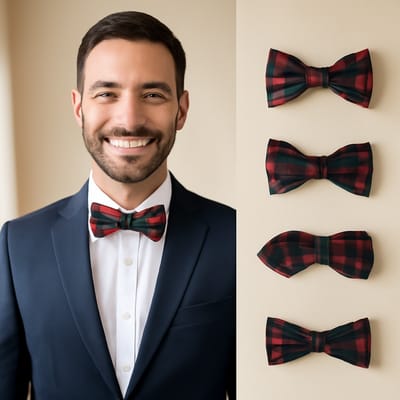
If your goal is “looks right everywhere,” classic tartan bow tie styles are the safest buy. They photograph well, don’t overwhelm your face, and pair cleanly with traditional menswear.
The most timeless silhouettes
- Butterfly (thistle): the familiar curved bow. It’s the easiest way to make tartan feel formal without being loud.
- Diamond point: slightly sharper ends that add polish; great when you want a touch of personality while staying traditional.
- Medium batwing: a narrow, straight silhouette that can be classic when kept modest and paired with a crisp shirt.
Pattern and color rules that keep it classic
- Choose medium or smaller tartan scale so the bow reads as a refined texture, not a billboard.
- Favor lower contrast palettes (deep greens, navy, burgundy) for black-tie-optional settings.
- Keep the rest of the outfit calm: solid white or pale blue shirts, simple pocket squares, minimal lapel clutter.
Best For Wedding planners
If you’re coordinating multiple people, classic tartan bow tie styles are the easiest to standardize. They’re forgiving across different face shapes, collar styles, and suit shades, which reduces last-minute fit and styling emergencies.
A related planning consideration is pattern selection for formal moments—How to Choose a Tartans Pattern for Formal Events can help you match the tartan’s mood to the venue and dress code.
Modern tartan bow tie styles: how to look current (not costume)
Modern tartan bow tie styles work when they look intentional. The risk is tipping into “theme party” territory—usually caused by oversized bows, clashing tartans, or pairing tartan with too many other statement pieces.
What makes a tartan bow tie feel modern
- Intentional proportion: either a slightly larger butterfly (balanced by broad lapels) or a clean, narrow batwing.
- High-contrast tartans: brighter lines or sharper color separation to pop on camera.
- Texture and fabric presence: matte wools, brushed finishes, or subtle slub textures that read elevated up close.
Modern outfit formulas that work
- Tartan bow tie + Oxford cloth button-down + unstructured blazer + dark denim (smart casual).
- Tartan bow tie + black or charcoal suit + solid shirt + sleek shoes (modern formal).
- Tartan bow tie + tonal knitwear (crewneck or cardigan) with a crisp collar showing (preppy-modern).
Best For Fashion students
Use modern tartan bow tie styling to practice controlled contrast: one statement accessory, one strong texture, and one quiet base. Document the look under different lighting—tartan contrast can shift a lot in flash photography.
For deeper coordination, Pairing Tartans: Best Shirt and Suit Combinations is a helpful next read when you’re building outfits around the bow tie rather than adding it last.
How do you choose between classic vs modern when buying?
Because purchase intent is high with tartan bow ties, your decision should be practical: occasion, repeat-wear potential, and how the bow tie sits on your neck.
A quick classic vs modern buying checklist
- Dress code: black-tie-optional and formal dinners lean classic; creative cocktail and daytime events can go modern.
- Your frame and collar: larger faces and wider spread collars can carry more bow; smaller frames often look sharper with modest proportions.
- How often you’ll wear it: first tartan bow tie? go classic. Second or third? try modern.
- Fabric and stiffness: softer fabrics can look relaxed (modern) but may lose crisp shape; firmer weaves hold a clean silhouette (often reads classic).
Price and value guidance (brand-neutral)
- Entry-level: good for trying a modern colorway; watch for itchy fabrics and uneven pattern alignment.
- Mid-range: better pattern matching, smoother hardware/adjusters, and more consistent sizing.
- Premium: superior fabric hand-feel, cleaner stitching, and tartan placement that looks deliberate rather than random.
Best For Gift buyers
If you don’t know their exact style, buy a classic tartan bow tie in a versatile palette and a medium silhouette. Include an adjustable neck size range and choose a fabric that feels comfortable against the collar—comfort is what determines whether your gift actually gets worn.
Finally, plan for upkeep: a tartan’s texture and color can dull if it’s handled poorly, so Tartan Bow Tie Care Guide: Maintenance & Longevity is a smart companion topic after purchase.
FAQ: Tartan Bow Tie Styles (Classic vs Modern)
Is a tartan bow tie considered formal?
Yes, a tartan bow tie can be formal when the silhouette is tidy and the outfit is classic (dark suit, solid shirt, polished shoes). High-contrast tartans and oversized shapes usually read more creative than formal.
Which is safer for a wedding: classic or modern tartan bow tie styles?
Classic tartan bow tie styles are safer for weddings because they look timeless in photos and coordinate more easily across a group. Modern styles can work well when the wedding has a creative dress code or a fashion-forward couple.
How can wedding planners coordinate tartan bow ties across the wedding party?
Pick one tartan and one bow shape, then keep shirts and suits consistent (for example, white shirts and navy suits). Confirm neck size adjustability ahead of time so fit issues don’t derail the timeline.
What should I choose if I’m buying a tartan bow tie as a gift?
Choose a classic silhouette in a versatile color palette and make sure it has a wide adjustable range. If you’re unsure about their confidence level, classic tartan is more likely to be worn often.
Are modern tartan bow tie styles appropriate for fashion school projects?
Yes—modern styles are great for experimenting with proportion, texture, and controlled pattern contrast. Keep the rest of the outfit simple so your bow tie choice is clearly the focal point.
Do classic vs modern tartan bow ties differ in sizing?
The neck sizing is usually the same, but the visual size changes with bow width and shape. If you have a shorter neck or smaller collar, a smaller classic bow often looks more balanced.
Can grooms wear a modern tartan bow tie without clashing in photos?
They can, as long as the suit and shirt are neutral and the tartan isn’t competing with other patterns. A single statement accessory photographs cleaner than multiple bold elements.
How do I keep a tartan bow tie looking crisp over time?
Avoid crushing it in a pocket, spot-clean carefully, and store it flat or loosely hung. Fabrics and weaves vary, so follow care guidance that matches the material to prevent fading and distortion.