Types of Neckties: Styles, Uses & Buying Guide 2026
Breadcrumb
What are the main types of neckties (and why it matters)?
The types of neckties you see in shops aren’t just aesthetic variations—they change how formal you look, how easy a tie is to wear, and even how long it lasts. If you’re building a work wardrobe, buying for a wedding party, or dressing for events, knowing the basics helps you choose faster and avoid mismatches (like a chunky tie with a sleek suit lapel).
At a high level, neckties fall into a few familiar families:
- Classic long tie (straight tie): the everyday business and formal option.
- Skinny tie: narrower and sharper, often reads more fashion-forward.
- Wide tie: more traditional, can balance broader frames and lapels.
- Knit tie: textured, slightly casual, great for smart-casual offices.
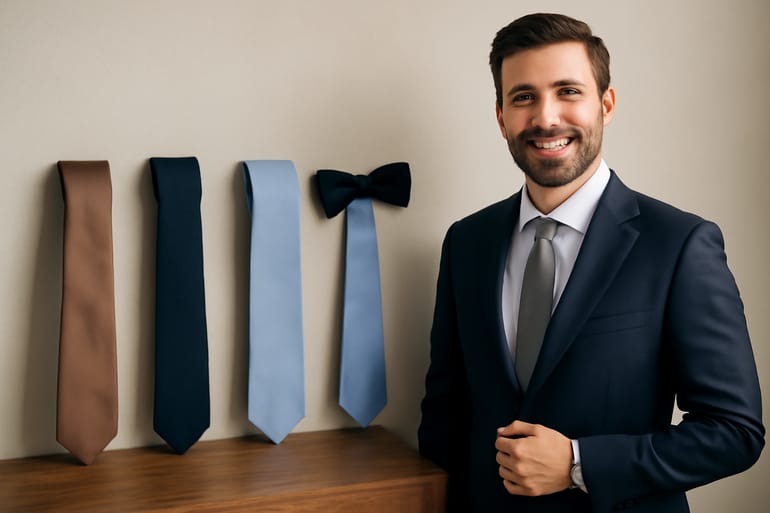
- Bow tie: formal and playful, often used for black tie or weddings.
- Cravat/ascot-style neckwear: traditional, often used for morning dress.
You’ll also see variations by shape (pointed vs square ends), construction (lined vs unlined), and finish (matte vs sheen). For UK shoppers especially, it’s helpful to keep sizing in mind too—classic lengths and widths are a separate rabbit hole, and “standard” often maps to a 58-inch baseline in many ranges.
If you want a next step after this overview, the upcoming article Classic Necktie Lengths and Widths Explained will go deeper on fit and proportion.
Classic long ties: which shapes and cuts should you know?

The classic long tie is where most buying decisions happen, especially for professional attire. Even within “normal ties,” there are a few variables that change how the tie drapes and how formal it reads.
Common tie shapes and end styles
- Pointed/blade end: the most traditional look; works everywhere from interviews to weddings.
- Square end: feels a touch more modern and minimal, often seen on knit or casual ties.
- Tipped vs self-tipped: Tipped ties have a different fabric at the back end; self-tipped uses the same fabric and usually looks more premium.
Width categories (practical, not prescriptive)
- Skinny (approx. 5–6 cm): pairs well with slim lapels and sharp silhouettes, but can look underpowered with heavy suiting.
- Classic (approx. 7–9 cm): the safest choice for most workplaces and occasions.
- Wide (9.5 cm+): traditional and bold; often best with wider lapels or larger builds.
Construction and drape
A tie’s interlining (the layer inside) affects knot size and how the tie hangs. A soft interlining can create an easy, relaxed knot; a firmer one holds a crisp shape. If you’re regularly wearing a tie for work, prioritize a tie that forms a clean knot without feeling bulky at the collar.
Best For Professional adults: Start with two classic-width long ties—one in a darker solid (or subtle texture) and one in a conservative pattern. That covers most business dress codes without overthinking it.
Knit, wool, linen, and silk: how fabrics change the vibe

Fabric is the shortcut to formality. Two ties with the same colour can look totally different if one is glossy silk and the other is a dry, textured wool.
Core necktie fabrics (and when to wear them)
- Silk: the most versatile and common. Smooth silk reads formal; grenadine or textured silk reads slightly more relaxed while staying smart.
- Knit (often silk or cotton): visible weave, usually square-ended. Great for smart-casual, and forgiving if you’re new to tying knots.
- Wool: matte and substantial; ideal in autumn/winter with flannel or tweed.
- Linen/cotton: breathable and casual; best with summer tailoring or relaxed blazers.
- Blends: can balance price and performance; check that the tie still holds shape and doesn’t look overly shiny.
Texture and pattern: the “distance test”
Before buying, do a quick check from a couple of steps away. If the pattern becomes noisy or the sheen looks plastic, it may feel less refined in real life. A subtle texture often photographs well too—useful for weddings and events.
Best For Style-conscious individuals: Build variety through texture, not novelty. A knit tie in navy, a textured silk in deep green, and a matte wool in charcoal can make the same shirts and suits feel fresh without looking gimmicky.
For colour coordination at work, the upcoming Color Theory for Neckties in Professional Settings will help you choose shades that flatter your suit and shirt combinations.
Bow ties, cravats, and wedding neckwear: what suits the dress code?
Weddings and formal events create the most confusion because “smart” can mean very different things. The right choice depends on the dress code, venue, and what the couple wants in photos.
Bow ties
A bow tie can be black-tie correct, or it can be a fun style statement. It’s strongest when it matches the formality of the outfit—think dinner jacket, crisp shirt, and polished shoes. For daytime weddings, a bow tie can also work with a waistcoat and tailored suit if the overall look is intentional.
Cravat/ascot-style neckwear
Cravats and ascots feel traditional and are often associated with morning dress. They can look excellent, but they’re less forgiving: the wrong fabric or volume can look costume-like. If you’re considering one, keep patterns restrained and make sure the collar style supports it.
Wedding party coordination tips
- Choose a shared formality level first (all classic long ties, all bow ties, etc.).
- Then unify with colour family (navy range, green range) rather than identical ties if you want a more modern look.
- Avoid ultra-shiny finishes for daytime ceremonies; they can look harsh in photos.
Best For Wedding party organizers: Pick the style family first, then fine-tune colour and texture so the party looks cohesive without forcing everyone into the same tie.
If you’ll be wearing neckwear all day, don’t ignore comfort—tie length and knot size matter, and How to Tie the Classic Necktie: Step-by-step will help newer wearers get a reliable, tidy knot quickly.
How do you choose the right tie to buy in the UK? (Quick checklist + comparisons)
If your primary intent is to buy, use a simple decision path: occasion → formality → fabric/texture → width → budget. Here’s what typically works for UK wardrobes.
A practical buying checklist
- Occasion: business, smart-casual, wedding, black tie.
- Formality level: matte textures read more casual; smooth silk reads more formal.
- Width vs lapels: match roughly; extreme skinny + wide lapels can look unbalanced.
- Length and fit: aim for the tip to hit around the belt line; many ranges treat ~58 inches as a common baseline, but your height and knot choice matter.
- Construction: look for clean stitching, a smooth slip-stitch, and good recovery after you gently scrunch the tie.
Fast comparison table
| Type | Formality | Best use | Watch-outs |
|---|---|---|---|
| Classic silk long tie | High | interviews, business, weddings | overly shiny finishes can look cheap |
| Textured silk / grenadine | Med–High | business, evenings | can snag if abused |
| Knit tie | Medium | smart-casual, creative offices | can look too casual for strict dress codes |
| Wool tie | Medium | autumn/winter tailoring | can feel heavy with lightweight suits |
| Bow tie | Medium–Very High | parties, black tie, weddings | proportions matter; don’t go too large |
| Cravat/ascot | Medium | morning dress, formal day events | easy to overdo pattern/volume |
Budget guidance (without brand names)
- Entry-level: fine for occasional wear; prioritize decent fabric feel and neat stitching.
- Mid-range: best value for frequent wear; better interlining and drape.
- Premium: noticeable hand-feel and finishing; worth it if ties are a weekly staple.
Best For Wedding guests: Choose a classic-width tie in silk or textured silk in a colour that complements (not matches) the wedding palette. You’ll look polished without competing with the wedding party.
If you’re planning to keep ties for years, the upcoming Care and Maintenance for Neckties will help you avoid the most common damage (creases, stains, and misshaping).
FAQ: Types of Neckties and How to Choose Them
What are the most common types of neckties?
The most common options are the classic long tie, skinny tie, knit tie, bow tie, and cravat/ascot-style neckwear. Within long ties, differences in width, lining, and end shape can change how formal the tie looks.
Which type of necktie is best for business attire?
A classic-width long tie in smooth silk or subtly textured silk is the safest business choice. Keep patterns conservative and avoid high-shine finishes if you want a more refined look.
What type of tie is best for wedding party organizers coordinating groomsmen?
Choose one tie style family first (all long ties or all bow ties), then unify the look with a shared colour family and similar texture. This keeps photos cohesive while allowing different body types and suit cuts to look balanced.
What tie types work best for event planners handling varied dress codes?
Stock options across formality levels: classic silk for formal, textured silk for versatile smart wear, and knit or wool for smart-casual. Having a clear “dress code map” helps you match tie type to venue and time of day quickly.
Are knit ties considered formal enough for the office?
In many modern workplaces, yes—especially in darker colours with a crisp shirt and tailored jacket. In very traditional offices or client-facing roles with strict dress codes, a smooth or textured silk tie usually reads more formal.
What should wedding guests choose if they’re unsure what to wear?
A classic long tie in a solid or subtle pattern is the most flexible. Aim for a colour that complements your suit and shirt while avoiding anything that looks like a deliberate match to the wedding party.
How do I know if a tie is good quality before buying?
Check the stitching and finishing, the feel of the fabric, and whether the tie springs back after a gentle scrunch. A well-made tie forms a clean knot without feeling bulky and hangs straight without twisting.
Do different necktie types require different care?
Yes—silk and textured weaves can snag, knits can stretch if stored poorly, and wool can pick up lint. As a rule, untie carefully, hang or roll to rest, and spot-clean promptly to prevent set-in stains.