Windsor Knot Collar Compatibility: Expert Guide 2026

Breadcrumb
Which Shirt Collars Actually Work With a Windsor Knot?
If your Windsor knot looks bulky, crooked, or like it’s “swallowing” your collar, it’s usually not your tying technique—it’s collar compatibility. The Windsor knot is a wide, triangular knot, so it needs enough space between collar points and enough height in the collar stand to frame it cleanly.
The quick rule: match width to width
A Windsor knot pairs best with collars that have a wide spread (room for the knot) and a structured collar (so the points don’t curl around the knot).
Good matches:
- Spread collar: the classic partner for a Windsor knot.
- Cutaway collar: very wide opening; great for full Windsor, but keep proportions in check.
- Semi-spread: often works well with a Half Windsor if a full feels too large.
More challenging matches:
- Point collar: narrow opening can pinch a Windsor knot and make it look oversized.
- Button-down collar: casual structure and button placement can fight the formal look of a Windsor knot.
Why this matters visually
A Windsor knot should create a clean triangle that sits centered under the collar, with the tie knot width echoing the collar spread. When those shapes disagree, even a perfectly tied knot can look “off.”
If you also want the tying mechanics nailed down, the related article "How to tie Windsor knot: step-by-step guide" goes into the hand motions that help the knot stay symmetrical.
Spread, Semi-Spread, Cutaway: How Wide Should the Collar Be?
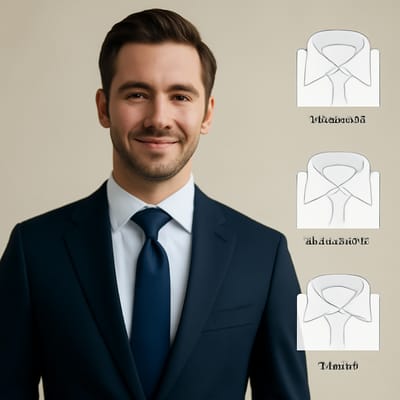
Collar names can feel subjective, so it helps to think in geometry: collar points create a “V,” and your Windsor knot has to fill that V without overflowing it.
Spread collar: the safest, most balanced option
A spread collar typically gives the Windsor knot enough room to sit flat, while still framing the knot with visible collar points. This is the most forgiving match for professional wear because it reads clean and traditional.
Semi-spread: great for smaller frames and daily wear
If you like the Windsor look but want less bulk, semi-spread collars are often ideal with a Half Windsor. With a full Windsor, semi-spread can still work—especially if your tie fabric is thinner—but you’ll want to watch for the collar points riding up against the knot.
Cutaway: excellent, but easy to overdo
A cutaway collar can make a Windsor knot look sharp and intentional—if the rest of your proportions are controlled. If your collar is very wide and your tie is thick, the knot can become the only thing anyone notices.
Best For: Tailors and styling professionals
If you’re advising clients, treat collar spread as a proportional tool:
- Use a full Windsor + cutaway/spread to add visual weight to a longer neck or broader lapels.
- Use a half Windsor + semi-spread to keep a client’s chest area looking lighter and more streamlined.
A practical cross-check is to view the collar and knot straight-on: if the knot extends beyond the “V” created by the collar points, it’s usually too large for that collar.
Point and Button-Down Collars: Can You Wear a Windsor Knot Anyway?

You can wear a Windsor knot with collars that aren’t “ideal,” but you’ll need to manage expectations and adjust technique. The issue isn’t correctness—it’s visual tension between a wide knot and a narrow or casual collar.
Point collars: choose Half Windsor or reduce bulk
A classic point collar often looks better with a Half Windsor than a full Windsor. If you insist on a full Windsor, reduce knot volume by:
- Choosing a thinner tie (less lining, smoother weave).
- Avoiding very thick fabrics (heavy wool, bulky grenadine-like textures).
- Making sure the knot is tightened cleanly so it sits high and centered.
Button-down collars: think “smart casual,” not boardroom
Button-down collars are designed to look good when the collar points are secured. A full Windsor can feel overly formal and too wide for the collar opening. If you like the triangular look, a Half Windsor is usually the better compromise.
Best For: Casual to formal dress enthusiasts
If you’re moving between dress codes, build a simple rotation:
- Work meetings / formal settings: spread or semi-spread collar with Windsor.
- Date night / smart casual: button-down with Half Windsor (or even a four-in-hand).
Best For: Beginner knot enthusiasts
If your knot keeps looking lopsided on a narrower collar, don’t assume you’re “bad at ties.” Start by pairing your Windsor knot with a spread collar first; it’s the most forgiving environment to learn symmetry and tension control.
Proportion Rules: Collar Height, Tie Fabric, and Face Shape
Collar compatibility isn’t only about spread—it’s also about how the collar and knot behave in three dimensions. A Windsor knot can look perfect with one shirt and oddly bulky with another, even if both are “spread collars.”
Collar height and stiffness
A taller, more structured collar stand tends to frame a Windsor knot better because it prevents the knot from pushing the collar outward.
Look for:
- Firm interlining (collar points stay crisp)
- Enough collar height so the knot doesn’t dominate the neck area
Tie fabric and thickness
A full Windsor builds layers. If the tie is thick, the knot can become oversized fast.
Practical guidance:
- Thicker ties → prefer Half Windsor or semi-spread collars.
- Thinner ties → full Windsor becomes easier to wear across more collars.
Face shape and body proportions
This is where style turns into balance:
- If you have a broader face or broader shoulders, a full Windsor can look harmonious.
- If you have a slimmer face or shorter neck, a Half Windsor often reads cleaner.
Best For: General fashion enthusiasts
Use the Windsor knot as a “shape tool.” It’s a triangle under your face, so it can either sharpen your look (when it matches your collar and lapels) or feel heavy (when it outscales them). When in doubt, step back from the mirror: if the knot is the first thing you see, it’s probably too large for the overall outfit.
If you’re choosing between knot sizes, the spoke topic "Full Windsor Knot vs Half Windsor Knot: Pros and Cons" is a helpful next read (even without a direct link, it’s worth searching on the site).
A Simple Collar-to-Windsor Match Guide (Plus What to Buy)
When you want the Windsor look to be consistent—especially in professional settings—use a quick decision guide based on collar type and the amount of structure you need.
Quick matching guide
- Cutaway collar → Full Windsor (best when you want a bold, formal presence)
- Spread collar → Full or Half Windsor (most versatile)
- Semi-spread → Half Windsor (clean and modern; less bulk)
- Point collar → Half Windsor (or full only with a thinner tie)
- Button-down → Half Windsor (smart casual), or consider a smaller knot
Common problems and fast fixes
- Knot looks too big → switch to Half Windsor or thinner tie fabric.
- Collar points flare outward → choose a stiffer collar or reduce knot bulk.
- Knot won’t sit centered → focus on even tension and tighten in small increments.
Transactional help: Windsor-friendly accessories (brand-neutral)
If you’re building a “Windsor-ready” setup, these are the most useful add-ons:
- A tie bar/tie clip (mid-chest placement) to keep the tie stable
- A collar stay set to keep collar points crisp and symmetrical
- A tie-tying guide (printable or card) if you want repeatable results
Best For: Tailors and styling professionals
Keeping a small kit—collar stays, a neutral tie bar, and a reference guide—lets you troubleshoot fit on the spot, especially when a client’s collar spread and tie thickness don’t naturally agree.
For a deeper tying walkthrough, "How to tie Windsor knot: step-by-step guide" complements this collar guide by showing how to build a stable, symmetrical triangle.
Frequently Asked Questions
What collar is best for a full Windsor knot?
A spread collar is the most reliable choice because it leaves enough space for the knot’s width. A cutaway collar can also work very well, but it can make the knot look extra bold.
Can I wear a Windsor knot with a point collar?
Yes, but it’s often better to use a Half Windsor so the knot doesn’t pinch the collar opening. If you want a full Windsor, choose a thinner tie and keep the knot tight and high.
Should tailors recommend full Windsor or half Windsor for clients?
Most tailors choose based on proportions: full Windsor for wider spreads, stronger lapels, and clients who suit a larger knot; half Windsor for everyday balance and narrower collars. Tie thickness and collar stiffness matter as much as collar spread.
What’s the easiest way for beginners to make a Windsor knot look centered?
Start with a spread collar (it’s more forgiving), then focus on even tension on both sides while tightening. Make small adjustments before fully snugging the knot so it stays symmetrical.
Does a Windsor knot work for fashion enthusiasts experimenting with vintage or modern looks?
Yes—use it as a shape statement under your face. Pair a full Windsor with wider collars for a classic, formal vibe, or choose a Half Windsor for a cleaner, modern profile.
Can casual-to-formal dressers wear a Windsor knot with a button-down collar?
You can, but it usually looks more natural with a Half Windsor since button-down collars read more casual. If the knot feels too formal or too wide, switch to a smaller knot.
What accessories actually help a Windsor knot outfit look sharper?
Collar stays keep collar points crisp, and a tie bar helps the tie stay flat and controlled throughout the day. A simple tying guide can also help you repeat the same knot size consistently across different shirts.