Occasions & Demographics: Formal Neckwear Guide 2026
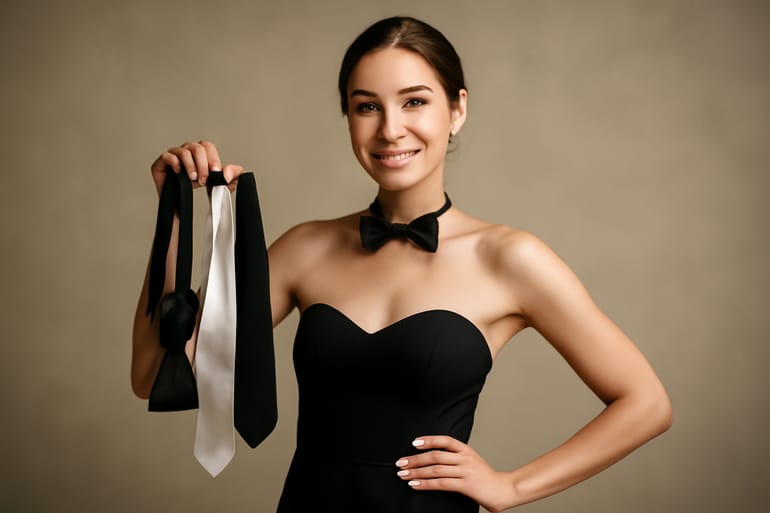
Occasions & demographics: how to pick formal neckwear that fits you
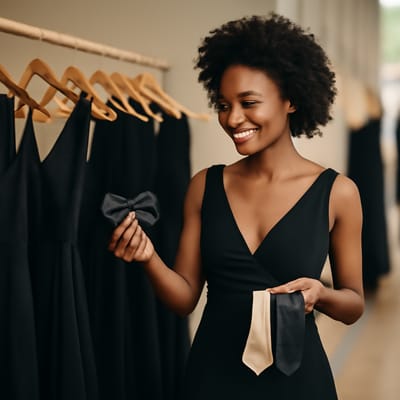
Shopping for formal neckwear is rarely just about the dress code. It’s also about you: your comfort level with menswear-inspired styling, your neckline, your height, and even how “photo-forward” the event will be. This hub pulls together the most practical guidance for choosing women’s formal neckwear—especially for black-tie settings—by occasion and by style profile.
Start here: choose your path
If you already know what you need, jump straight to a focused guide:
- Women’s black tie necktie style guide
- Silk vs satin: which neckwear for formal gowns?
- How to match neckwear with dresses: color coordination for black-tie events
- How to tie a women’s necktie: quick guide
- Occasion-specific styling for weddings and galas
- Care and maintenance of silk neckties for women
The two questions that solve most “what should I wear?” stress
- What’s the occasion vibe? (strict black tie, festive gala, wedding, work formal)
- What’s your silhouette goal? (sharper lines, softer romance, or minimalist polish)
If you’re worried neckwear will feel awkward or too bold, you’re not alone. The good news: fabric, scale, and pairing choices let you dial the look from subtle to statement without breaking black-tie expectations.
Why women wear black tie neckwear: confidence, structure, and personal style
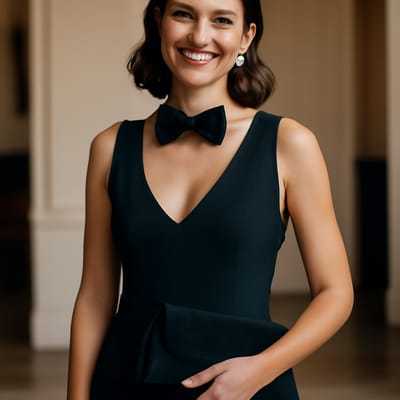
Women choose black tie neckwear for the same reason they choose a great clutch or statement earring: it turns an outfit into a look. The pain point is making it feel intentional—not like an afterthought.
What neckwear does for your outfit
- Adds structure at the neckline (especially with strapless or minimalist gowns).
- Replaces a necklace when you want sleek tailoring instead of sparkle.
- Balances proportions if you’re wearing a tuxedo jacket, jumpsuit, or sharp shoulder line.
- Creates contrast that reads clearly in photos and under event lighting.
Who it tends to flatter most (the “demographics” side)
This isn’t about age—it’s about styling comfort and how you like to present:
- If you like clean lines and minimal jewelry, a satin bow tie or slim necktie can feel instantly “you.”
- If you prefer romantic details, a neck bow or scarf tie gives softness while still looking formal.
- If you’re new to neckwear, starting with a tone-on-tone tie (same color family as your gown) keeps it elegant and low-stress.
Go deeper
For a complete black-tie-specific walkthrough, use: Women’s black tie necktie style guide.
Fabric guide (silk, satin, and alternatives): what looks formal in real lighting
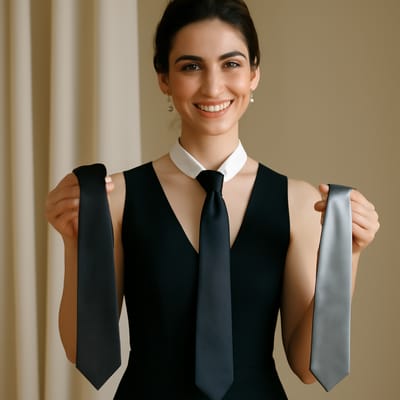
The #1 regret with formal neckwear is buying something that looks luxe online but turns out shiny in a cheap way—or too limp to hold a crisp knot. Fabric choice controls sheen, drape, and shape.
Silk: the safest formal choice
Silk tends to photograph well and holds a knot cleanly.
- Silk twill: refined, slightly matte; great for versatile black-tie wear.
- Silk satin: high shine; best when the rest of your outfit is simple.
- Silk jacquard: woven patterns that feel elevated without loud contrast.
Satin: a weave that can be great—or risky
Satin can look stunning for black tie, but thin satin can read like ribbon.
- Choose satin when you want maximum evening shine.
- Avoid very thin, slippery satin that collapses or creases easily.
Alternatives that still feel black-tie appropriate
- Velvet (winter events, rich color depth)
- Organza/chiffon neck bows (soft, romantic pairing with gowns)
- High-quality synthetics (budget-friendly, but check stitching and edge finishing)
If you want a direct comparison that makes choosing easier, see: Silk vs satin: which neckwear for formal gowns?.
Styles of neckwear for women: necktie vs bow tie vs neck bow (which suits you?)
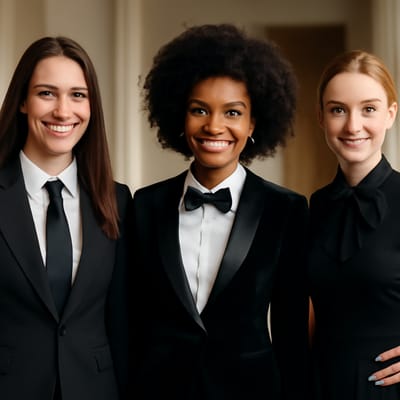
Neckwear style is where “occasion” and “personal vibe” meet. The goal is to pick a silhouette that matches your outfit’s structure and your comfort level.
Necktie (tailored, modern, sharp)
Best when you want a crisp focal point.
- Works well with: tuxedo shirts, blazers, high necklines, jumpsuits
- Fit tip: slimmer ties often look more refined for petite frames
Bow tie (classic black-tie energy)
A bow tie can be sleek, not gimmicky—especially in satin or velvet.
- Works well with: tuxedo jackets, minimalist gowns, clean updos
- Style tip: smaller bows tend to look more formal and less “costume”
Neck bow / scarf tie (soft, feminine, fashion-forward)
Great if you want movement and romance.
- Works well with: strapless gowns, simple bodices, halter styles
- Watch-out: overly long tails can read casual unless the fabric is truly luxe
Make it wearable: learn the basics fast
If tying is your stress point, you’ll love: How to tie a women’s necktie: quick guide. And for black-tie-specific styling rules, see: Women’s black tie necktie style guide.
Choosing neckwear by occasion: weddings, galas, opera, and formal work events
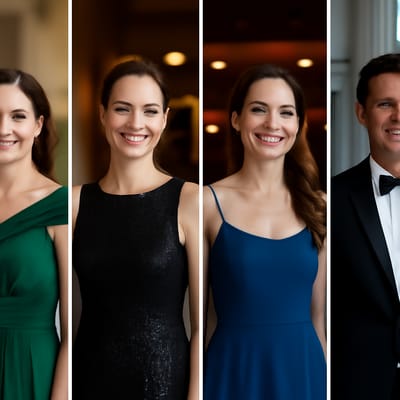
Even with “black tie” on the invite, the room can feel very different depending on the occasion. The safest approach is to match the neckwear’s formality level and attention level to the event.
Black-tie weddings
You want polish without stealing focus.
- Best picks: silk twill, subtle jacquard, small bow ties, soft neck bows
- Avoid: loud prints and stark white that pops too hard in photos
Galas and charity events
These often reward a bolder, editorial look.
- Best picks: satin bow tie, velvet necktie, richer colors (deep jewel tones)
- Pairing tip: a tuxedo jacket makes neckwear feel intentional immediately
Opera, formal concerts, theater
Understated elegance tends to win.
- Best picks: silk jacquard, matte black twill, tone-on-tone patterns
Formal corporate events
Aim for sleek and confident.
- Best picks: solid black/navy, conservative width, minimal shine
For a deeper breakdown with outfit formulas, go to: Occasion-specific styling for weddings and galas.
Pairing neckwear with evening gowns: neckline, proportion, and color coordination
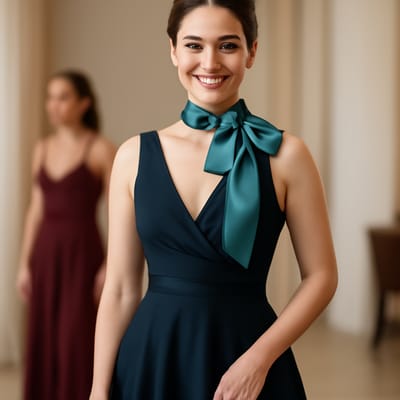
This is the make-or-break moment: pairing neckwear with a gown so it looks designed, not added. Use three checks—neckline space, proportion, and color logic.
Neckline space (your easiest win)
- Strapless: perfect for neck bows, scarf ties, or a compact bow tie.
- Deep V: choose a smaller knot/bow so it doesn’t fall into the V.
- High neck/halter: go slim and controlled—avoid bulky knots.
- One-shoulder: keep neckwear minimal so lines don’t compete.
Proportion (especially important for petite frames)
If the knot or bow is wider than the visual space between your collarbones, it can look crowded. Slimmer ties and smaller bows often read more formal and more flattering.
Color coordination that always works
- Match neckwear to your deepest dress tone for a seamless look.
- Or match to metal accessories (silver/gold) via cool vs warm shades.
- If your gown is embellished, choose solid neckwear with controlled sheen.
For step-by-step color guidance, use: How to match neckwear with dresses: color coordination for black-tie events.
Care, maintenance, and shopping: buy once, wear for years
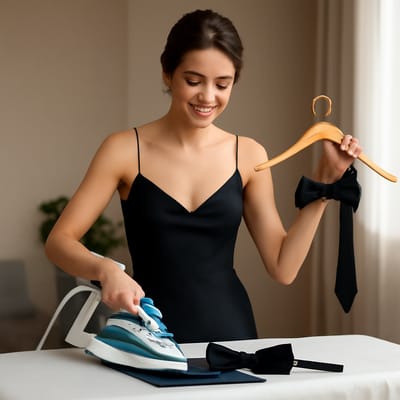
Two practical pain points show up after you buy: keeping neckwear crisp (no wrinkles, no crushed knots) and shopping without wasting money on a piece that doesn’t match your gown.
Care essentials
- Untie—don’t pull through: it protects the fabric and shape.
- Steam over ironing: especially for silk and velvet.
- Store properly: hang ties or roll loosely; keep bows in a structured box.
Get the full routine here: Care and maintenance of silk neckties for women.
Shopping without regret (quick checklist)
- Pick fabric based on shine: twill/jacquard for subtle, satin/velvet for statement.
- Check construction: clean stitching, smooth edges, no rippling.
- Confirm scale: petite-friendly widths and compact knots photograph best.
- Prioritize return options when matching a gown.
Lead magnet idea: download a buying guide
If you want a fast “yes/no” checklist for fabric, measurements, and color matching, download a one-page buying guide and use it while you shop.
From here, the fastest next click is your core pillar: Women’s black tie necktie style guide.
Frequently Asked Questions
What does “occasions & demographics” mean for formal neckwear?
It means choosing neckwear based on the event (wedding, gala, opera, corporate black tie) and your style profile (tailored vs romantic, minimalist vs statement). The right match prevents you from feeling overdressed or out of place.
Can I wear a necktie with an evening gown?
Yes—especially with strapless, deep V, or minimalist gowns where neckwear can replace a necklace. Keep the knot compact and choose a formal fabric like silk twill, silk satin, or velvet.
Which is more black-tie appropriate: silk or satin?
Silk is the safest overall because it drapes well and looks refined under lighting. Satin can look even dressier due to shine, but quality matters—thin satin can look inexpensive.
What neckwear works best for a black-tie wedding?
Subtle, elegant options usually work best: silk twill or tone-on-tone jacquard, smaller bow ties, or soft neck bows. Avoid loud novelty patterns and extremely bright whites.
How do I match neckwear color to my dress quickly?
Match to your gown’s deepest color for a seamless look, or coordinate with your metallic accessories (gold/silver). If your dress is embellished, choose solid neckwear with controlled sheen.
Is a bow tie too playful for women’s formalwear?
Not when it’s proportionate and made from formal fabric. A smaller satin or velvet bow tie can look sleek, modern, and very black-tie appropriate.
What’s the easiest knot for a women’s necktie?
A simple four-in-hand is often the easiest and creates a slightly relaxed, modern knot. For step-by-step help, use the quick tying guide.
How do I care for silk neckwear after an event?
Always untie it carefully, let it rest flat, and use gentle steam for wrinkles. Avoid aggressive ironing and consider professional cleaning for noticeable stains.