Bolo Tie History: Origins, Meaning & Style Guide 2026

What is the origin of the bolo tie—and why does it matter?

If you’re curious about bolo tie history, you’re probably trying to answer a practical question: is this piece of neckwear a costume, a tradition, or a modern style move? The truth is, the bolo tie sits at the intersection of craft, identity, and everyday utility—one reason it keeps cycling back into fashion.
A quick definition (so the history makes sense)
A bolo tie (also called a bola tie) is a neckwear piece made from a cord—often leather—with a decorative clasp (the “slide”) that tightens and loosens. The ends are usually finished with metal tips (called aglets) to prevent fraying and add weight.
The “why it matters” part
Knowing the background helps you avoid common buying mistakes:
- You’ll recognize when a bolo is built like a functional tie (secure slide, quality tips), not just a novelty.
- You’ll understand why certain materials—like braided leather and silver-toned hardware—are considered classic.
- You’ll be better at styling it appropriately, whether you want subtle everyday wear or a statement piece.
In short: the origin story isn’t trivia. It’s the fastest way to understand what makes a bolo tie look authentic and feel wearable today.
How did bolo ties evolve from regional tradition to mainstream style?

Most timelines of bolo tie history point to the American Southwest in the early-to-mid 20th century, where artisans and wearers shaped the bolo into the form we recognize now: cord + slide + tipped ends.
Southwestern roots and cultural influence
Bolo ties are strongly associated with Southwestern aesthetics—think leatherwork, silversmithing, and turquoise-inspired color palettes. Many designs reflect Indigenous and Mexican-American artistic traditions, and that influence shows up in common slide motifs (stone inlays, engraved metalwork, nature symbols). If you’re buying, it’s worth appreciating that the bolo tie is not just “cowboy gear”—it’s part of a broader regional craft story.
The Western wear era
As Western movies, rodeo culture, and ranch wear rose in popularity, the bolo tie became a practical alternative to a long necktie—less fabric flapping in the wind, easier to adjust, and visually distinctive.
Official recognition boosted legitimacy
One major turning point: bolo ties became recognized as official or symbolic neckwear in parts of the U.S. Southwest (often cited with Arizona as a key example). That kind of recognition helped move the bolo tie from niche accessory to respectable dress option.
Today, the evolution continues—minimal slides, slimmer cords, and dressier finishes make bolo ties easier to wear beyond Western settings.
What does a bolo tie symbolize (and how should you wear it respectfully)?

A big pain point for new buyers is worry about looking like they’re “playing dress-up.” Understanding symbolism helps you wear a bolo tie with confidence—and with respect.
Common meanings behind bolo ties
Depending on the design and context, a bolo tie can signal:
- Regional pride (Southwestern heritage and local style)
- Craft appreciation (hand-tooled leather, engraved slides, stonework)
- Individualism (it’s intentionally different from standard neckties)
- Formality with personality (especially when paired with a collared shirt)
How to avoid the “costume” look
A few simple choices make a bolo feel intentional:
- Pick a slide size that matches your frame: smaller for subtle daily wear, larger for statement looks.
- Choose materials that fit your wardrobe: matte metal + brown/black leather is the easiest “starter” combo.
- Keep the outfit clean: a crisp shirt and solid colors let the bolo tie be the focal point.
Cultural respect tips
If a design clearly references Indigenous motifs, treat it as art, not a joke. Avoid pairing meaningful symbols with gimmicky outfits. When possible, read the product description to understand the materials and design inspiration—this also helps you buy higher-quality pieces.
Handled thoughtfully, a bolo tie becomes a tasteful nod to history rather than a caricature.
Which vintage-inspired bolo tie details come from history—and which are just trends?
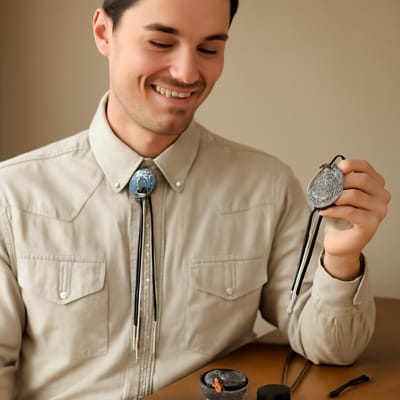
When shopping, it’s easy to overpay for “vintage” looks that don’t hold up. The goal is to spot details with real roots in bolo tie history—and separate them from short-lived fashion tweaks.
Classic details with historical staying power
Look for these features if you want a traditional feel:
- Braided or round leather cord: comfortable, durable, and historically common
- Adjustable slide with strong grip: the slide should hold position without constant tightening
- Metal tips (aglets): not optional if you want a finished look and better longevity
- Balanced proportions: a slide that doesn’t spin or pull the cord forward
Trend-driven details (not bad, just more “fashion”)
These can be fun, but they’re less timeless:
- Oversized novelty slides (very large shapes, playful graphics)
- Ultra-thin cords that crease or fray quickly
- High-shine finishes that show scratches fast
Quick quality check (60 seconds)
Before you buy:
- Tug the slide gently—does it hold?
- Check the tips—are they crimped cleanly and aligned?
- Feel the cord—does it feel supple, not plasticky?
If those basics are right, you’ll get the vintage vibe without the “cheap souvenir” problem.
Want a “historically inspired” bolo tie? Use this simple buying checklist
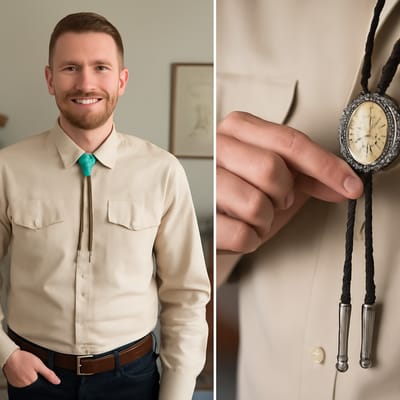
If you like the story behind bolo ties, the next step is choosing one that fits your wardrobe and budget. This is where a little guidance prevents common regrets—slides that slip, cords that crack, or finishes that look worn after a few outings.
What to look for (history-meets-wearability)
Here’s a practical checklist for a historically inspired bolo tie:
- Cord material: real or high-quality leather is the safest all-around pick
- Cord thickness: medium thickness usually drapes best and lasts longer
- Slide backing: should grip evenly without shredding the cord
- Tip material: metal tips add weight and reduce fraying
- Finish style: brushed or antiqued metal reads more classic than mirror-shine
Price expectations (so you don’t overpay)
- Budget options can look good, but prioritize a secure slide and decent tips.
- Mid-range pieces often improve cord quality and hardware durability.
- Higher-priced options usually justify cost through better materials and cleaner craftsmanship.
Optional: download the quick guide
If you want a one-page reference for shopping and styling, create a quick “Bolo Tie Fit & Style” guide for yourself (or save this checklist). It’s the easiest way to compare products side by side.
Once you’ve got the basics, you can explore different slides and finishes confidently—without losing the timeless feel that made bolo ties iconic in the first place.