Bolo Ties Guide: How to Wear & Buy in 2026

What is a bolo tie—and why is it in the necktie family?

A bolo tie is a neckwear piece made of a cord (often leather) with a decorative slide/clasp that cinches the cord up or down. Instead of a blade like a traditional necktie, the “front” of a bolo tie is the ornament—sometimes minimal, sometimes bold—supported by cord and finished with tips.
The quick definition (so you can shop smarter)
A bolo tie typically includes:
- A cord (leather, braided leather, fabric, or metal)
- A slide (the centerpiece that adjusts position)
- Tips (metal end caps that add weight and a finished look)
A short history snapshot
Bolo ties are strongly associated with Western style, but their appeal goes beyond cowboy aesthetics. They’ve moved in and out of mainstream fashion over decades, popping up in street style, creative offices, and even formal events when styled thoughtfully.
If you want the full story—origins, meaning, and how it became a recognized neckwear type—start here: Bolo tie history, origins, and meaning.
When a bolo tie makes sense (and when it doesn’t)
A bolo tie works best when you want a look that’s:
- Expressive without being loud
- Structured enough for collars, but relaxed enough for casual outfits
- Easy to adjust throughout the day
If your main concern is “Where can I actually wear one without feeling overdressed or underdressed?”, jump to the occasions guide: Bolo tie uses and styling occasions.
Leather bolo tie basics: what makes it the go-to option?

If you’re new to this neckwear category, a leather bolo tie is usually the easiest place to start. Leather reads classic, holds its shape, and looks intentional—whether you’re wearing denim or a crisp button-down.
Why leather is so popular
A leather bolo tie tends to deliver three practical wins:
- Better drape and control: Leather hangs predictably and doesn’t kink as easily as some cords.
- More “finished” at a glance: Even simple slides look elevated on leather.
- Versatility: Leather can lean rugged or refined depending on the slide and tips.
Common leather cord styles you’ll see
- Round leather cord: The most traditional; easy to dress up or down.
- Braided leather: Adds texture; feels more casual and Western.
- Flat leather lace: More fashion-forward; can look minimalist and modern.
Leather vs cord: what’s the real difference?
Shoppers often get stuck deciding between leather and non-leather cords (fabric, synthetic, woven, etc.). It’s less about “better” and more about what fits your lifestyle: leather often wins for durability and polish, while non-leather cords can be lighter or more budget-friendly.
Use this side-by-side breakdown to decide fast: Leather vs cord bolo ties: materials guide.
If you want a safe first buy
Choose a medium-thickness leather cord with simple metal tips and a slide that isn’t oversized. That combination is the most forgiving across outfits—and it won’t feel like a costume piece.
Materials and finishes: cord, slide, metal tips, and clasps explained
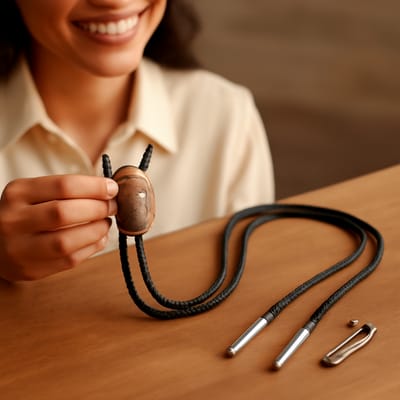
A bolo tie looks simple, but the materials and finishes determine how it hangs, how long it lasts, and how formal it can feel. When you’re comparing options, focus on the cord first, then the hardware.
Cord materials (and what they signal)
- Leather: The classic choice; balanced weight and a premium look.
- Braided leather: Adds texture; typically more casual.
- Fabric or synthetic cords: Often lighter and lower-cost; can be great for occasional wear.
Slide styles: subtle vs statement
The slide is the visual anchor. You’ll see everything from clean geometric pieces to engraved, stone-set, or sculpted looks. A good rule: the more decorative the slide, the simpler the rest of your outfit should be.
If you want to understand the most common designs before you buy, read: Bolo tie common styles guide.
Metal tips and clasps: the overlooked quality check
Cheap tips can bend, tarnish quickly, or snag clothing. Better tips feel smooth, are evenly finished, and add just enough weight to keep the cords hanging straight.
Key features to look for:
- Secure clasp grip (slide should hold position without slipping)
- Smooth edges (no sharp points on tips)
- Even finish (consistent tone, no flaking)
Dive deeper into what matters on hardware: Metal tips and clasps: features to know.
Width and proportion (yes, it matters)
The visual “width” of a bolo tie comes from cord thickness, slide size, and how high you wear it. If you’re unsure what will look balanced on your frame and collar style, this guide helps: Bolo tie width and proportion guide.
How to wear a bolo tie casually without it looking like a costume

The biggest fear most people have is looking like they’re “in character.” Casual styling solves that—because a bolo tie can act like a relaxed alternative to a necktie, not a theme.
Start with these easy casual formulas
- Denim shirt + bolo tie + chore jacket: Keep the slide modest.
- Oxford button-down + chinos: Wear the slide mid-chest for a laid-back feel.
- Plain tee + overshirt: Treat the bolo tie like a necklace—lower slide, simple hardware.
Where should the slide sit for casual outfits?
Casual usually looks best when the slide isn’t tight to the collar. Aim for a little breathing room—think “open collar energy,” even if you’re wearing a button-down.
If placement and length confuse you, use the fit guide: Bolo tie size guide: choose the right fit.
Color and pattern: match without overthinking
A fast, reliable approach:
- Match metal tone to your belt buckle/watch hardware.
- Keep the slide color in the same family as your shoes or jacket.
- If your shirt is patterned, choose a simpler slide.
For a more detailed, outfit-friendly approach: Matching bolo ties with outfits: color and pattern.
Want plug-and-play outfit ideas?
Use these complete looks (including casual-to-smart-casual transitions): Bolo tie styling for casual and formal outfits.
Can you wear a bolo tie to formal occasions like weddings?

Yes—bolo ties for weddings and dress events can look sharp, but the details have to be intentional. The goal is to make it read as formal neckwear, not a novelty.
The formal checklist (use this before you buy)
For formal occasions, prioritize:
- A sleek, high-quality slide (clean finish, balanced proportions)
- A cord that looks refined (often leather bolo tie cords work best here)
- Neat, polished metal tips
- A fit that sits closer to the collar (usually higher than casual)
Best shirt and jacket pairings
- Dress shirt with a structured collar: Helps the bolo tie sit cleanly.
- Blazer or suit jacket: Keeps the look elevated; choose simpler slides.
- Western-inspired suiting: Great for themed weddings, but still keep quality high.
How high should the slide be for formal wear?
If you’re replacing a tie, wear the slide closer to where a tie knot would sit—high enough to feel deliberate. If the slide is too low, it can look like an accessory rather than neckwear.
For event-specific do’s and don’ts (including guest vs groom guidance), this is the most helpful deep dive: Bolo ties for weddings and formal events.
One mistake to avoid
Don’t combine a very bold slide with a very bold outfit. In formal settings, let one element lead—either the bolo tie or the statement jacket, not both.
Buying guide: what to look for (fit, comfort, value, and budget)
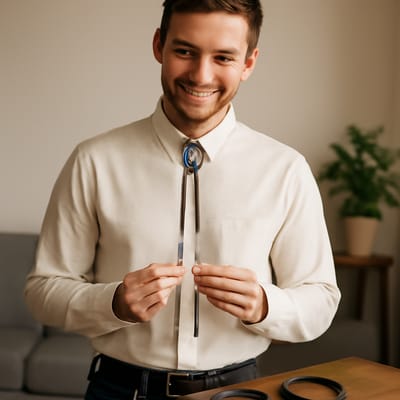
Buying a bolo tie gets easier when you judge it like any other piece of quality neckwear: fit first, then materials, then finishing details. Here’s a practical checklist you can actually use while shopping.
1) Fit and sizing: the make-or-break factor
A bolo tie that’s too short can look cramped; too long can feel messy. Start with your typical collar size and how you plan to wear it (high for formal, lower for casual).
Use this step-by-step guide before you choose: How to choose a bolo tie: size and fit.
2) Comfort: what you’ll notice after an hour
- Slide edges should be smooth (no scratching collars)
- Cord shouldn’t feel stiff against your neck
- Tips shouldn’t be so heavy they swing around annoyingly
3) Value markers (non-brand, but still quality-focused)
Even without focusing on any specific brand, you can spot quality:
- Even stitching/braiding (if braided)
- Consistent finish on metal parts
- Secure clasp that holds position
4) Budget vs “buy once”
If you’re trying to keep costs down, focus on clean construction and a secure clasp rather than flashy slide details. Budget options can look great if the basics are right.
Here’s exactly what to check when shopping affordable options: Budget-friendly bolo ties: what to look for.
Optional: a quick downloadable checklist (email capture)
If you want a one-page checklist you can use while shopping (fit + materials + hardware), create a simple “Bolo Tie Buying Checklist” for yourself and save it to your phone—or sign up for our downloadable version when it’s available. It’s the easiest way to avoid impulse buys you won’t wear.
Care, maintenance, and style trends (so yours lasts and stays current)

A leather bolo tie can last for years if you treat it like leather goods and jewelry—not like a throw-in accessory. Maintenance is simple, but consistency matters.
Care and maintenance essentials
- Store it hanging or laid flat to prevent kinks.
- Keep it dry; if it gets wet, air-dry away from heat.
- Wipe the cord occasionally with a soft cloth.
- For metal tips and slides, use a gentle cloth to remove fingerprints.
For a full routine (including what to avoid with leather and metal finishes): Bolo tie care and maintenance guide.
Style inspiration: how bolo ties are worn right now
Current trends tend to fall into a few wearable lanes:
- Minimalist slides with crisp shirts and clean tailoring
- Heritage Western styling with denim, suede, and textured layers
- Creative formal looks where the bolo tie replaces a necktie at events
If you want a fast way to refresh your outfits, start with these complete combinations: Outfit ideas for casual and formal bolo tie styling.
A quick style “upgrade” tip
If your bolo tie feels too loud, simplify everything else: solid shirt, minimal patterns, and one metal tone across belt/watch/shoes. The bolo tie should feel like the final detail—not the entire outfit.
And if you’re still exploring variations (different tips, different slide types, different cord looks), these guides help you go deeper: Bolo tie tips and style details and Common bolo tie styles.
Frequently Asked Questions

What is a bolo tie used for?
A bolo tie is used as adjustable neckwear—either as a casual accessory or as a tie alternative for dressier outfits. The slide sets the look: higher reads more formal, lower reads more relaxed.
Are bolo ties formal enough for a wedding?
They can be, especially with a refined slide, polished metal tips, and a leather cord that looks clean and structured. For very formal dress codes, keep the design subtle and the fit close to the collar.
How tight should a bolo tie be?
It depends on the occasion. For formal wear, the slide usually sits near the collar like a tie knot; for casual outfits, it often sits a bit lower so it feels relaxed.
What’s better: leather or cord bolo ties?
Leather bolo ties tend to look more classic and polished, while non-leather cords can be lighter or more budget-friendly. The “better” choice is the one that matches how often you’ll wear it and how formal you want it to feel.
How do I choose the right bolo tie size?
Start with cord length and how high you plan to wear the slide. If you want a tie-like look, choose a length that keeps the tips neat and not overly long when the slide is worn high.
Do metal tips and clasps really matter?
Yes—tips add weight so the cords hang straight, and a good clasp keeps the slide from slipping during the day. Poor hardware is one of the most common reasons a bolo tie looks cheap.
How do you take care of a leather bolo tie?
Store it flat or hanging to avoid kinks, keep it away from moisture and heat, and wipe it down occasionally with a soft cloth. For metal parts, a gentle polish cloth helps maintain the finish.
Can I wear a bolo tie with an open collar?
Absolutely. Wearing a bolo tie with an open collar is one of the easiest casual looks—just set the slide lower so it feels more like an accessory than a replacement for a tie knot.
Explore Bolo Ties Hub
- Bolo Ties 101: History
- uses
- and common styles
- Leather vs Cord: Material guide for bolo ties
- How to choose a bolo tie: size
- width
- and tips
- Outfit ideas: bolo tie styling for casual and formal wear
- Care and maintenance for bolo ties
- Bolo ties for weddings and formal events
- Budget-friendly bolo ties: what to look for
- Matching bolo ties with outfits: color and pattern guidance
- Wire/metal tips and clasps: features to know