Bolo Ties for Weddings: Formal Style Guide 2026
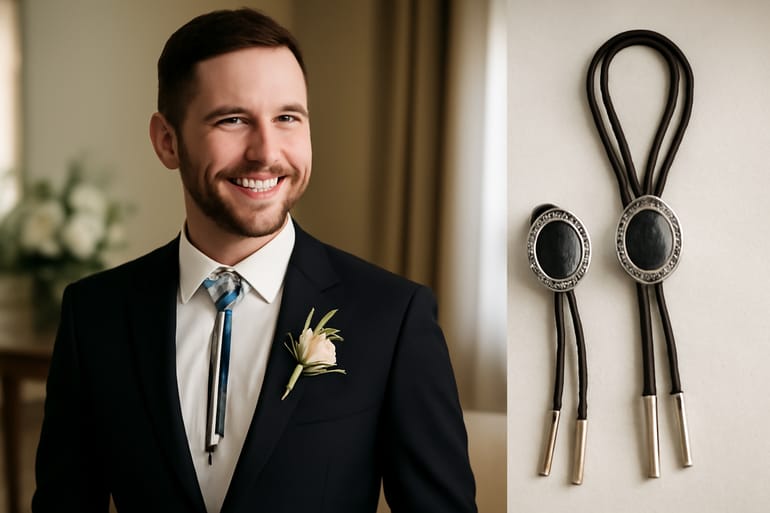
Can you wear a bolo tie to a wedding without looking casual?

Yes—when you treat it like real formal neckwear. A bolo tie can look wedding-appropriate when three things line up: materials, proportions, and styling discipline.
What makes a bolo tie “formal”?
A formal bolo tie usually has:
- A clean leather cord (or refined braided cord) that isn’t overly chunky
- Neat, symmetrical metal tips (often silver- or gold-tone)
- A slide/clasp with a polished finish—think smooth metal, subtle engraving, or a small stone that reads “dressy,” not novelty
The big mistake to avoid
Most people accidentally make a bolo tie look casual by wearing it loose and low, like a necklace. For weddings and formal events, the slide should sit high—similar to where a tie knot would be—especially with a buttoned collar.
If you’re the groom or in the wedding party, aim for a bolo tie that looks intentional with the entire outfit: crisp shirt, tailored jacket, and accessories that match your hardware. Done right, bolo ties for weddings feel classic, personal, and sharp—without trying to copy a standard necktie.
What bolo tie materials look best for formal events?

For formal events, the goal is simple: choose materials that look refined up close and stay sharp under indoor lighting.
Leather cord basics (and what to look for)
A leather bolo tie is the most traditional option, but not all leather reads formal.
Look for:
- Smooth, even leather (no cracking, flaking dye, or rough edges)
- A cord thickness that matches your frame—too thick can look rustic
- Consistent color (black and dark brown are safest for weddings)
Slide/clasp finishes that photograph well
The slide is what people notice first. For a formal bolo tie, these finishes usually work best:
- Polished metal for a clean, tux-adjacent look
- Antique metal if your event is more vintage or Western formal
- Subtle stone or enamel accents if they’re not oversized
Tips matter more than most people think
Metal tips should be straight, matching, and securely attached. Crooked tips or mismatched plating instantly makes bolo ties for formal events look inexpensive.
If you’re trying to keep things classic, match your metal tone to your watch, belt buckle, or cuff links. That small detail is what makes bolo ties for weddings look “styled,” not improvised.
How should a bolo tie fit with a dress shirt and jacket?

Fit is the difference between “wedding-ready” and “weekend casual.” When you wear bolo ties for weddings, treat the slide like a tie knot and the cord like a tie blade.
Placement: where the slide should sit
- With a buttoned collar: slide sits at the collar line (or just below)
- With an open collar: slide can drop slightly, but keep it intentional—not mid-chest
Cord length: what looks balanced
You want visible cord ends, but not so long they compete with your jacket lines.
- Under a jacket: ends should generally fall above the lowest jacket button
- Without a jacket: ends can be a bit longer, but avoid anything that swings or looks like a necklace
Collar and lapel considerations
A spread collar can make the slide look small; a more standard point collar often frames it better. If you’re wearing a jacket, keep your lapels clean—busy lapels plus a bold bolo slide can feel crowded.
Comfort and stability check
Before the event, do a simple test: move your arms, sit, and hug someone. If the slide drops a lot or twists, tighten it slightly or choose a slide with a better grip. A stable slide keeps your formal bolo tie looking sharp all night.
How do you choose the right bolo tie for your wedding role?

Your role in the event should guide how bold you go. The safest rule: the more “center stage” you are, the more polished and cohesive your bolo tie should be.
Groom vs guest: how much statement is too much?
- Groom: choose a higher-quality leather cord, clean tips, and a slide that matches the wedding’s formality. Keep it elevated and photo-friendly.
- Groomsmen: coordinate metal tone and general style (shape/size), but you don’t need identical slides.
- Guest: you can be more expressive, but avoid oversized novelty slides that pull attention.
A quick buying checklist (save this)
When shopping bolo ties for weddings, look for:
- Secure slide mechanism (doesn’t slip)
- Clean, even plating/finish on metal parts
- Cord that lays flat and doesn’t kink
- Tips that are aligned and firmly attached
- A slide size that fits your chest and collar scale
Smart budget guidance
Budget-friendly options can still look formal if the leather is smooth and the metal finish is consistent. If you only upgrade one thing, upgrade the slide and tip quality—those are what people see.
If you want help narrowing options quickly, browse curated “formal bolo tie” selections and compare photos of the tip finish and slide scale before you buy.
How do you care for a bolo tie so it looks perfect on event day?

A little prep prevents the two most common problems: dull hardware and a kinked cord.
The night-before routine
- Wipe the cord gently with a dry cloth (or a barely damp cloth if needed), then let it air-dry
- Polish metal parts with a soft microfiber cloth; avoid harsh cleaners that can strip finishes
- Check the slide grip: if it slips, it may not hold a formal placement during photos
Prevent cord kinks and twists
Store the bolo tie flat or gently coiled in a wide loop. Tight coils create permanent bends that show under a jacket. If the cord is slightly kinked, hang it for a day so gravity helps straighten it.
Protect the slide finish
Keep the slide away from keys, coins, and other metal items. Many finishes scratch easily, and scratches show up fast under indoor lighting.
Make it easy: grab a free checklist
If you’d like a quick pre-event routine you can print, download a short “Formal Bolo Tie Fit & Care Checklist” and keep it with your wedding accessories. It’s a simple way to make sure your bolo tie for a wedding looks crisp from ceremony to reception.