Bolo Tie Care and Maintenance: Easy Guide 2026
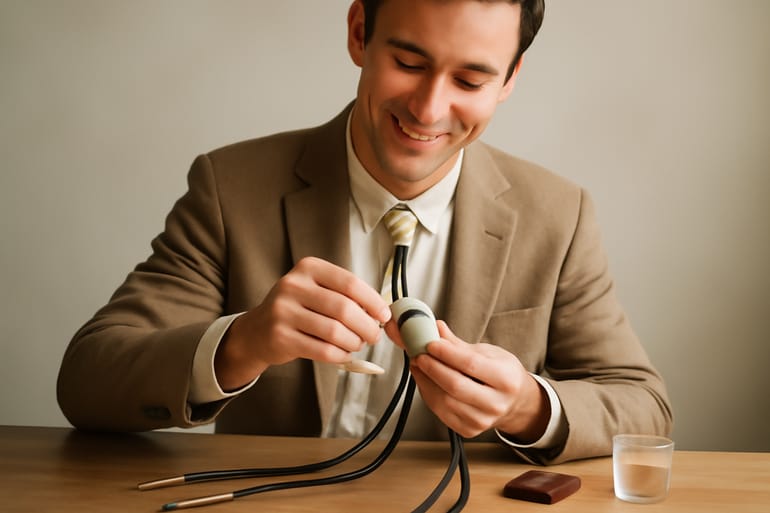
How do you keep a bolo tie looking new?

Bolo tie care and maintenance is mostly about protecting three parts: the cord (often leather), the slide/clasp, and the metal tips. If any one of these gets neglected, the whole piece can start to look tired—cracked cord, cloudy metal, or a slide that won’t hold position.
The 60-second routine after wearing
- Wipe it down: Use a soft, dry microfiber cloth on the slide and tips to remove skin oils.
- Check the cord ends: Make sure the tips haven’t started to separate or loosen.
- Let it breathe: If you wore it all day, hang it for an hour before storing (especially important for leather cords).
What to avoid (the fast ways to ruin it)
- Spraying cologne/perfume onto the cord or slide (it can stain leather and dull finishes).
- Tossing it into a pocket or bag where the slide gets scratched.
- Using “all-purpose” household cleaners on metal—many are too harsh.
If you want the simplest upgrade for bolo tie care and maintenance, it’s this: treat it like jewelry, not like a regular tie.
Leather bolo tie care: how do you clean and condition the cord?

Leather is the most common source of worry for bolo tie care and maintenance: it can dry out, darken unevenly, or get stiff and cracked. The good news is that light, consistent care works better than heavy “deep cleaning.”
Cleaning (gentle, first)
- Dry wipe the leather cord with a clean cloth to remove dust.
- If needed, use a slightly damp cloth (water only). Don’t soak the leather.
- Let it air-dry naturally—no hair dryers, no heaters.
Conditioning (when the cord feels dry)
Use a small amount of a leather conditioner (or a leather balm) and apply it sparingly along the cord. You’re aiming for flexibility, not shine.
Rule of thumb: condition a leather bolo tie cord every few months if you wear it often, and less if it stays stored.
Stain and water tips
- If the cord gets wet, blot—don’t rub—and let it dry flat.
- Avoid heavy oils (they can darken leather and attract dirt).
For most people, proper leather bolo tie care is the difference between a cord that lasts years and one that cracks after a season.
How do you polish the slide and metal tips without damage?

Slides and tips can be made from different metals (or plated finishes), so bolo tie care and maintenance needs a “least aggressive first” approach. Over-polishing is the common mistake—especially with plated pieces.
Safe cleaning steps
- Start with a dry microfiber cloth to remove oils and fingerprints.
- If there’s buildup, use a slightly damp cloth with a drop of mild dish soap, then wipe again with clean water.
- Dry immediately to prevent spotting.
Polishing: when and how
If the metal looks dull, use a non-abrasive jewelry polishing cloth. Avoid gritty metal polishes unless you’re sure the piece is solid metal (not plated), because abrasives can wear through finishes.
Protecting stones and inlays
Many bolo ties have decorative fronts: turquoise-style stones, enamel, wood, or resin. Keep chemicals away from these areas. Clean around them with a cotton swab lightly dampened with water.
Quick test before using any product
Pick a hidden spot on the back of the slide and do a small rub first. If you see color transfer or the finish changes, stop.
Good metal care keeps a bolo tie looking crisp—without turning “maintenance” into a risky restoration project.
Best storage for bolo ties: how do you prevent kinks and scratches?

Storage is a big part of bolo tie care and maintenance because cords can kink and metal can scratch just sitting in the wrong place. The goal is to keep the cord relaxed and the slide protected.
The best ways to store a bolo tie
- Hang it on a tie rack or hook (ideal for regular wear).
- Lay it flat in a drawer lined with soft fabric if hanging isn’t possible.
- Store it in a soft pouch if you travel or keep multiple pieces together.
Preventing cord kinks
Never fold the cord sharply. If it arrives kinked from shipping, hang it for a few days so gravity can relax it. For stubborn bends in leather, gently curve the cord in the opposite direction with your hands—no heat.
Avoid humidity and sunlight
Leather cords and certain finishes don’t love damp closets or sunny windowsills. Aim for a cool, dry space.
Travel tip
If you pack it, place the slide in the center and coil the cord in a wide loop around it, then put it in a pouch. That prevents both tangles and scuffs.
If your bolo tie looks “beat up,” storage is often the hidden culprit—fixing it is usually easy.
What if the slide slips or parts loosen—repair or replace?

A common pain point in bolo tie care and maintenance is a slide that won’t hold position. The cord drops, the tie sits unevenly, and it feels cheap—even if it isn’t. Small issues are often fixable, but there’s a line where replacement is smarter.
If the slide won’t stay put
- Check for a tension mechanism (often a spring or grippy insert).
- Wipe the inside of the slide to remove oils that reduce friction.
- If the cord is very smooth or worn, the slide may never “bite” well again.
If tips feel loose
Loose metal tips can snag clothing and keep fraying the cord end.
- If you see adhesive failure, a jeweler can often reattach tips cleanly.
- If the cord end is frayed, trimming and re-tipping may be needed.
When replacement makes more sense
Consider replacing components (or the whole tie) if:
- The cord has deep cracks or stiffness throughout.
- The slide finish is flaking (common with worn plating).
- The mechanism is bent and won’t align.
Buying note (for your next one)
If you’re shopping again, look for slides with a strong, smooth tension and tips that feel firmly seated. Higher-quality hardware makes day-to-day bolo tie maintenance much easier.
Want a quick reference? Offer a downloadable “Bolo Tie Care Checklist” via email capture so you can keep cleaning, conditioning, and storage steps in one place.