Bolo Tie History & Common Styles: Guide 2026

Where did the bolo tie come from—and why is it still worn?

If you’ve ever wondered why a bolo tie feels both old-school and modern, it’s because its roots sit at the crossroads of Western wear and personal craftsmanship. The bolo tie rose to popularity in the American Southwest during the mid-20th century, where practical, durable neckwear made sense for everyday life. Instead of a long fabric tie, riders and ranch hands could wear a cord that wouldn’t flap in the wind, with a slide clasp to adjust it quickly.
From regional staple to mainstream style
Over time, the bolo tie moved beyond rodeos and Western shirts. Musicians, artists, and style-forward dressers adopted it because it reads as intentional without feeling stiff. Today, you’ll see bolo ties in everything from vintage-inspired outfits to contemporary formal looks.
Why it works right now
- Adjustable comfort: the cord tightens or loosens in seconds.
- Statement piece: the slide (often called the clasp) becomes a focal point.
- Versatility: works with denim and boots, but also with a blazer when chosen carefully.
If you’re new to bolo ties, the key is understanding the common styles—because the right cord, slide, and tips decide whether it looks casual, dressy, or costume-like.
What are the most common bolo tie styles (and how do you spot them)?
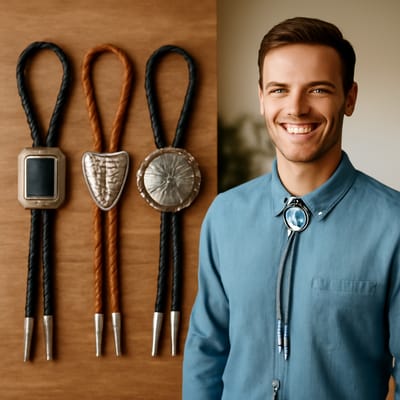
Most “styles” of a bolo tie come down to three parts: the cord material, the slide design, and the tips (the ends). Once you know what you’re looking at, shopping gets much easier.
1) Classic Western (everyday)
This is the most recognizable bolo tie style: a leather or braided cord, a medium-size slide, and simple metal tips. It pairs naturally with Western shirts, chambray, denim jackets, and boots.
2) Dress bolo (sleeker, more minimal)
A dress bolo tie usually has a thinner cord (or a more refined leather), a smaller slide, and polished tips. The goal is clean lines—great with a crisp button-down and a tailored jacket.
3) Statement slide (the “centerpiece” look)
Here, the slide is large, bold, and meant to be noticed—think oversized shapes, engraved finishes, or high-contrast materials. Keep the rest of the outfit quieter so the bolo tie doesn’t compete with patterns.
4) Vintage-inspired (heritage vibe)
Vintage-style bolo ties often use warmer-toned metals, patina finishes, and thicker cords. They look especially good with suede, denim, and earth tones.
A quick buying tip: if the slide looks great but the cord and tips look cheap, the whole bolo tie will read low quality—balance matters.
Leather, cord, tips: which materials actually change the look?

Materials are the biggest “make or break” factor for a bolo tie, especially if you want it to look intentional rather than like a novelty item.
Cord choices (what you’ll feel all day)
- Leather bolo tie cord: the most common. Look for even coloring, smooth edges, and a cord that holds its shape without cracking.
- Braided leather: adds texture and a rugged feel; great for casual outfits.
- Synthetic cord: can be budget-friendly, but it may shine oddly or feel stiff.
Slide/clasp materials (what everyone notices)
Slides are often metal, sometimes with inlays or decorative fronts. A good slide should feel solid and adjust smoothly—if it slips, your bolo tie won’t sit right.
Tip finishes (small detail, big signal)
Tips are usually metal and can be rounded, pointed, or cylindrical. Matching the tip finish to your other hardware helps:
- silver-toned tips with a silver watch/buckle
- gold-toned tips with warmer metals
Practical check: lightly tug the tips—if they feel loose, that’s a durability red flag. Strong construction matters because tips take the most wear in daily use.
How do you choose a bolo tie style for casual vs formal outfits?

The most common frustration with a bolo tie is buying one you love… then realizing you don’t know where it fits. Use these quick rules so your styling feels natural.
Casual styling (easy wins)
For casual looks, you have room for texture and personality:
- thicker leather or braided cord
- medium-to-large slide
- denim, chambray, flannel, or a simple tee under a jacket
Wear it slightly looser if you want a relaxed vibe—think “open collar” energy without actually unbuttoning too far.
Formal styling (keep it refined)
A bolo tie can work for dressier settings when it’s sleek:
- thinner, smoother cord
- smaller, polished slide
- clean metal tips that don’t look bulky
Wear it higher, closer to the collar line, like you would a neat tie knot. If you’re wearing a blazer, aim for a slide size that doesn’t fight your lapels.
Quick fit check
Your bolo tie should sit centered and stay put. If the slide drifts sideways or slips down constantly, the clasp mechanism may not grip well—or the cord may be too slippery for that slide.
If you’re shopping online, look for close-up photos of the slide’s back (the grip mechanism) and the tip attachment—those details predict real-world wear.
Ready to buy? A simple checklist + a free mini guide you can save

Even with an informational search, it’s smart to shop with a checklist—because small quality details decide whether a bolo tie becomes a staple or sits in a drawer.
Bolo tie buying checklist (fast, practical)
- Cord material: leather that looks even and feels flexible (not plasticky).
- Slide grip: it should adjust smoothly but hold without slipping.
- Tip attachment: secure, straight, and not wobbly.
- Proportions: slide size matches your build and the formality of your outfits.
- Finish matching: tips/slide tone fits your usual belt buckle, watch, or jewelry.
Smart price expectations
Budget-friendly options can look good, but they often compromise on slide grip or tip durability. Mid-range bolo ties tend to be the sweet spot for daily wear, while higher-end options usually add better materials, smoother hardware, and cleaner finishing.
Want a printable version?
If you like shopping with something you can reference on your phone, create a simple “Bolo Tie Fit & Quality” note using the checklist above—or download a one-page guide when available on our site.
When you’re ready to compare options, look for product pages that show the clasp back, cord thickness, and tip construction—those are the details that separate a great bolo tie from a frustrating one.