Popular Tartans: Hunting, Stewart & Modern Plaids 2026
Breadcrumb
Home > neckties > types of Necktie > bow Tie
Why do Hunting, Stewart, and modern tartans stay popular?
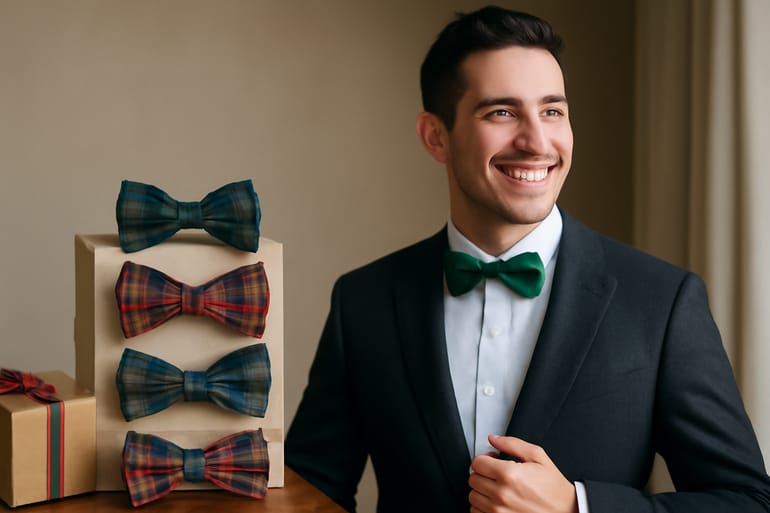
Popular tartans endure because they solve the same problem you face when buying or styling tartan neckwear: you want a pattern that reads as intentional, not costume-y. Hunting tartans tend to be darker and more muted, which makes them easy to wear with navy, charcoal, and tweed. Stewart tartans (especially red-forward versions) are high-contrast and celebratory—great when you want the bow tie to be the focal point. And modern plaids borrow the tartan grid language while loosening the “rules,” so they feel current in contemporary suits.
A tartan bow tie also has a unique scale challenge: the pattern is small, so the sett (the repeating block of stripes) can look busy if the colors are too loud or the fabric too shiny. Choosing a classic tartan like Hunting or Stewart reduces that risk because those palettes are proven on small accessories.
If you’re deciding between silhouettes first (batwing vs butterfly, slim vs classic), it helps to read tartan Bow Tie Styles: Classic vs Modern, then come back and match your favorite style to one of the patterns below.
Quick takeaway: pick Hunting for subtle versatility, Stewart for statement occasions, and modern plaids for a fashion-forward look that still nods to tradition.
What is a “Hunting” tartan, and when does it look best?

In menswear, “Hunting” tartans are commonly recognized by deep greens, navy, and black with restrained accent lines. The overall effect is grounded and outdoorsy—more texture than flash—which is why they work so well in fall and winter wardrobes.
When to choose a Hunting tartan bow tie
- You want an everyday tartan that won’t overpower a white or light-blue shirt.
- You wear tweed, flannel, or textured wool suits and want the bow tie to blend rather than shout.
- You’re styling for venues like barn weddings, country clubs, or evening receptions where dark tones feel appropriate.
Styling moves that rarely fail
Pair a Hunting tartan bow tie with:
- A white Oxford or pinpoint shirt
- A navy or charcoal suit
- A plain pocket square (linen white or a solid that matches one stripe)
If you’re unsure how far you can push the rest of the outfit, the safest route is to keep the suit and shirt clean and let the tartan be the only pattern. The outfit logic is the same as in pairing Tartans: Best Shirt and Suit Combinations, where contrast and spacing matter more than matching every color line.
Buying note: darker tartans can hide wrinkles, but they also hide poor construction—so check that the bow keeps its shape and the edges are crisp.
Why is Stewart tartan such a statement pattern for bow ties?

Stewart tartans are famous because they’re instantly recognizable: bold red fields, high contrast, and strong striping that reads well even at a small scale. On a tartan bow tie, that visibility is the point—you’re choosing Stewart because you want the accessory to be noticed.
Best moments for Stewart tartan
- Holiday parties and winter events (Stewart’s palette naturally fits)
- Celebratory occasions where photos matter
- When your suit is simple and you want a “centerpiece” accessory
How to keep Stewart from looking overwhelming
Use one of these balancing strategies:
- Neutral suit, neutral shirt: black/charcoal/navy suit + white shirt is the cleanest canvas.
- One echo color: match a subtle accessory (socks or pocket square border) to one stripe.
- No competing patterns: skip patterned shirts; solids keep the tartan crisp.
If you’re wearing Stewart to a formal event, pay extra attention to finish and fabric. A shiny fabric can make a red tartan look louder than intended. For a more formal checklist—dress codes, shirt collars, and how to avoid “too casual”—how to Choose a Tartans Pattern for Formal Events lays out the decision points clearly.
Best For Wedding planners and grooms: Stewart is a reliable “photo tartan.” It reads from a distance, coordinates easily with neutral suits, and can unify groomsmen even if body types and jacket cuts differ.
Are modern plaids “real” tartans—and should you buy them?
Modern plaids often look tartan-adjacent: they use the familiar grid and stripe rhythm but may not follow traditional registrations or historical setts. For you as a shopper, the question isn’t whether it’s “real”—it’s whether it’s cohesive, wearable, and well-made.
When modern plaids are the better choice
- You want a tartan look that feels contemporary with slim suits and minimal styling.
- You’re matching a brand-new color story (sage, dusty blue, monochrome grey) that classic tartans don’t always cover.
- You’re building a wardrobe where the bow tie needs to work beyond heritage-themed events.
What to inspect before buying
- Scale: small accessories need simpler linework; too many micro-stripes can shimmer on camera.
- Color harmony: two to four main tones usually look sharper than six-plus.
- Fabric hand: a matte wool or cotton often looks more premium than a slick polyester.
And don’t forget the practical choice: self-tie vs pre-tied. A modern plaid in a very stiff fabric can be frustrating to shape as a self-tie, while a soft fabric can collapse in a pre-tied form. That trade-off is exactly what self-Tie vs Pre-Tied Tartans: Pros, Cons, and Fit helps you decide.
Best For Fashion students: modern plaids are a great sandbox for studying proportion and contrast—try sketching the same plaid in two scales (large vs small) and you’ll see immediately why bow ties demand cleaner pattern structure.
How do you choose the right tartan bow tie (fit, price, and purpose)?
When you’re buying a tartan bow tie, you’re really choosing for three things: occasion, visual intensity, and comfort/fit.
A simple decision framework
- Start with the event: weddings and formal dinners usually reward classic palettes (Hunting or Stewart) and matte fabrics.
- Set the intensity: if your suit is plain, you can go bolder; if your outfit already has texture or pattern, go darker and simpler.
- Get the fit right: adjustable neck sizing should cover your collar size without maxing out the hardware.
What to expect by price tier (typical ranges)
- Budget: basic fabrics and simpler construction; good for occasional wear.
- Mid-range: better stitching, cleaner symmetry, more durable fabric blends.
- Premium: superior hand-feel, better shaping, and often stronger longevity if you wear bow ties often.
Avoid these common buying mistakes
- Choosing a tartan that matches everything (it rarely does); instead, match it to two suits you already own.
- Ignoring fabric care; some tartans hold creases and lint more than you expect.
- Buying the wrong style for your collar and face shape.
That last point is where ongoing maintenance matters too—especially if you’re buying for repeated events. A tartan that pills or warps quickly won’t look sharp long-term, so it’s worth following the habits in tartan Bow Tie Care Guide: Maintenance & Longevity.
Best For Gift buyers: choose an adjustable size, a medium-width classic shape, and a tartan with 2–4 dominant colors. It’s the safest blend of flexibility and “wow.”
FAQ: Popular tartans, bow ties, and formal styling
Is Hunting tartan appropriate for a black-tie event?
Usually only if the event is black-tie optional or creative black tie. For strict black tie, keep patterns minimal and choose a very dark, matte tartan that doesn’t read casual under flash photography.
Which Stewart tartan is easiest to style with suits?
A red-forward Stewart is the most recognizable and pairs best with charcoal, navy, and black suits. Keep the shirt solid white so the pattern stays crisp and the look doesn’t get busy.
Do modern plaids look cheaper than traditional tartans?
Not automatically—quality depends on fabric and construction. Modern plaids can look very premium when the color palette is controlled and the pattern scale is clean on a small bow tie.
What tartan bow tie should wedding planners recommend for groomsmen?
Choose a tartan that photographs well and won’t clash with varied complexions—Stewart is a reliable high-contrast option, while darker Hunting styles are safer for rustic themes. Standardize on one shirt color (usually white) to keep the look uniform.
What’s the safest tartan bow tie to buy as a gift?
Go for an adjustable, mid-width bow tie in a classic palette like a dark Hunting tartan or a restrained modern plaid. Avoid ultra-bright color mixes unless you know the recipient’s suit colors and comfort level.
How should fashion students analyze tartans for accessory design?
Focus on sett scale, stripe hierarchy, and contrast at a distance. A bow tie compresses the pattern, so simplifying line density often produces a clearer, more intentional design.
How do I stop a tartan bow tie from looking like a costume?
Keep the rest of the outfit simple: solid shirt, solid suit, minimal accessories, and one texture maximum. Choose a tartan with fewer dominant colors and a matte fabric finish for a more modern, wearable result.
Are tartan bow ties seasonal?
They’re easiest in fall and winter because wool, flannel, and darker palettes feel natural then. Lighter-weight cotton tartans and modern plaids can work in spring and summer if the colors are softer and the outfit is breathable.