Tartan Bow Tie Care Guide: Maintenance 2026
Breadcrumb
Home > neckties > types of Necktie > bow Tie
Why tartan bow tie care matters (and what ruins them fast)
A tartan bow tie can look sharp for years—if you treat it like the structured, color-sensitive accessory it is. Tartan bow tie care isn’t just about “keeping it clean.” It’s about protecting the weave, keeping the set of the bow crisp, and preventing fading so the pattern stays high-contrast.
The fastest ways people shorten a tartan bow tie’s life are surprisingly common:
- Over-cleaning (especially harsh detergents or frequent dry cleaning)
- Heat damage from ironing directly on the face fabric
- Bad storage (crushing the bow, trapping moisture, or hanging by the knot until it distorts)
- Spot-cleaning mistakes (rubbing stains deeper into the fibers)
- Color bleed from water/cleaners on saturated tartan dyes
Care also depends on what you’re wearing: a more structured, crisp-looking bow often needs gentler reshaping than a softer one. If you’re still deciding which build suits your lifestyle, tartan Bow Tie Styles: Classic vs Modern helps you understand how construction choices affect daily wear and maintenance.
If your goal is longevity, the right mindset is: clean less, air out more, handle gently, and store smart. The sections below give you a practical routine that fits both occasional formal wear and frequent rotation.
What fabric is your tartan bow tie—and how should you treat it?

Before you clean anything, identify the fabric. Tartan bow ties show up in wool blends, cotton, silk, and synthetics, and each reacts differently to water, friction, and heat. If you’re unsure, check the label or test in a hidden area (like inside the neck band).
Quick fabric care rules
- Wool / wool blends: Avoid soaking. Water and agitation can felt fibers and blur the pattern edges. Spot clean lightly; steam cautiously.
- Cotton: More forgiving. Gentle spot cleaning works well, but avoid aggressive scrubbing that lifts dye.
- Silk: Sensitive to water spots and pressure marks. Blot only; consider professional cleaning for anything beyond a tiny mark.
- Polyester / synthetics: Usually easy-care, but heat can permanently flatten texture or create shine.
Pay attention to construction
- Interfaced/structured bows hold shape but can crease sharply if crushed.
- Soft, drapier bows resist creasing but can lose definition if stored poorly.
If you’re buying for a specific event (especially black-tie-adjacent weddings), pattern choice and formality matter as much as care. For a helpful baseline on selecting event-appropriate checks, how to Choose a Tartans Pattern for Formal Events explains how scale, contrast, and tradition affect the look.
Best For Fashion Students: Treat this like a mini textile lab—note fiber content, weave texture, and how the pattern behaves under light steaming. Those observations will make your styling and sourcing decisions more accurate.
How do you clean a tartan bow tie without fading the pattern?

Most tartan bow ties don’t need full washing after one wear. The safer routine is airing + spot cleaning, with a professional option for stubborn marks. When in doubt, follow the care label.
Step-by-step: safer spot cleaning
- Air it out first for 30–60 minutes to let body moisture evaporate.
- Blot, don’t rub. Use a clean white cloth; press gently to lift residue.
- Use minimal moisture. Dampen the cloth—not the bow tie—then dab the stain from the outside in.
- Mild soap only if needed. A tiny amount of gentle soap in cool water; keep contact brief.
- Rinse by blotting with a fresh damp cloth (again, minimal water).
- Dry flat on a towel, reshaping the bow lightly so it dries in form.
Common stain triage
- Makeup: Blot, then a tiny amount of mild soap; avoid oils.
- Food/grease: Blot first; if it’s oily, professional cleaning is often safest.
- Wine: Blot immediately; cool water dabbing; don’t “chase” the stain with heavy water.
When to use a professional cleaner
Choose professional cleaning if the bow tie is silk, heavily interfaced, vintage, or has a set-in stain. Ask for a gentle process and mention dye sensitivity.
Best For Wedding Planners: Build a “day-of accessory kit” with white cloths, blotting paper, and a small bottle of water. Quick blotting within minutes prevents most permanent marks in photos.
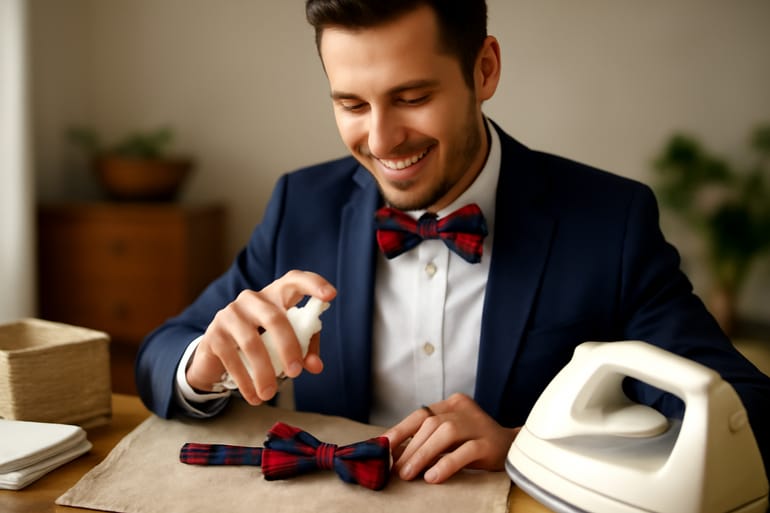
How should you press, steam, and reshape a tartan bow tie?
Most damage happens here: direct ironing can create shine, flatten texture, and distort the bow’s edges. The goal is to restore crispness without setting a hard crease across the face.
Safer pressing rules (works for most fabrics)
- Start with steam first (from a distance) to relax wrinkles.
- If you must iron, use a press cloth (clean cotton) and the lowest effective heat.
- Never drag the iron; press and lift.
- Avoid pressing across the bow “wings” where you want soft curvature.
How to reshape the bow
- Lay it flat and let steam relax it for 10–15 seconds.
- Use your fingers to re-form the central knot and smooth the edges.
- Let it cool completely before storing—cooling helps the shape hold.
Quick fixes before an event
- Hang the bow tie in a steamy bathroom for 3–5 minutes (no direct water).
- Smooth with your hands, then rest it flat.
Best For Wedding Planners and Grooms: Do reshaping the night before, not minutes before the ceremony. You’ll avoid last-second heat mistakes and keep the tartan pattern crisp in close-up photos.
If you’re comparing classic, sharper silhouettes versus softer modern profiles, maintenance effort can differ slightly; tartan Bow Tie Styles: Classic vs Modern is a useful reference when deciding what “crisp” should mean for your look.
How do you store tartan bow ties for longevity (and travel safely)?
Storage is the quiet hero of tartan bow tie maintenance. A bow tie that’s cleaned perfectly can still look tired if it’s crushed for months.
Everyday storage that prevents distortion
- Store flat in a drawer or on a shelf, not hanging by the knot.
- Use a breathable pouch; avoid sealed plastic if there’s any humidity.
- Keep away from direct sunlight to reduce pattern fading.
- Rotate wears so one tie doesn’t get constant abrasion at the neck band.
Travel tips (so you arrive crease-free)
- Pack the bow tie in a hard-sided case or between layers of clothing.
- Stuff the bow lightly with tissue to support the wings.
- If it arrives wrinkled, use steam and finger-reshaping—skip aggressive ironing.
Longevity checklist
- Air out after each wear
- Spot clean only when needed
- Steam more often than you wash
- Store flat, cool, and dry
Best For Gift Buyers: If you’re gifting a tartan bow tie, include a small protective case or pouch. It makes the gift feel premium and dramatically improves long-term shape and pattern clarity.
Many shoppers also appreciate care guidance before they buy—especially if they’re choosing a tartan for a formal calendar. Pairing and event-appropriateness are covered elsewhere (including a guide on choosing patterns for formal events), but good storage is what keeps that “new” look through repeat wears.
FAQ: Tartan Bow Tie Care, Cleaning, and Storage
Can you wash a tartan bow tie in the washing machine?
Usually no. Machine washing can twist the shape, stress stitching, and fade tartan dyes. Spot cleaning and gentle steaming are safer for most bow ties.
How do I remove stains from a tartan bow tie without spreading them?
Blot first with a clean white cloth and use minimal moisture. Work from the outside of the stain inward, and avoid rubbing, which pushes residue deeper into fibers.
Should wedding planners bring a backup tartan bow tie for the wedding party?
Yes, especially for groomsmen or long events with food and drinks. A backup avoids panic if there’s a visible stain or a crushed bow right before photos.
What’s the best way to store a tartan bow tie long-term?
Store it flat in a cool, dry place away from sunlight, ideally in a breathable pouch. Avoid hanging by the knot because it can distort the bow’s shape over time.
What should gift buyers include with a tartan bow tie to help it last?
A simple protective case or fabric pouch is the most useful add-on. It prevents crushing in drawers and makes travel storage easier.
How can fashion students evaluate tartan bow tie quality for longevity?
Check fiber content, stitching at stress points, and whether the fabric shows shine marks when lightly pressed. Also assess how well the bow returns to shape after gentle steaming.
How do I keep a tartan bow tie crisp for a groom on the day of the wedding?
Reshape and steam the night before, then store it flat so it holds form. On the day, use light steam and finger-shaping rather than direct ironing to avoid shine and hard creases.