Care and Maintenance of Cravats: UK Guide 2026
Breadcrumb
Home > Neckties > Types of Necktie > Cravat
How do you keep a cravat looking crisp without ruining it?
Good cravat care is mostly about avoiding the two things that age neckwear fastest: heat and crushing. Unlike many neckties, a cravat often sits closer to your neck and gets handled more (adjusted, tucked, retied), so oils, fragrance, and friction build up quicker.
The quick “after-wear” routine (2 minutes)
- Untie gently (don’t yank the knot tight to remove it). If you wear a pre-tied style, unfasten rather than pulling over your head.
- Air it out for a few hours on a wide hanger or laid flat—this lets moisture evaporate and helps odours dissipate.
- Brush off dry marks with a clean, soft clothes brush. For lint on wool blends, use a lint roller lightly.
- Rest it: rotate cravats instead of wearing the same one repeatedly. Fabric recovery reduces permanent creasing.
What not to do (common UK formalwear mistakes)
- Don’t blast it with a hot iron “just to fix a ripple.” Most damage comes from shine, flattening, or scorched fibres.
- Don’t fold it tightly for a jacket pocket; cravats crease more visibly because of their width.
- Don’t spray aftershave onto your neckwear—alcohol can leave tide marks, especially on silk.
If you’re also deciding whether a cravat or a necktie is the better choice for an event, the spoke article titled “Cravat vs necktie: differences explained for UK fashion” will help you match the right piece to the dress code—then care for it accordingly.
Cleaning a cravat: what’s safe for silk, cotton, and wool blends?

The safest approach for cleaning is: spot-clean first, and only escalate if you must. “Care and maintenance of cravats” isn’t about constant washing—it’s about preventing stains from setting and knowing when to hand work versus when to use a professional.
Silk cravats (most common for weddings)
Silk shows water marks easily. For fresh spills:
- Blot—don’t rub with a dry, clean cloth.
- Sprinkle a little cornflour/talc on oily marks; leave 20–30 minutes, then brush off.
- For small marks, use a barely damp cloth with a tiny amount of mild soap, then dab with clean water and blot dry.
If the stain is large, coloured, or on a printed silk, dry cleaning is usually the best option. Ask for a cleaner experienced with delicate accessories.
Cotton and cotton-linen blends
These are generally more forgiving:
- Hand wash in cool water with mild detergent.
- Rinse thoroughly and press out water in a towel (no wringing).
- Lay flat to dry to prevent distortion.
Wool and wool-silk blends
Wool can felt or lose shape:
- Spot-clean only at home.
- Use a damp cloth and gentle dabbing.
- If it smells “musty,” airing and light steaming (at distance) is safer than washing.
Best For Stylists
Build a “save kit” in your styling bag: blotting cloth, travel steamer, cornflour, and a small brush. It prevents last-minute outfit changes when a client marks their neckwear.
How do you remove creases from a cravat without flattening the fabric?
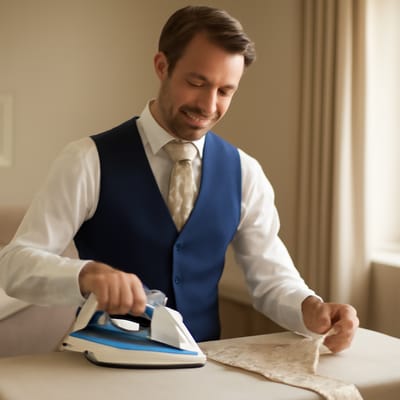
Creasing is the #1 frustration with cravats because the fabric area is broad and sits under waistcoats, lapels, and scarf pins. The goal is to relax fibres while preserving texture and drape.
The safest method: steam, not direct ironing
- Hang the cravat in a bathroom while a hot shower runs for 5–10 minutes.
- Smooth it lightly with your hands—no pulling.
- Let it dry fully before storing.
Hand steamer tips (best for most UK households)
- Keep the steamer head a few centimetres away.
- Steam from the back side first.
- Use short passes and let the fabric cool between passes.
If you must iron (last resort)
- Turn it inside out or place a pressing cloth on top.
- Use the lowest heat appropriate for the fabric.
- Press—don’t slide—so you don’t distort the shape.
- Avoid crushing decorative textures or jacquard weaves.
Preventing creases in the first place
- Tie with enough room so the knot isn’t overly tight.
- Avoid heavy clips that pinch the fabric.
- If you wear it with a waistcoat, check for friction points at the V opening.
Best For Tailors
When fitting clients, watch how the cravat sits against the shirt collar and waistcoat edge. A millimetre of collar height adjustment can reduce rubbing and stop repeat creases forming in the same spot.
Storage and travel: how should you store a cravat to keep its shape?
Storage is where good cravat care pays off long-term. Poor storage leads to edge curl, permanent fold lines, and crushed knots—especially with silk.
At home: the three best storage options
- Roll and place in a drawer: roll loosely from one end (never tight), then store in a divider so it doesn’t uncoil.
- Hang on a wide accessory hanger: best for pieces you wear often; avoid thin hooks that create a hard bend.
- Lay flat in a breathable box: ideal for special-occasion cravats you want to keep pristine.
Keep it away from the usual culprits
- Sunlight (fades colour)
- Damp wardrobes (can cause odour or mildew)
- Rough Velcro or zips (snags)
Travel: arriving crease-free
- Use a tie/cravat case with gentle structure.
- If you don’t have one, roll the cravat and place it inside a shirt collar area in your suitcase for protection.
- Pack it last so it stays on top.
Best For Fashion Bloggers
If you photograph cravats regularly, store them by colour family and texture. It speeds up outfit planning and helps you avoid “camera surprises” like shine marks from over-ironing.
Light buying guidance (without overthinking it)
If you’re shopping for a new piece, look for neat hand-rolled edges, consistent stitching, and fabric that springs back after a gentle scrunch—those details tend to handle repeated wear and careful maintenance better.
Care and maintenance checklist (plus a free guide idea)
If you want your cravat to last for years—through weddings, dinners, and formal events—treat it like a small luxury item: maintain it little and often, and avoid “panic fixes.” Here’s a practical checklist you can save.
Weekly / after-event checklist
- Air out and rest the cravat for 24 hours before wearing again.
- Spot-check for collar oil or makeup transfer (common after long events).
- Brush lightly and remove lint before storing.
Monthly checklist
- Check edges for loose threads; snip carefully (don’t pull).
- Inspect for dull patches (often heat damage) and switch to steaming methods.
- Refresh storage: keep it dry, uncrowded, and away from sunlight.
When to use a professional cleaner
- Strong odours that don’t lift with airing
- Large stains (wine, gravy, coloured sauces)
- Delicate printed silk where water might leave a mark
Best For Formalwear Buyers
Before a big occasion, do a “fit rehearsal” a week ahead. If you notice creasing, you have time to steam gently or arrange professional cleaning—rather than improvising with a hot iron the night before.
Guide download idea (lead magnet)
A downloadable one-page “Cravat Care & Packing Checklist” works brilliantly for event season. Include stain triage steps, steamer settings, and a packing diagram so you can arrive in the UK countryside (or central London) looking sharp.
Frequently Asked Questions
Can I wash a silk cravat at home?
It’s risky because silk can develop water marks and lose its finish. For small spots, blot and spot-clean carefully; for bigger stains or printed silk, use a reputable dry cleaner.
How do I remove a crease from a cravat quickly on the day?
Steam is safest: hang it in a steamy bathroom or use a handheld steamer at a short distance. Let it cool and dry fully before tying to avoid new creases.
Is cravat care different from necktie care?
Yes, slightly. Cravats tend to be wider and crease more visibly, so storage (rolling or flat storage) matters more; neckties are often more forgiving when hung.
What’s the best way for stylists to keep client cravats camera-ready?
Carry a small kit: blotting cloth, a soft brush, and a travel steamer. It lets you fix shine-free creases and handle minor marks without emergency ironing.
How should fashion bloggers store cravats between shoots?
Store by colour and fabric type, and avoid tight folds that photograph as hard lines. Rolling loosely or laying flat in a breathable box keeps them ready for quick outfit swaps.
What should tailors watch for when a client complains their cravat creases badly?
Check friction points at the collar, waistcoat V, and any pins or clips. Small fit tweaks—like collar height or waistcoat opening—often reduce repeated creasing.
Should formalwear buyers dry clean a cravat after every event?
Not usually. Frequent dry cleaning can be harsh over time; spot-clean and air out after wear, then dry clean only when stains, odours, or heavy soiling require it.