How to Tie a Cravat: Step-by-Step Guide 2026
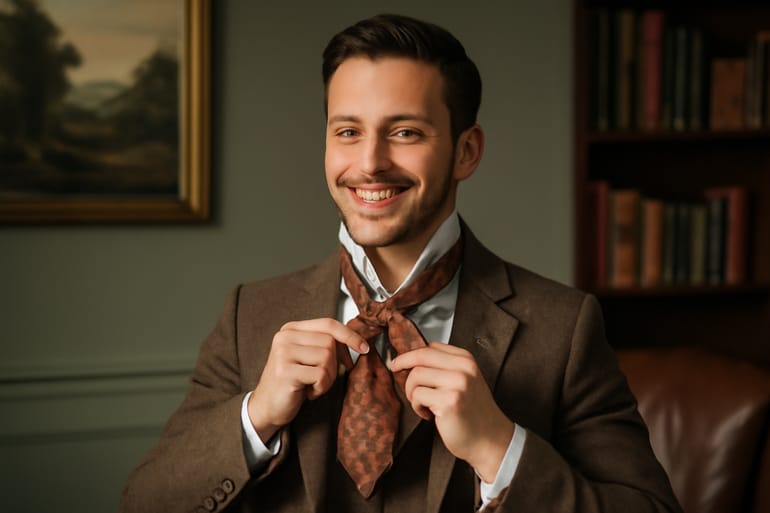
Breadcrumb
Home > Neckties > Types of Necktie > Cravat
How do you tie a cravat without it looking bulky?
Tying a cravat well is mostly about shape control and tension, not complicated knots. If your cravat keeps looking bulky, it usually comes down to three things: too much fabric in the front, a knot that’s over-tightened, or ends that aren’t laid flat.
Before you start: a quick UK-style setup
- Start with a well-pressed cravat (creases become lumps).
- Wear a shirt with enough neck room—cravats need space to drape.
- Decide your fastening: a tie pin (classic) or a hidden tuck (cleaner for daytime).
Cravat vs necktie (why the tying feels different)
A necktie is designed to be narrow and structured, so it stacks neatly into knots. A cravat is wider and softer, meant to create a controlled fold at the neck. That’s why “tightening” like a necktie often makes a cravat look thick and messy.
You’ll get the best results when you aim for a flat, slightly open look at the throat, then tidy the ends. The next sections walk you through a dependable step-by-step method, plus fixes for the most common problems.
Step-by-step: the classic cravat tie (with a pin)
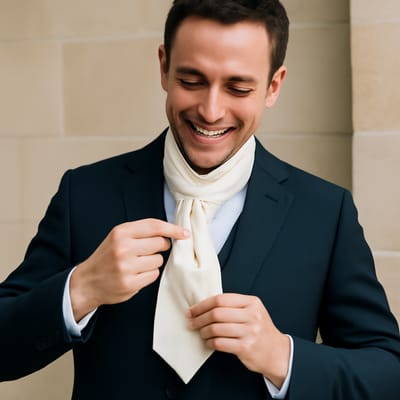
This is the most reliable method for weddings, formal events, and traditional British styling. It creates a neat front with enough volume to look intentional—without the “overstuffed” effect.
1) Drape and centre
- Place the cravat around your neck with the centre at your throat.
- Let both ends hang down your chest, roughly even.
2) Cross and form the front
- Cross the right end over the left (choose the side that feels natural).
- Bring the top end up and through the neck loop, like the first move of a necktie.
3) Create the fold (the key difference)
- Instead of tightening hard, flatten the knot area with your fingers.
- Fold the top end down to make a clean front panel.
4) Tuck and secure
- Bring the lower end up behind that front panel and tuck it down.
- Adjust the front so it sits flat and symmetrical.
- Add a tie pin through both layers (usually just below the knot), then angle the ends neatly into your waistcoat or shirt front.
Fit check (30-second rule)
- You should be able to slide one finger under the cravat comfortably.
- The front should look smooth, not puckered.
- Ends should disappear cleanly—no long tails swinging below the waistcoat.
Alternative styles: how to tie a cravat without a pin

Not every look needs a pin. For daytime events, fashion-forward outfits, or when you want a cleaner line for photos, a pin-free tie can look more modern—if you control the drape.
The hidden tuck (simple and tidy)
- Tie the classic method up to the point where the front panel is formed.
- Instead of pinning, tuck the inner end deeper behind the front fold.
- Smooth the front panel flat, then tuck both ends into a waistcoat or the top of your trousers (high-waisted looks work especially well).
The relaxed day cravat (best with softer fabrics)
- Cross the ends, bring one up through the loop, then leave it slightly open.
- Fold both ends outward so they frame the centre.
- Tuck the ends down; rely on your collar and waistcoat to hold it.
Fabric matters more without a pin
- Silk holds crisp folds but shows creases—press lightly.
- Cotton/linen blends stay put and feel less slippery.
- Wool or heavier weaves can look luxurious, but bulk up fast—keep folds minimal.
If your cravat slides during the day, it’s usually too loose at the neck or the fabric is too slick. Tighten slightly, flatten the fold again, and make sure the ends are tucked with enough friction to stay in place.
Fix common cravat problems (twisting, slipping, odd proportions)
Even when you know how to tie a cravat, a few small issues can ruin the finish. Here are the quick fixes UK formalwear pros use.
Problem: the knot looks bulky
- Use less tightening and more flattening.
- Keep the fold shallow; don’t double the fabric more than needed.
- Choose a lighter fabric for smaller collars and slimmer faces.
Problem: the cravat twists or looks uneven
- Before crossing, lay both ends completely flat.
- After pulling through the neck loop, rotate the fabric so the right side faces out.
- If one end is longer, don’t “pull it tight”—re-centre and start again. Cravats punish shortcuts.
Problem: it keeps slipping down
- Check shirt collar fit; a loose collar won’t support the drape.
- For pin-free styles, tuck ends deeper and consider a waistcoat for stability.
- A discreet pin (even a simple one) often looks more polished than constant adjusting.
Problem: proportions look off in photos
- The front panel should sit around mid-chest when worn with a waistcoat.
- On broader builds, a slightly wider fold reads more balanced.
- On slimmer builds, keep the fold narrow and the knot area flatter.
Light buying guidance (UK shoppers)
If you’re shopping for your first cravat, you’ll usually find it easiest to learn on a medium-weight silk or a cotton-silk blend. Avoid ultra-slippery finishes until your hand placement is consistent.
Best For Stylists, Bloggers, Tailors, and Formalwear Buyers
If you’re tying a cravat for someone else—or you need it to look consistent across fittings and photos—use these segment-specific shortcuts.
Best for stylists: repeatable results under time pressure
- Standardise one method: the classic pin tie is the most predictable.
- Carry a small kit: 2 pins (different lengths), a lint roller, and a compact steamer.
- Build a “camera check” habit: step back, check symmetry, then flatten the front panel once more.
Best for fashion bloggers: looks that read well on camera
- Prefer pin-free or minimal-pin styling for a cleaner front.
- Choose fabrics with visible texture (subtle weave beats shiny flat silk in harsh lighting).
- Photograph at a slight angle—cravats look better with depth than straight-on.
Best for tailors: fit-first adjustments
- Confirm collar size and neck height before blaming the cravat.
- For clients with shorter necks, keep the knot flatter and fold narrower.
- Consider how the cravat interacts with a waistcoat: the ends should tuck without bunching the front.
Best for formalwear buyers: the safest wedding/event approach
- Wear it with a waistcoat for stability and a more traditional UK silhouette.
- If you’ll be moving a lot (dancing, mingling), use a pin—comfort beats constant readjustment.
- If you’re unsure, aim for “neat and classic” over experimental folds.
If you want a quick reference to practise, turn these steps into a one-page checklist you can print or save on your phone (it’s the easiest way to improve fast).
Frequently Asked Questions
Is a cravat the same as an ascot?
Not exactly. In everyday UK usage they’re related, but an ascot often refers to a formal, wide neckwear style worn with morning dress, while “cravat” can be used more broadly for similar folded neckwear.
How do I stop my cravat from looking too big?
Use less tightening and more flattening, and keep the fold shallow. Lighter fabrics and a well-fitted collar also reduce bulk immediately.
Can I tie a cravat without a waistcoat?
Yes, but it’s harder to keep the ends hidden and stable. If you skip the waistcoat, use a pin or tuck the ends deeper into your shirt front so they don’t drift.
What’s the easiest cravat style for a wedding?
The classic pin tie is the most dependable: it stays put, looks formal, and photographs well. Pair it with a waistcoat for the cleanest lines.
Best cravat tying tip for stylists working with multiple clients?
Standardise the classic pin method and carry pins in two lengths. It saves time and gives consistent symmetry across different neck sizes.
How can fashion bloggers make a cravat look good on camera?
Choose a textured fabric and avoid over-shiny finishes under strong lighting. Keep the front panel flat and slightly open at the throat for a more natural look in close-ups.
What should tailors check if a cravat keeps slipping?
Start with shirt collar fit and neck height—those determine support. If the collar is loose, the cravat will shift no matter how well it’s tied.
What should formalwear buyers look for when purchasing their first cravat?
Go for a medium-weight silk or a cotton-silk blend and avoid ultra-slippery fabrics at first. A simple pin-friendly design makes learning and all-day wear much easier.