Cravats & Ascots: British Neckwear Masterclass 2026
Breadcrumb
What makes cravats and ascots uniquely British formal neckwear?
Cravats and ascots sit in a sweet spot of UK style: more expressive than a standard tie, but still rooted in British formalwear tradition. If you’ve ever wondered why some wedding looks call for a draped neckpiece instead of a long tie, this is the masterclass—covering terminology, types, fabrics, tying styles, and practical buying guidance for the UK.
Cravat vs ascot (in everyday UK terms)
In modern British shopping language, “cravat” is often used as an umbrella term for formal neckwear that wraps around the neck and drapes or tucks into the shirt/waistcoat. “Ascot” commonly refers to a specific more formal cravat style associated with traditional day dress (especially morning dress), though many retailers blur the labels.
Where they fit in your wardrobe
- Weddings and formal daytime events: cravats and ascots are at their best.
- Heritage tailoring: they add a classic, intentional finish.
- Modern suits: they can work, but you’ll want to match the formality so it doesn’t feel costume-like.
Because this page is your hub, use it as a reference point: start with the basics, then dip into the sections that match your event, season, and comfort preferences.
Neckties, cravats, and ascots: the terminology UK shoppers actually face

One of the biggest pain points when buying British neckwear online is that product names don’t always match how you plan to wear them. The easiest way to avoid confusion is to focus on shape and styling, not just the label.
Necktie (classic long tie)
A necktie is the familiar long, blade-shaped tie worn under a shirt collar with a structured knot. It’s the most versatile option for business and general smart dressing.
Cravat (wrap-and-drape neckwear)
A cravat typically wraps around the neck and creates a softer, broader look at the throat. Depending on the style, it may be tied, tucked, or secured with a pin. Many “wedding cravats” are designed to sit neatly with a waistcoat.
Ascot (formal daywear variant)
An ascot is commonly sold as a formal cravat style intended to be worn with traditional day dress—often with a waistcoat, sometimes with a tie pin. In UK contexts, it’s associated with race-day and morning dress aesthetics.
The practical takeaway
If you’re deciding what to wear (or what to buy), think in three questions:
- Do you need versatility across outfits? (necktie)
- Do you want a softer, more traditional look at the neck? (cravat)
- Are you dressing for formal daywear where tradition matters? (ascot-style cravat)
Cravat and ascot types: how to recognise the main styles at a glance
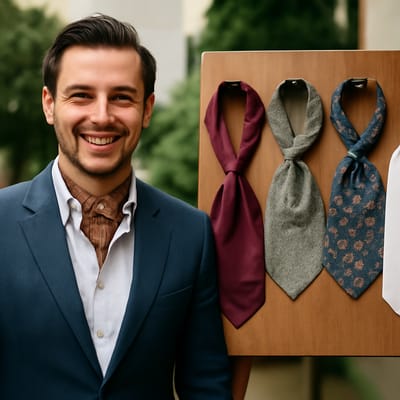
Cravats and ascots aren’t one single item—there are a few common silhouettes you’ll see in UK formalwear, and each solves a different styling problem (bulk, comfort, formality, or ease).
Common cravat/ascot styles you’ll encounter
- Day cravat / wedding cravat: designed to sit neatly at the neck and work with a waistcoat. Often easier to tie and more “contained” in shape.
- Ascot-style (traditional daywear): typically broader through the neck and front, intended to be arranged and tucked with a waistcoat for a classic formal look.
- Pre-tied cravat: built for speed and consistency—useful if you want the same shape all day and predictable photos.
Fit and silhouette cues
Look for:
- Neck width: wider often means a fuller, more traditional drape.
- Front shape: some are designed to form a central fold; others spread to fill the chest opening.
- How it finishes: tucked ends tend to look more formal with waistcoats.
Best for Tailors
When advising clients, treat the neckwear as part of a system: collar height, waistcoat V depth, and lapel width all affect whether the cravat looks elegant or crowded. A slightly lower waistcoat opening can make a fuller ascot-style arrangement look intentional rather than bulky.
Fabrics and materials: choosing the right drape for season and occasion

Fabric is where cravats and ascots either look effortlessly refined—or disappoint in real life. In UK formalwear, you’re balancing drape, texture, and how the material photographs.
The most common UK fabric choices
- Silk: the classic. Smooth silk can look very formal (sometimes shiny), while textured silk (jacquard, grenadine-like weaves) often reads richer and more modern.
- Cotton and linen blends: breathable for summer events, but can crease and may look casual unless the rest of the outfit is strongly tailored.
- Wool and heavier weaves: excellent for autumn/winter, with deeper colour and texture—but can feel warm at the neck.
How to match fabric to the event
- Weddings and formal daytime: silk is the safest bet; subtle texture tends to photograph best.
- Outdoor summer ceremonies: consider lighter blends, but avoid anything too floppy.
- Heritage looks: textured weaves add depth and avoid a “prom hire” sheen.
Buying tip: avoid the two common mistakes
- Overly glossy fabric that looks cheap in daylight photos.
- Fabric that’s too limp to hold a neat fold—especially if you want a clean, classic front.
Best for Fashion bloggers
If you’re creating content, fabric texture is a visual cheat code: close-ups of a textured silk fold instantly communicate “quality” on camera. Show the same outfit with a smooth, shiny finish versus a textured one to make the difference obvious.
Tying techniques and styling: how to make it look intentional (not theatrical)
The fear many UK shoppers have is looking like they’re wearing a costume. The difference between “theatrical” and “sharp” is usually just proportion, collar choice, and how cleanly the neckwear sits.
Styling principles that work almost every time
- Wear it with structure: a well-fitted jacket and (often) a waistcoat make cravats look purposeful.
- Mind the collar: you want enough room to arrange the fabric without forcing the collar open.
- Control the bulk: keep folds flat and deliberate; avoid an oversized puff at the throat.
Pin or no pin?
A tie pin can add formality and keep folds in place, but it’s optional. If you do use one, it should secure gently—never distort the fabric.
If you want the simplest route
A pre-tied option can be a smart choice for weddings and long days: it keeps the shape consistent, which is useful for photos and comfort.
Best for Stylists
On client shoots, test neckwear in motion. What looks neat in a mirror can shift when someone hugs, sits, or turns. A slightly firmer fabric and a flatter fold often outperform a dramatic drape on camera and in candid photos.
Formality, occasions, and pairings: UK rules for weddings, races, and beyond
Cravats and ascots are most powerful when they match the event’s formality and the outfit’s architecture. Use this as a UK-ready guide to avoid under- or over-dressing.
Weddings (guest, groom, and wedding party)
- Guests: a restrained cravat in textured silk can look polished, especially with a waistcoat.
- Grooms: cravats and ascot-style arrangements help you stand out without going loud.
- Wedding party: pre-tied options can keep everyone consistent.
Races and formal day events
These settings reward traditional choices. Ascot-style neckwear looks most at home when paired with classic tailoring and a waistcoat.
Business and smart casual
A necktie usually wins for everyday versatility. If you wear a cravat here, keep it subtle and let the tailoring do the heavy lifting.
Colour and pattern (simple guidance)
- Start with solids or subtle textures for maximum flexibility.
- Use pattern sparingly, especially if your waistcoat or suit already has texture.
Best for Formalwear buyers
If you’re buying for a single event, prioritise: comfort at the neck, compatibility with your waistcoat, and a fabric that photographs well. That’s often the difference between “rental look” and “tailored look,” even at mid-range prices.
Care, sizing, and fit: keeping your neckwear looking sharp
A cravat can look incredible once—and then look tired fast if it’s stored badly or repeatedly crushed at the neck. Good care is also how you protect your spend if you’re buying silk.
Fit and comfort checks
- Make sure you can move your neck comfortably—formal doesn’t have to mean tight.
- Avoid collars that pinch or collapse; cravats need a bit of space to sit neatly.
- If you’re wearing a waistcoat, check that the neckwear doesn’t bunch at the V.
Storage that prevents creases
- Let it rest flat after wearing.
- Store loosely folded or on a hanger designed for ties.
- Keep it away from moisture and direct sunlight.
Cleaning guidance (keep it safe)
Many silk pieces are best treated as dry clean only, but always check the label. Spot-cleaning can permanently mark delicate weaves, so when in doubt, use a professional.
A useful lead magnet idea
A printable “UK Formal Neckwear Fit & Care Checklist” (collar match, waistcoat checks, storage steps) is an easy way to avoid common mistakes and keep everything photo-ready.
Frequently Asked Questions
What is the difference between a cravat and an ascot in the UK?
In the UK, “cravat” is often used as a broad category, while “ascot” commonly refers to a more formal daywear style associated with traditional dressing and waistcoats. Retailers may blur the terms, so focus on how it’s meant to be worn.
Are cravats only for weddings?
No, but weddings are where they’re most common in modern UK wear. They also work for races, formal daytime events, and heritage tailoring looks when styled with structure.
Should I choose a cravat or a necktie for a UK wedding?
If you’re wearing a waistcoat and the event is formal daytime, a cravat (or ascot-style arrangement) often looks more in place. If you want maximum versatility or a more modern look, a classic necktie is the safer pick.
What should stylists look for when fitting cravats on clients?
Prioritise proportion: collar height, lapel width, and waistcoat opening should support the neckwear without crowding it. Also test movement and comfort, since folds can shift during the day.
What are the best cravat content angles for fashion bloggers?
Focus on clear “when to wear” rules, close-up texture shots, and before/after comparisons against a necktie. Wedding styling, race-day looks, and heritage tailoring stories perform well.
How do tailors avoid bulk and collar gaps with ascot-style neckwear?
Use a collar with enough space for folds, then arrange the fabric flat and controlled rather than puffy. Ensure the waistcoat V is balanced so the neckwear sits neatly without bunching.
What should formalwear buyers prioritise when purchasing a cravat?
Choose a fabric that photographs well (often textured silk), a shape that sits comfortably at the neck, and a style that works with your waistcoat. Pre-tied options can be worth it for consistency.
Are pre-tied cravats acceptable for formal UK events?
Yes, especially for weddings where you want consistency across a group and reliable photos. The key is selecting a shape that looks natural rather than overly rigid.
Explore Cravat & Ascot Neckwear
- Cravat vs necktie: differences explained for UK fashion
- Cravat fabrics: silk, cotton, wool and when to wear
- How to tie a cravat: step-by-step guide
- Cravat length and width guidelines for formal events
- Color and pattern coordination for cravats in British wardrobes
- History of the cravat in British fashion
- Care and maintenance of cravats