Black Necktie Guide: Choose the Right Style 2026
Breadcrumb
Why does the right black necktie make such a big difference?
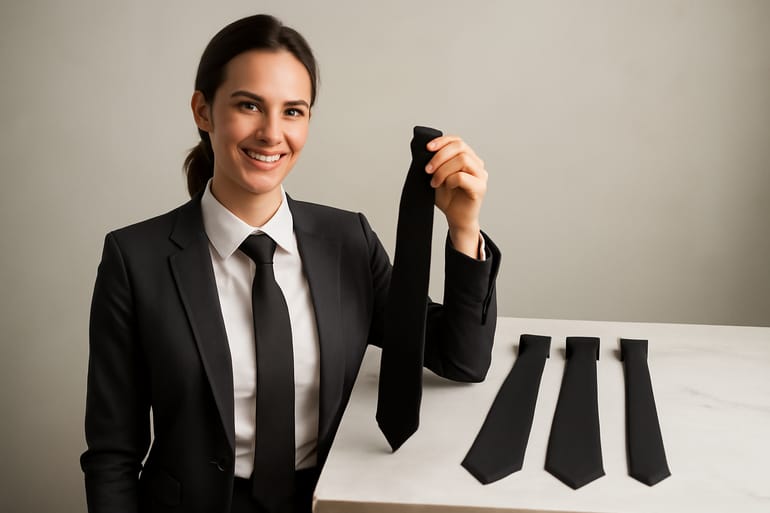
A black necktie looks simple at first glance, but small details change the whole effect. Width, fabric, finish, and knot shape all influence whether your outfit reads polished, severe, modern, or slightly off-balance. For formal events, the tie needs to look refined and intentional. For office wear, it should feel sharp without looking overdressed.
The easiest way to choose well is to start with three things: your outfit, the occasion, and the visual balance you want. A black tie worn with a crisp white shirt creates strong contrast and a clean professional line. Paired with softer tailoring, textured fabrics, or relaxed office pieces, it can look more understated and versatile.
Women shoppers often have an extra styling layer to consider because neckline shape, blazer width, and overall silhouette affect how the tie sits. Event planners also need consistency across multiple looks, especially when coordinating staff, speakers, or formal dress themes. If you are shopping without loyalty to any label, focusing on proportion and fabric quality will usually serve you better than chasing packaging claims.
A helpful starting point is width recommendations for black neckties to flatter different necklines, which explains how width changes the final look. Once you understand proportion, the rest of the decision becomes much easier.
What width works best for formal and office black neckties?

For most people, 7 cm width is the safest and most versatile choice. It sits in the sweet spot between slim and traditional, which makes it especially reliable for both formal settings and office outfits. It feels current without looking trend-driven, and it works well with structured blazers, tailored shirts, and classic suiting.
A narrower tie can look sleek, but it may feel too fashion-forward for conservative workplaces or ceremonial events. A wider tie carries more presence, yet it can overpower smaller frames or softer outfit lines. The goal is not to follow a rigid rule. It is to match the tie to your lapels, collar spread, and body proportions.
For women styling a black tie with a shirt dress, waistcoat, or blazer, balance matters even more. A medium width usually integrates more smoothly with varied necklines. Color-based buyers who mainly care about getting the right shade and visual impact should also remember that width affects how much black appears at the center of the outfit. More width means stronger contrast, especially against white or pale blue shirts.
If you want a deeper breakdown, width recommendations for black neckties to flatter different necklines walks through shape, proportion, and outfit harmony in more detail. For most wardrobes, one well-made 7 cm black tie will cover more occasions than several trend-led alternatives.
Which fabric should you choose: silk or matte finishes?
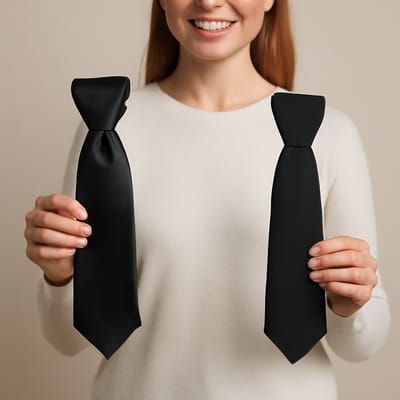
Fabric decides whether a black necktie feels dressy, corporate, soft, or dramatic. Silk remains the classic formal option because it has natural depth, elegant drape, and a subtle light-catching surface. It pairs especially well with evening tailoring, occasion wear, and high-contrast black-and-white outfits.
A matte black tie can be a better office choice if you want something more restrained. It usually feels less ceremonial and easier to wear in daylight. Textured weaves can also help the tie sit naturally within office wardrobes that include wool blazers, cotton shirts, or softer suiting fabrics.
Non-brand neckwear shoppers should pay close attention to finish rather than marketing language. A tie can be described in premium terms and still look flat, shiny in the wrong way, or poorly lined. Check for smooth construction, a balanced hand feel, neat edges, and fabric that returns to shape after light handling.
For a side-by-side breakdown, black silk vs matte black neckties: fabric choices and occasions explains when each finish works best. In practical terms:
- Choose silk for evening events, formal dinners, and elevated gifting
- Choose matte or lightly textured fabric for daily office wear
- Choose deeper, richer black tones when strong contrast is part of the outfit
- Avoid overly glossy finishes for conservative professional settings
That same fabric logic also shapes how a tie will work with blazers and dresses, which becomes especially important when styling black neckwear as part of a more fashion-led wardrobe.
How do you match a black necktie to shirts, outfits, and occasions?
The strongest pairing is still the classic black tie with a white shirt. It is crisp, formal, and easy to control. Light blue, pale grey, and fine stripe shirts can also work for office settings, but the look becomes less formal and more business-oriented. If your goal is ceremony, evening polish, or a sharp uniform effect, keep the palette simple.
For office outfits, think in terms of contrast and texture. A smooth black tie against a bright shirt creates authority. A matte black tie with a softer shirt or blazer feels more approachable. Women using ties as part of personal styling often get the best results when the rest of the outfit is tailored enough to support the structure of the neckwear. Event planners may prefer consistent black ties across a group because they photograph well and simplify dress coordination.
A few practical matching rules help:
- Match formality first, then fabric
- Keep shirt patterns subtle if the tie is central to the look
- Use black ties to anchor lighter outfits, not compete with busy prints
- Let accessories stay minimal in highly formal settings
- Choose a knot size that suits the collar and tie width
If you are comparing multiple options before buying, how to choose the right black necktie for formal and office outfits is a useful benchmark for fit, finish, and styling logic. One tie that coordinates across several shirts is usually a smarter buy than several highly specific options.
What should you look for before buying a black necktie?
A good black necktie should earn its place in your wardrobe by covering both formal and professional use. That means looking beyond appearance and checking how the tie performs in real life. Does it knot cleanly? Does it hang straight? Does the black look rich rather than faded, dusty, or overly reflective? These details matter more than decorative packaging.
Before you buy, focus on this shortlist:
- Width: around 7 cm for the broadest versatility
- Fabric finish: silk for formalwear, matte or textured for office use
- Construction: tidy stitching, even blade shape, smooth lining
- Drape: the tie should fall cleanly without twisting
- Shade: choose a deep neutral black that works with white, grey, and navy
- Use case: one tie for events, daily office wear, gifting, or coordinated group dressing
For gift buyers and event planners, versatility is often the best value. A classic medium-width black tie is easier to style across different shirts and body types. For newsletter-style styling content, shoppers usually benefit most from saving a simple checklist: width, fabric, knot compatibility, shirt pairing, and occasion.
If you are ready to compare options, prioritize products that clearly state fabric composition, dimensions, and close-up images. Direct product recommendations are most useful at that stage because they let you compare finish, width, and construction side by side rather than guessing from a single product photo.
How can you style and knot a black necktie with confidence?
The right knot keeps a black necktie looking intentional. A four-in-hand is slightly relaxed and works well for office outfits, especially when the shirt collar is narrower or the look is meant to feel modern. A half-Windsor gives more symmetry and is often the better choice for formal events, presentations, and polished tailored outfits.
Length matters just as much as the knot. The tip should generally reach around the waistband area. Too short looks awkward; too long throws off the proportions of the entire outfit. With black ties, these mistakes show clearly because the shape and contrast are so visible.
For women wearing ties with blazers, fitted shirts, or dresses layered under tailoring, the tie should support the outfit rather than dominate it. A medium knot and medium width usually create the cleanest result. Color-based buyers deciding between several blacks should compare the tie in natural light, because some fabrics read charcoal, blue-black, or shiny jet black depending on the weave.
Over time, details like storage and pressing also affect appearance, and care can make an average tie last far longer. Pairing decisions matter too, especially when building looks around blazers and dresses for work or events. Those topics deserve closer attention because they often determine whether a tie feels easy to wear or ends up unused in a drawer.
Frequently asked questions about black neckties
What is the best width for a black necktie?
For most formal and office outfits, a 7 cm black necktie is the most versatile option. It balances well with common shirt collars, blazers, and tailored silhouettes without looking too slim or too traditional.
Is a silk black necktie better than a matte black necktie?
Silk is usually better for formal occasions because it has a richer finish and more elegant drape. Matte black ties are often easier for office wear since they look quieter and less dressy in daylight.
How do color-based buyers choose the right black shade?
Compare ties in natural light and against the shirts or blazers you plan to wear most often. Some ties look deep neutral black, while others lean charcoal or have a blue-toned cast that changes the overall outfit.
Can women wear black neckties for office and formal outfits?
Yes, and a medium-width tie is often the easiest place to start. It works well with shirts, tailoring, and layered looks while keeping the outfit sharp rather than costume-like.
What should non-brand neckwear shoppers check before buying?
Look at width, fabric composition, stitching, drape, and close-up product images. A well-made non-branded tie can perform very well if the construction and finish are consistent.
Are black neckties a good choice for event planners?
Yes, because they create a cohesive look across groups and photograph cleanly. They also pair easily with white shirts and standard tailoring, which simplifies coordination for staff, speakers, or guests.
Which knot is best for a black necktie at work?
A four-in-hand is a strong everyday choice because it looks clean and slightly relaxed. If you want a more symmetrical finish for important meetings, a half-Windsor usually works better.
Should I buy one black necktie for everything?
You can, if you choose a medium-width tie in a versatile finish. A 7 cm tie in a refined but not overly glossy fabric usually covers most office, event, and gift-buying needs.